

The first known images depicting the Nativity of Christ are dated to the 3rd–4th centuries. They were painted on the walls of the Roman catacombs and show only the figures of the Mother of God, the Virgin and the Magi. Over time, the composition became more complex and multi-figured and generally developed by the 7th century.
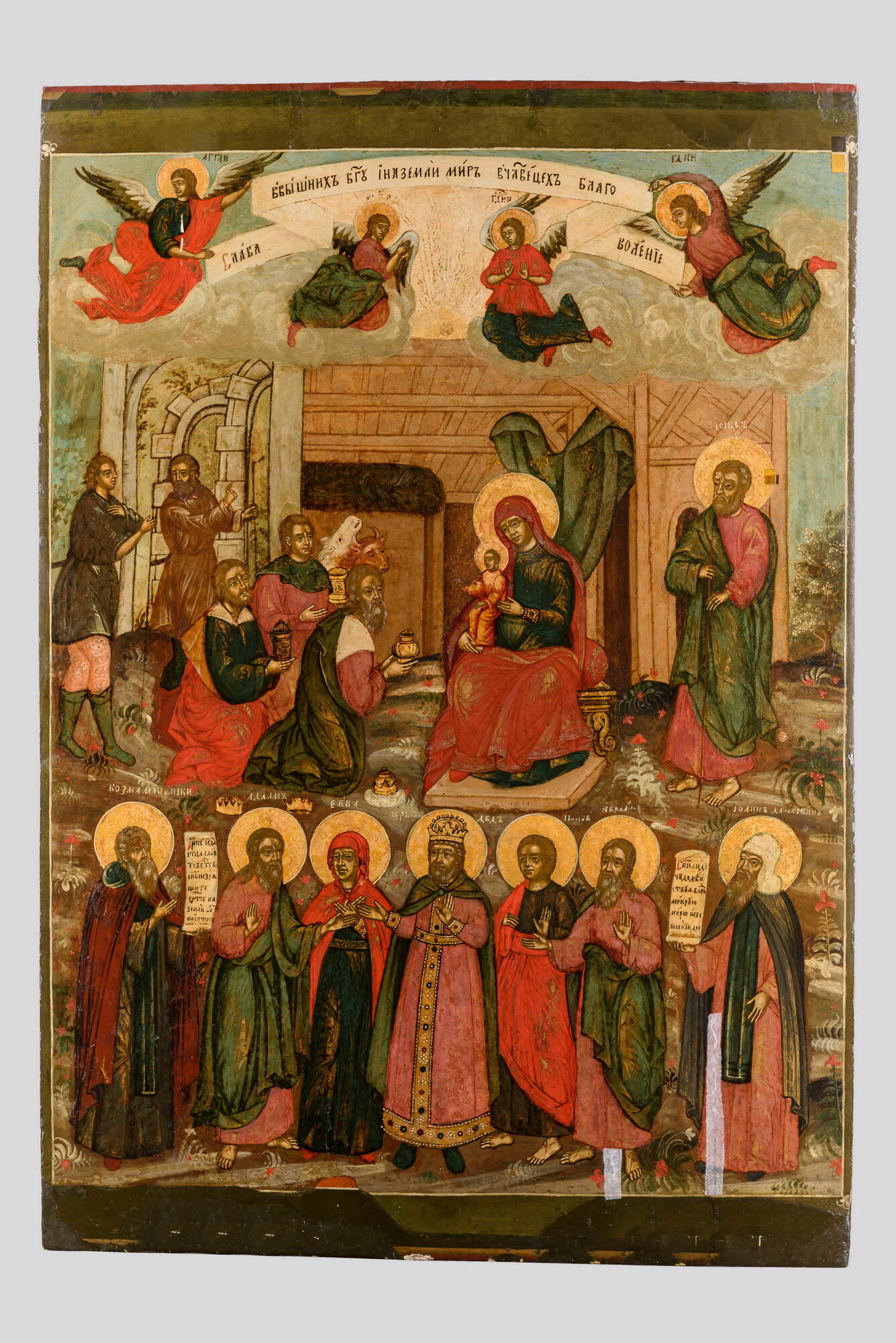
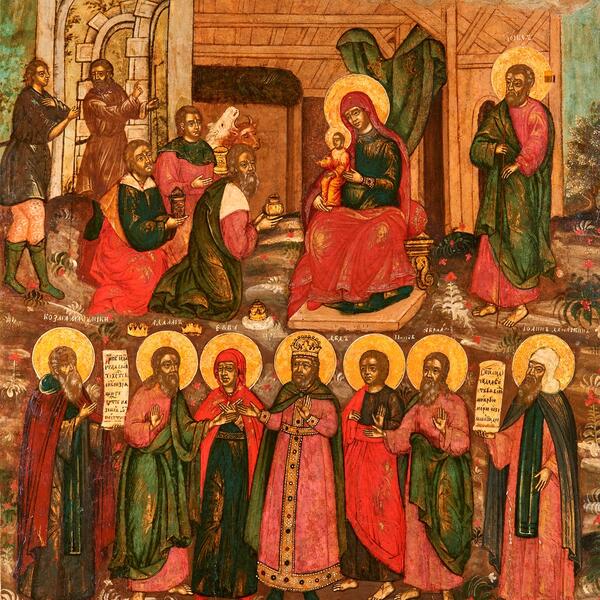
The central place on the icon is occupied by the Mother of God, holding the Baby in her arms. In early icons, it was customary to depict her sitting: such a pose testified to the wonderful painless birth. In later versions, the Virgin reclines on her bed. The icon painter who created this image follows the ancient tradition.
The righteous Joseph, immersed in thoughts, is depicted behind Mary’s back. A large group on the left side includes the Magi and shepherds who came at the call of the Star of Bethlehem, as well as an ox and a donkey. The kneeling Magi bring symbolic gifts to the God-Child. The first gift is gold as a tribute to the “King of Kings and Lord of Lords” (Rev. 19:16). The second one they bring, saying
The central place on the icon is occupied by the Mother of God, holding the Baby in her arms. In early icons, it was customary to depict her sitting: such a pose testified to the wonderful painless birth. In later versions, the Virgin reclines on her bed. The icon painter who created this image follows the ancient tradition.
The righteous Joseph, immersed in thoughts, is depicted behind Mary’s back. A large group on the left side includes the Magi and shepherds who came at the call of the Star of Bethlehem, as well as an ox and a donkey. The kneeling Magi bring symbolic gifts to the God-Child. The first gift is gold as a tribute to the “King of Kings and Lord of Lords” (Rev. 19:16). The second one they bring, saying