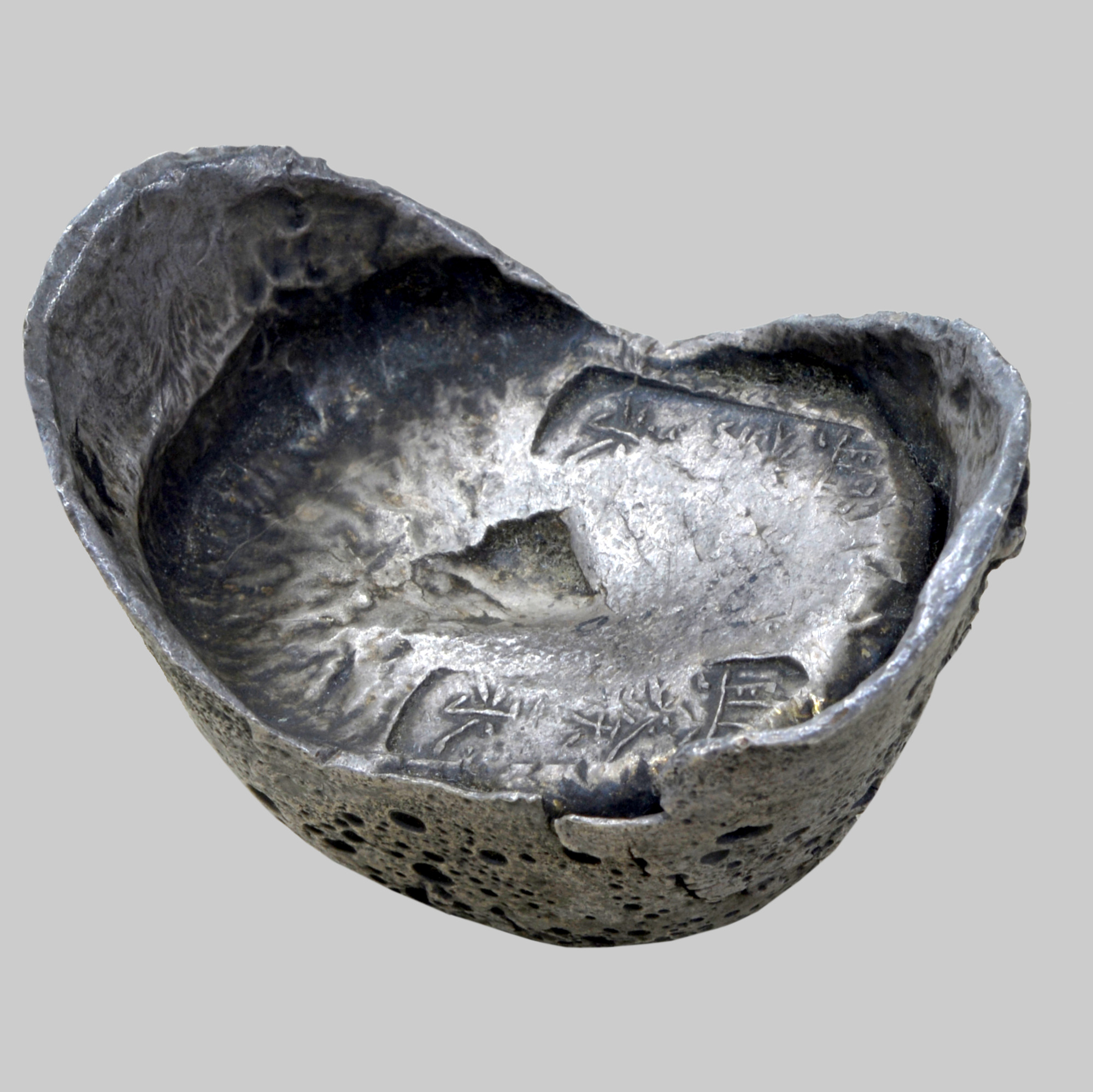


Yuanbao, or Yamba, is the Russian name for silver ingots that existed in China before the 1933 monetary reform. By the 19th century, the monetary system in the country was very chaotic: foreign and local coins, banknotes and yunbaos were in use. The largest of them weigh 1830 grams. They were made by private bankers who had permission from the government. When creating yunbaos, high-grade silver in the form of shoes was taken, it could also be divided into parts — this impressive piece of silver had a different value in different provinces. When the yunbao traveled through country, old hallmarks were removed from it many times and new ones were applied.
Usually the money weighed 50 liǎng, but you could find bars in both 5 and 10 liǎng. It was a measure of weight in China, which the Manchurians called yang and the Mongols called liǎng. The Europeans adopted the Manchurian name and called it yen, the Russians — according to the Mongolian tradition — lana. 1 liǎng by weight was equal to 34.128 grams. These weights were used for silver in commercial calculations and payments, obtaining also the value of monetary units, but they were not in the form of coins.
In the regions adjacent to China, yunbaos could sometimes also be found in monetary circulation, for example, in Kyrgyzstan of the 19th century, where they were drawn on when making large transactions, as well as for trade with the Celestial Empire. Even after the Chinese monetary system switched to Mexican dollars, the country’s legal currency since the mid-19th century, the liǎngs were still used in the calculations. For example, in Shanghai 71-73 liǎng were equal to 100 dollars. In 1903, coins of one liǎng were created, which weighed 37.2 grams.
Most of the numismatists want to catch hold on genuine yunbao, as there are a limited number of them left. The State Hermitage contains a large piece of the rarest silver ingot, which in its shape resembles an ax. It says “50 liǎng” and dates from the end of the 12th — the beginning of the 13th century. Currently, the most expensive yunbaos, in the manufacture of which precious metals were used, can be bought at jewelry stores.
In 1910, several ingots were purchased by the Blagoveshchensk Museum from a resident of the city of Blagoveshchensk E.M. Mosolov, later they were deposited with the financial authorities, and in 1928 the Amur regional financial department returned seven ingots to the Amur regional museum.
Usually the money weighed 50 liǎng, but you could find bars in both 5 and 10 liǎng. It was a measure of weight in China, which the Manchurians called yang and the Mongols called liǎng. The Europeans adopted the Manchurian name and called it yen, the Russians — according to the Mongolian tradition — lana. 1 liǎng by weight was equal to 34.128 grams. These weights were used for silver in commercial calculations and payments, obtaining also the value of monetary units, but they were not in the form of coins.
In the regions adjacent to China, yunbaos could sometimes also be found in monetary circulation, for example, in Kyrgyzstan of the 19th century, where they were drawn on when making large transactions, as well as for trade with the Celestial Empire. Even after the Chinese monetary system switched to Mexican dollars, the country’s legal currency since the mid-19th century, the liǎngs were still used in the calculations. For example, in Shanghai 71-73 liǎng were equal to 100 dollars. In 1903, coins of one liǎng were created, which weighed 37.2 grams.
Most of the numismatists want to catch hold on genuine yunbao, as there are a limited number of them left. The State Hermitage contains a large piece of the rarest silver ingot, which in its shape resembles an ax. It says “50 liǎng” and dates from the end of the 12th — the beginning of the 13th century. Currently, the most expensive yunbaos, in the manufacture of which precious metals were used, can be bought at jewelry stores.
In 1910, several ingots were purchased by the Blagoveshchensk Museum from a resident of the city of Blagoveshchensk E.M. Mosolov, later they were deposited with the financial authorities, and in 1928 the Amur regional financial department returned seven ingots to the Amur regional museum.