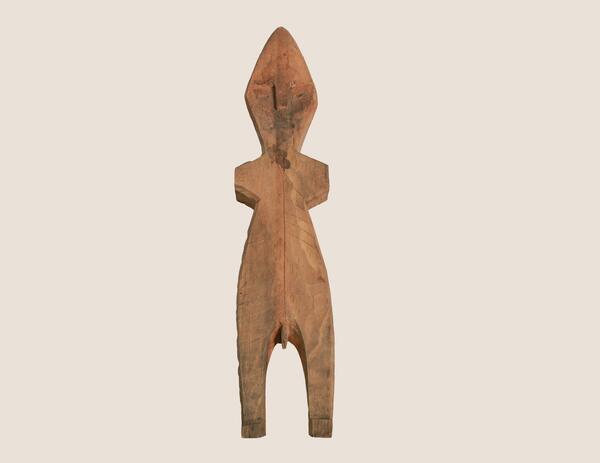
The Khanty worshipped various spirits, those that patronized the trade, the territory, and the home. The characters of these cults were human-like deities. Each of them had its own name and a unique appearance.
The sacred statues of the Salym Khanty group could be stored inside or outside the house. Storage in the house implies several options: in a room, in chests, on the back bunks or in a corner, in the hayloft or in the attic. Being kept outside the house, statues were placed on a special shelf on the back wall or in a barn.
The wooden houses of the Khanty resemble the Russian houses: they have a living room on the first floor and an attic under the roof. The chests with spirits were often taken there. The skins or skulls of sacrificial animals were also stored there. In small villages, today one can see houses of early architecture, that is without attics. In this case, the chests with sacred statues were placed on a shelf built over the bunks, and necessarily on the wall opposite the entrance. The statues were dressed in a piece of new cloth, which could also be used to make detailed clothing. Every family of the Salym Khanty had sacred chests with figurines of guardian spirits.
The ritual of veneration was performed in the place where the guardian spirits were kept. The eldest member of the family lifted the lid of the chest and fixed it. Treats were brought for spirits: pierogi (small pies), fish, berries, alcoholic beverages. The family would form a semicircle, facing the open chest. The men necessarily stood in the front row, with the women and children behind them. The family turned to the spirit for help in hunting and fishing. Other requests were also made. After the ritual was over, the chest was closed. The Khanty family idols are kept even today.
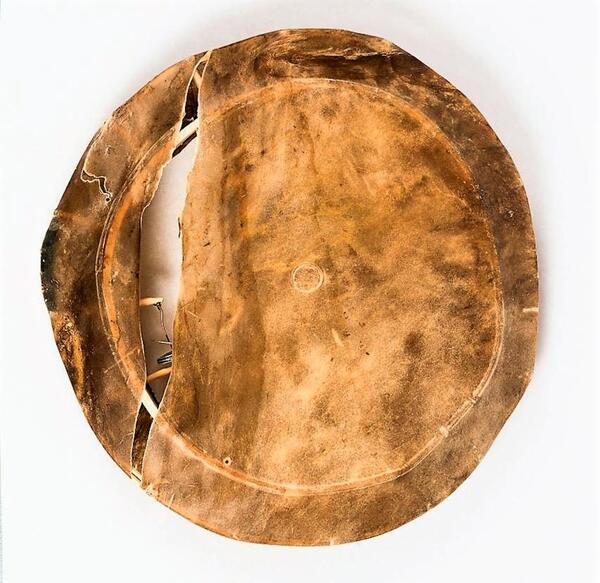
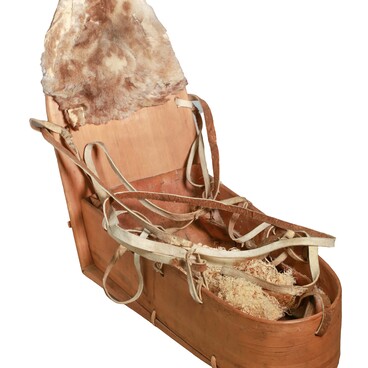
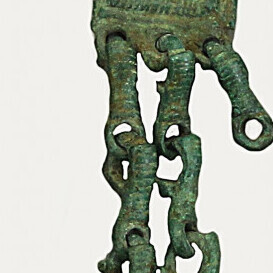
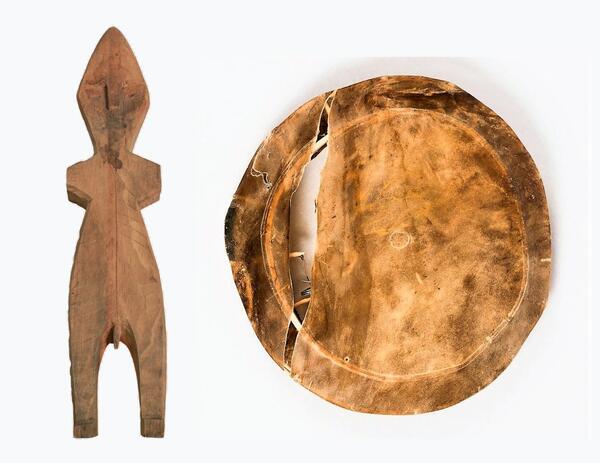
The Museum of the Ob River displays three wooden sculptures of guardian spirits at the exhibition “Ugra Heritage”. They entered the museum in the 1990s. These sculptures once belonged to the Salym Khanty group. In Salym, in the house of the Lukin family, at the eastern gable of the attic, there was a Russian chest padded with iron. It is believed that it contained seven wooden sculptures, but only three have been preserved to this day. Perhaps, the idols found were family deities of the Lukins.
The sacred statues of the Salym Khanty group could be stored inside or outside the house. Storage in the house implies several options: in a room, in chests, on the back bunks or in a corner, in the hayloft or in the attic. Being kept outside the house, statues were placed on a special shelf on the back wall or in a barn.
The wooden houses of the Khanty resemble the Russian houses: they have a living room on the first floor and an attic under the roof. The chests with spirits were often taken there. The skins or skulls of sacrificial animals were also stored there. In small villages, today one can see houses of early architecture, that is without attics. In this case, the chests with sacred statues were placed on a shelf built over the bunks, and necessarily on the wall opposite the entrance. The statues were dressed in a piece of new cloth, which could also be used to make detailed clothing. Every family of the Salym Khanty had sacred chests with figurines of guardian spirits.
The ritual of veneration was performed in the place where the guardian spirits were kept. The eldest member of the family lifted the lid of the chest and fixed it. Treats were brought for spirits: pierogi (small pies), fish, berries, alcoholic beverages. The family would form a semicircle, facing the open chest. The men necessarily stood in the front row, with the women and children behind them. The family turned to the spirit for help in hunting and fishing. Other requests were also made. After the ritual was over, the chest was closed. The Khanty family idols are kept even today.
The Museum of the Ob River displays three wooden sculptures of guardian spirits at the exhibition “Ugra Heritage”. They entered the museum in the 1990s. These sculptures once belonged to the Salym Khanty group. In Salym, in the house of the Lukin family, at the eastern gable of the attic, there was a Russian chest padded with iron. It is believed that it contained seven wooden sculptures, but only three have been preserved to this day. Perhaps, the idols found were family deities of the Lukins.