

#1
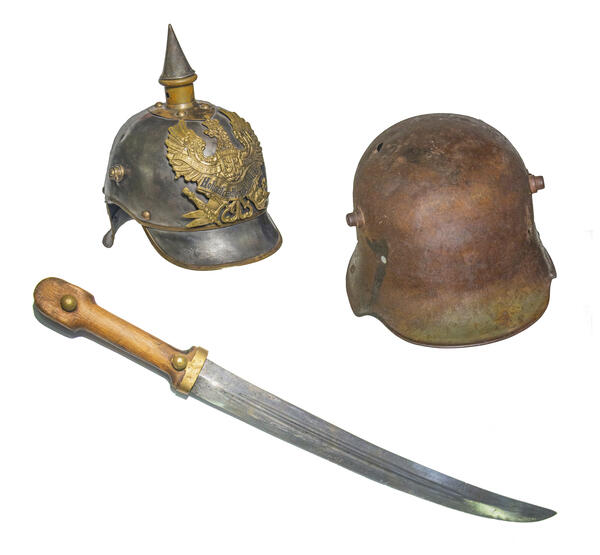
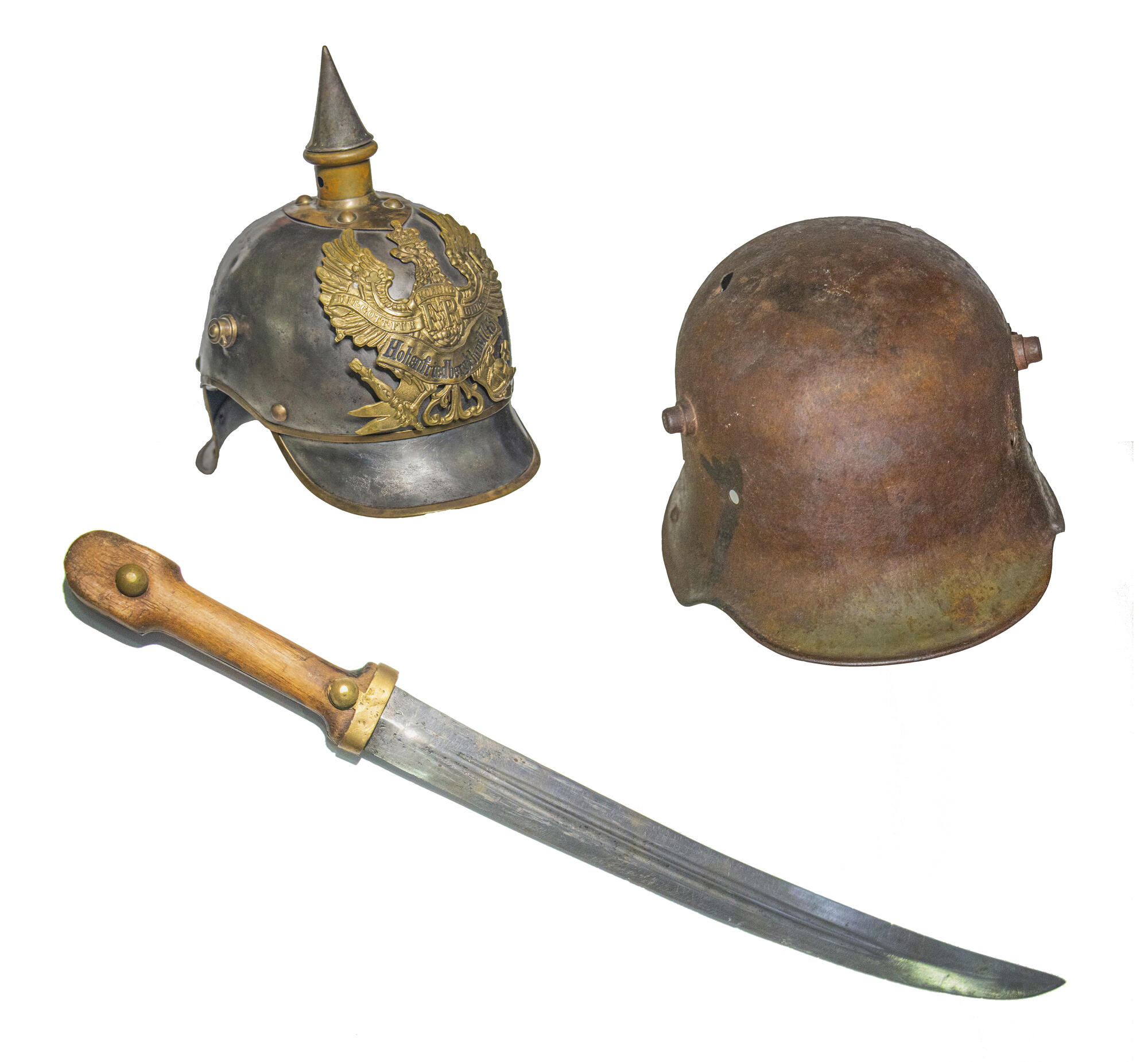
Stahlhelm, Pickelhelm, Bebut dagger
#3
#4
#5
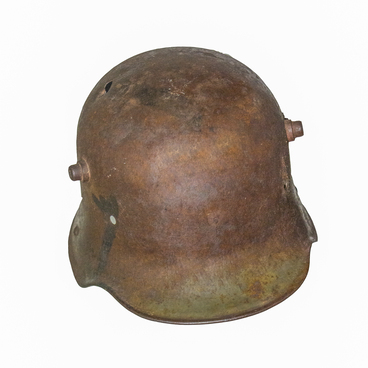
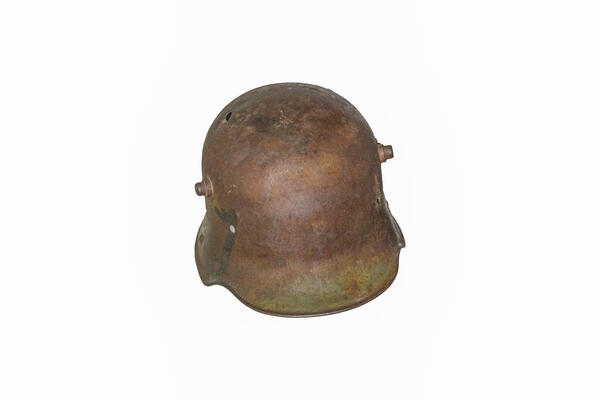
The stahlhelm was a steel helmet worn by the German infantry from 1916 to 1945.
During World War I, stahlhelm replaced high and uncomfortable pickelhelms, which showed a soldier’s position during trench warfare. Later these helmets became one of the most recognizable attributes of the Wehrmacht soldiers.
In 1915, Germans produced many helmets of different shapes, tested them at proving ground, and made technical requirements for their shape, metal thickness, and weight.
At first, the German army was supplied with slightly modified pickelhelms, produced in wartime conditions. They were made not of leather, but of thin metal sheets and pressed cardboard. However, their protective capability was considered low.
Later, in the same 1915, the Storm Battalion of Ernst Rohr fighting on the Western front was supplied with the first steel helmets. The observers, sentinels, and snipers were equipped with the next batches.
Dr. Friedrich Schwerd of the Technical Institute of Hanover designed the stahlhelms. By the beginning of 1916, the first samples began to arrive en masse in the army. The helmet covered the head and protected the ears from fragments and the sound wave. Small “horns” on the sides were designed to fix additional steel protective plates. However, they were rarely used, as they were too heavy. There was also a hole for ventilation on the side. However, the soldiers had to seal it with materials at hand in cold weather.
Stahlhelms were made of nickel steel. The inner part was sewn from three leather pieces, so its size could be changed. A strap was attached to the metal outer part and fastened under the chin.
During World War I, the first means of camouflaging stahlhelms appeared. To make the helmets unseen for the enemy snipers, they were specially dirtied or covered with homemade gunny sack covers. In 1917—1918, soldiers at the front often applied camouflage paint with a geometric pattern to their helmets themselves.
During World War I, stahlhelm replaced high and uncomfortable pickelhelms, which showed a soldier’s position during trench warfare. Later these helmets became one of the most recognizable attributes of the Wehrmacht soldiers.
In 1915, Germans produced many helmets of different shapes, tested them at proving ground, and made technical requirements for their shape, metal thickness, and weight.
At first, the German army was supplied with slightly modified pickelhelms, produced in wartime conditions. They were made not of leather, but of thin metal sheets and pressed cardboard. However, their protective capability was considered low.
Later, in the same 1915, the Storm Battalion of Ernst Rohr fighting on the Western front was supplied with the first steel helmets. The observers, sentinels, and snipers were equipped with the next batches.
Dr. Friedrich Schwerd of the Technical Institute of Hanover designed the stahlhelms. By the beginning of 1916, the first samples began to arrive en masse in the army. The helmet covered the head and protected the ears from fragments and the sound wave. Small “horns” on the sides were designed to fix additional steel protective plates. However, they were rarely used, as they were too heavy. There was also a hole for ventilation on the side. However, the soldiers had to seal it with materials at hand in cold weather.
Stahlhelms were made of nickel steel. The inner part was sewn from three leather pieces, so its size could be changed. A strap was attached to the metal outer part and fastened under the chin.
During World War I, the first means of camouflaging stahlhelms appeared. To make the helmets unseen for the enemy snipers, they were specially dirtied or covered with homemade gunny sack covers. In 1917—1918, soldiers at the front often applied camouflage paint with a geometric pattern to their helmets themselves.
#6
Full name: Infantry helmet, stahlhelm
Date: 1910s
Technique: casting
Place: Germany
Dimensions: 26×23×16 cm
Copyright: Omsk State Museum of History and Regional Studies
Date: 1910s
Technique: casting
Place: Germany
Dimensions: 26×23×16 cm
Copyright: Omsk State Museum of History and Regional Studies
#7
Pickelhelm
#8
#9
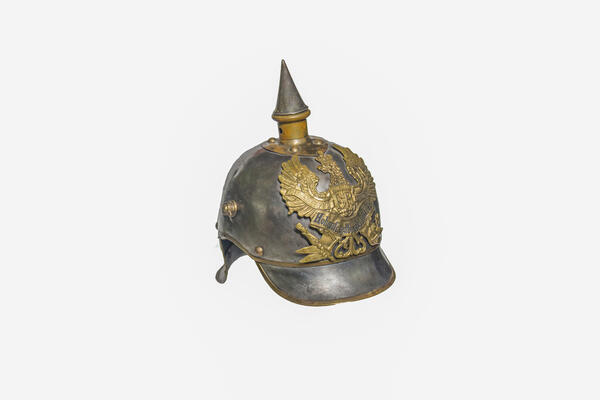
‘Pickelhelm’ means ‘pointed helmet’ in German. Such helmets were introduced in the Prussian army in 1842 by the order of King Frederick William IV. Armies of other German states soon began to use pickelhelms.
The helmet base was made of reinforced boiled leather. It was treated to a glossy black sheen, and reinforced with metal trim, usually plated with gold or silver. A metal spike was fixed on the crown.
Full metal helmets were mostly worn by the cuirassiers 一 a type of heavy cavalry. One can see them in many grand portraits of the high-ranking German military and political figures.
All helmets produced for infantry in 1914 were made of leather. However, during World War I, supplies of leather in Germany began to run low. In 1915, several pickelhelms were made of steel sheets as an experiment.
A steel pickelhelm of the Prussian officer was a semi-sphere produced from white metal. The helmet front was decorated with a plate in the form of the large winged eagle — the emblem of Prussia, with the monogram of King Frederick ‘FR’ and the motto ‘With God for king and country! ’
However, the import of steel from South America soon ended. The helmets for the Prussian army were now produced from other materials: artificial leather, thick paper, pressed potato peelings, and even overripe pumpkin skin.
When World War I turned from the war of maneuver into the war of position, it became clear that pickelhelm was not appropriate for trench warfare. The crest often stuck out from the cover showing where a soldier is. Sometimes the enemies tried to shoot the spike off to scare the Germans. In 1915, a pickelhelm with removable spike appeared, but it didn’t last long.
Since 1916, pickelhelm was replaced with a new German steel helmet 一 stahlhelm. Later only high-ranking officials wore pickelhelms during official ceremonies. With the collapse of the German Empire in 1918, the pickelhelm ceased to be part of the military uniform.
The helmet base was made of reinforced boiled leather. It was treated to a glossy black sheen, and reinforced with metal trim, usually plated with gold or silver. A metal spike was fixed on the crown.
Full metal helmets were mostly worn by the cuirassiers 一 a type of heavy cavalry. One can see them in many grand portraits of the high-ranking German military and political figures.
All helmets produced for infantry in 1914 were made of leather. However, during World War I, supplies of leather in Germany began to run low. In 1915, several pickelhelms were made of steel sheets as an experiment.
A steel pickelhelm of the Prussian officer was a semi-sphere produced from white metal. The helmet front was decorated with a plate in the form of the large winged eagle — the emblem of Prussia, with the monogram of King Frederick ‘FR’ and the motto ‘With God for king and country! ’
However, the import of steel from South America soon ended. The helmets for the Prussian army were now produced from other materials: artificial leather, thick paper, pressed potato peelings, and even overripe pumpkin skin.
When World War I turned from the war of maneuver into the war of position, it became clear that pickelhelm was not appropriate for trench warfare. The crest often stuck out from the cover showing where a soldier is. Sometimes the enemies tried to shoot the spike off to scare the Germans. In 1915, a pickelhelm with removable spike appeared, but it didn’t last long.
Since 1916, pickelhelm was replaced with a new German steel helmet 一 stahlhelm. Later only high-ranking officials wore pickelhelms during official ceremonies. With the collapse of the German Empire in 1918, the pickelhelm ceased to be part of the military uniform.
#10
Full name: Infantry helmet, pickelhelm
Date: 1910s
Technique: casting
Place: Germany
Dimensions: 20×17×16 cm
Copyright: Omsk State Museum of History and Regional Studies
Date: 1910s
Technique: casting
Place: Germany
Dimensions: 20×17×16 cm
Copyright: Omsk State Museum of History and Regional Studies
#11
Bebut dagger
#12
#13
The Russian army rearmament began with the appearance of new quick-fire artillery in the army and the change in combat strategy and tactics in the early 20th century. The command decided to supply some military units and branches with new daggers instead of shashkas which were long and therefore inconvenient in close combat.
In 1907, a crooked soldier’s bebut dagger was put into service in the Imperial Russian army by order No. 287 of the Military Department. Since 1840, it was part of the Kuban Cossacks uniform. A fascine knife with a sawtoothed back or an ax was an alternative to bEbut.
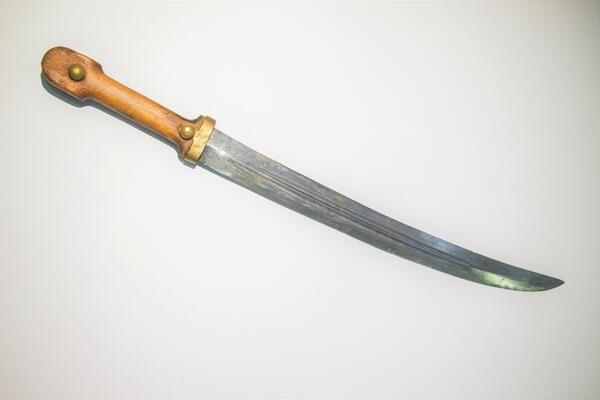
“Bebut” means “leg” or “thigh” in Persian. By 1907, that was the name of almost every dagger with a curved blade at the end. From 1907 till 1917, about 100 thousand such daggers were produced at Zlatoust, Arti, and Izhevsk Arms Plants. The length of the blade allowed to use the weapon in slashing, and the slight curve did not interfere with stabs.
Bebut was in service up to the Russian revolution of 1917. It was the favorite weapon of the so-called “plastUns” 一 the foot Cossacks in Kuban Cossack Host (before the Black Sea Cossack Host) which carried out guard and reconnaissance service in the Kuban. Plastuns were recruited from poor Cossacks who could not afford to buy a horse.
On foot, the soldiers wore the dagger on the belt near the buckle, and in mounted formation, they moved it to the left side. During the Russian Civil War, both Red and White Army soldiers used the bebut. Since 1918, foot militiamen were armed with it, while the mounted militia used shashkas.
Daggers were kept in wooden leather-covered sheathes. A military unit number was usually stamped on the sheath and the hilt.
The displayed bebut dagger was donated to the museum in 1952 by the wife of a participant of the battle of Maryanovka participant. That was the largest fight of the Civil war on the Omsk region territory.
In 1907, a crooked soldier’s bebut dagger was put into service in the Imperial Russian army by order No. 287 of the Military Department. Since 1840, it was part of the Kuban Cossacks uniform. A fascine knife with a sawtoothed back or an ax was an alternative to bEbut.
“Bebut” means “leg” or “thigh” in Persian. By 1907, that was the name of almost every dagger with a curved blade at the end. From 1907 till 1917, about 100 thousand such daggers were produced at Zlatoust, Arti, and Izhevsk Arms Plants. The length of the blade allowed to use the weapon in slashing, and the slight curve did not interfere with stabs.
Bebut was in service up to the Russian revolution of 1917. It was the favorite weapon of the so-called “plastUns” 一 the foot Cossacks in Kuban Cossack Host (before the Black Sea Cossack Host) which carried out guard and reconnaissance service in the Kuban. Plastuns were recruited from poor Cossacks who could not afford to buy a horse.
On foot, the soldiers wore the dagger on the belt near the buckle, and in mounted formation, they moved it to the left side. During the Russian Civil War, both Red and White Army soldiers used the bebut. Since 1918, foot militiamen were armed with it, while the mounted militia used shashkas.
Daggers were kept in wooden leather-covered sheathes. A military unit number was usually stamped on the sheath and the hilt.
The displayed bebut dagger was donated to the museum in 1952 by the wife of a participant of the battle of Maryanovka participant. That was the largest fight of the Civil war on the Omsk region territory.
#14
Full name: Crooked soldier’s dagger. Bebut
Date: the early 20th century
Technique: manufacture, bench work, double sided casting
Place: Russian Empire
Dimensions: 59.4×3.6 cm
Copyright: Omsk State Museum of History and Regional Studies
Date: the early 20th century
Technique: manufacture, bench work, double sided casting
Place: Russian Empire
Dimensions: 59.4×3.6 cm
Copyright: Omsk State Museum of History and Regional Studies
#15
Ministry of Culture of the Russian Federation
read morehide
00:00
00:00
1x
Stahlhelm, Pickelhelm, Bebut dagger
Exhibition
0
 Point your smartphone camera to open in the app
Open in app
Share