

There are many woodworking and carpentry tools that differ in functions. The grooving plane is considered one of the most sophisticated tools of its kind.
The name of the device shows that it is used to plane grooves which are up to one centimeter in width. In Russian this tool is sometimes called “paznik” from the Russian “paz”, which is a groove.
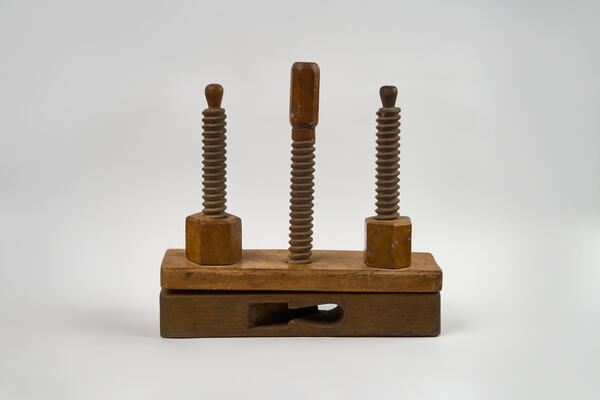
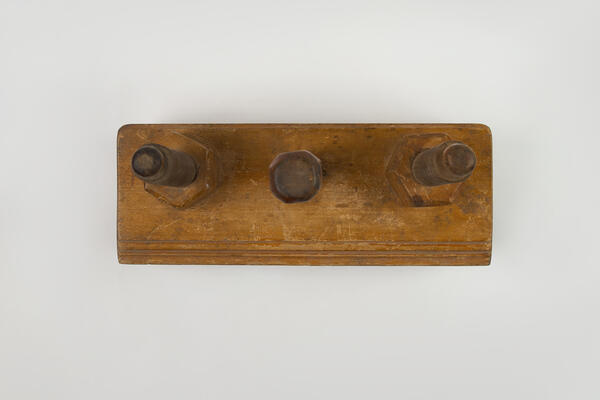
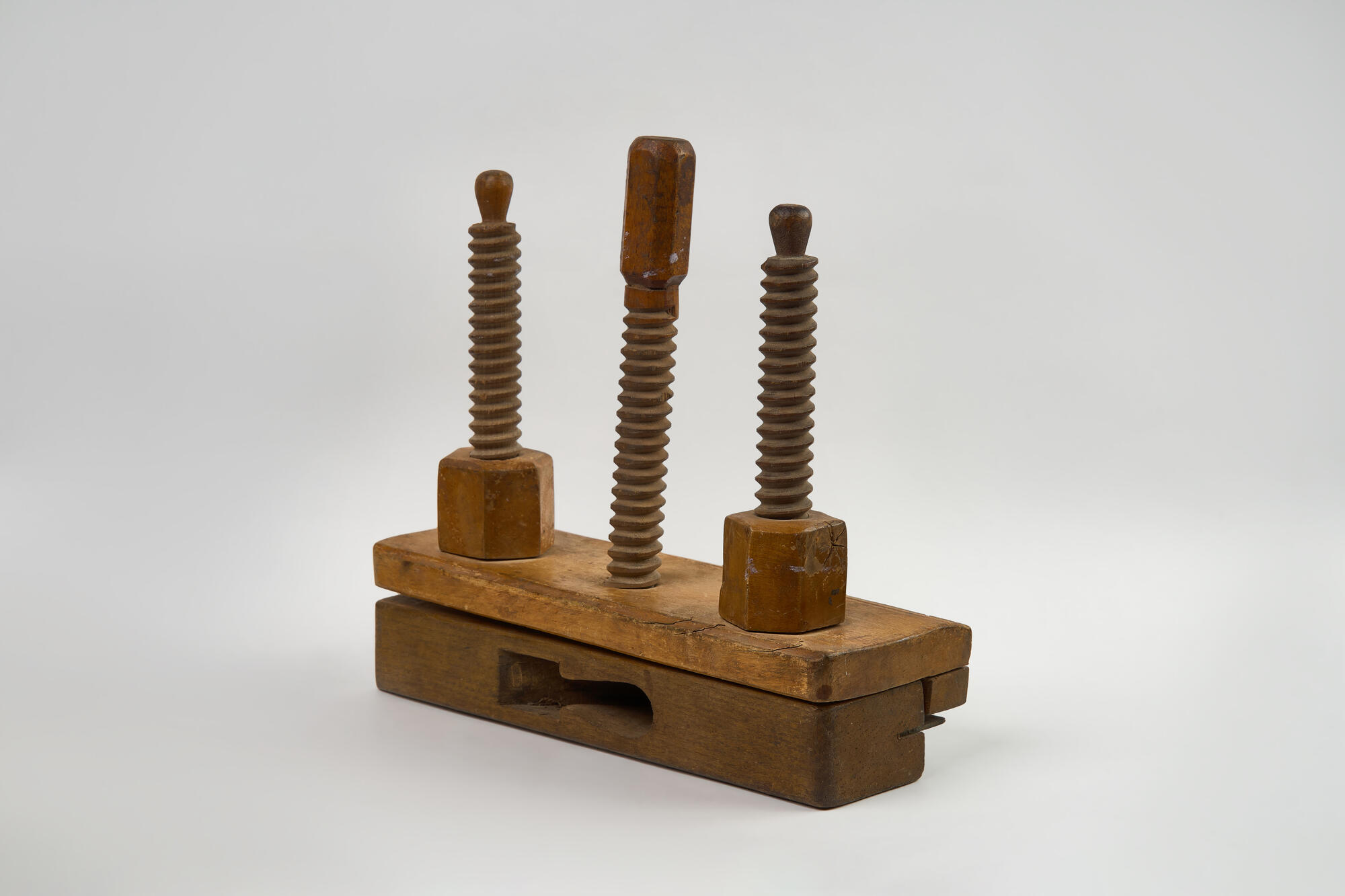
The grooving plane consists of a main block and an additional block, which are screwed together with a handle in the middle, as well as a guide bar and a knife.
The knife is mounted on the block at an angle and can only be moved forward and backward. It is fixed with a wedge on wooden grooving planes and with a special screw on metal ones.
When working with a grooving plane, the craftsman sets the blade projection in relation to the plane rest based on the properties of the wood and thus adjusts the depth of the future groove. Depending on the purpose of the work, a knife of a certain width is inserted into the grooving plane, which determines the width of the groove. The bolts, which are located on one side of the tool, are needed to adjust the distance from the groove to the workpiece. This is the peculiarity of the tool: the grooving plane cuts the groove in the workpiece at a fixed distance from the edge.
Before the widespread use of woodworking machines, the grooving plane was one of the main tools of carpenters who were engaged in flooring or ceiling work. They used this tool to carve a rectangular groove in a board. Then they made a feather on the edge of the other board, which then fit tightly into the finished groove. In this way, the end edges of the boards fit tightly together and the joints between them were almost invisible.
The grooving plane was also indispensable in making paneled doors and furniture. When making such doors, the edges of the frame boards were grooved, and when assembling the door, the panels made of one or several thin boards were tightly inserted into the grooves. The process was technologically similar when building furniture, only in this case panels were made of plywood or glass.
The grooving plane from the museum’s collection is
a carpenter’s tool, which was once used to build the house of the merchant
Grigory Vasilyevich Tetyushinov.