Font
Color
Graphics
Изображение точки

To see AR mode in action:

1. Install ARTEFACT app for iOS or Android;

2. Find the exhibition «Rus and Horde: 14th Century Warfare»

3. Push the «Augmented reality» button and point your phone's camera at the exhibit;

Скрыть точки интересаПоказать точки интереса
Показать в высоком качестве

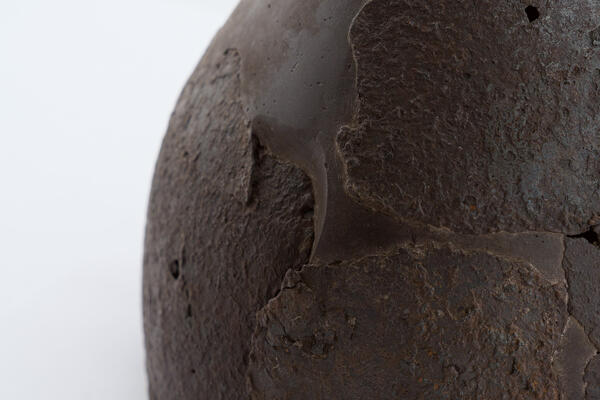
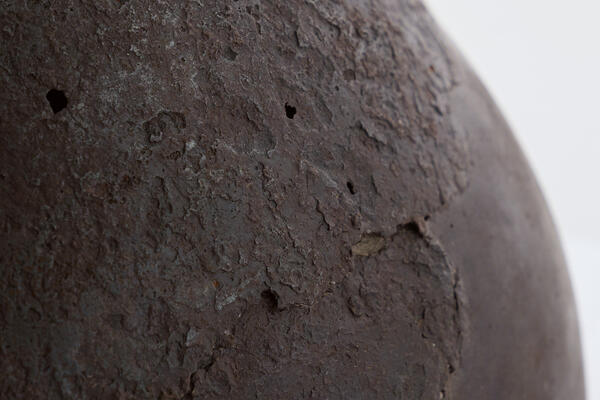
Conical helmet

Creation period
the 13th–14th centuries
Dimensions
23,5x24x21,4 cm
Technique
iron; forging, riveting
0
Open in app
#2
In the museum’s exhibition, in the hall “Rus and Horde: 14th Century Warfare”, there is an iron helmet on display — the main element of armor in the 14th century. The helmet is conical in shape.


A helmet is a kind of headgear used in combat to protect a warrior’s head.


In the beginning of the second third of the 14th century, there was a significant advancement in metalworking techniques. Numerous workshops began to emerge, specializing in the mass production of weapons.


Since that time, armor became more accessible, and a helmet became a mandatory element of it. During this period, helmets became more complex with additional protective elements such as a brim, earpieces, and partial or full-face protection in the form of half-masks or full visors. Sometimes, these were designed in the form of anthropomorphic masks. These changes were caused by the fading of range combat, the main tactic of previous times, and the increasing role of close combat.
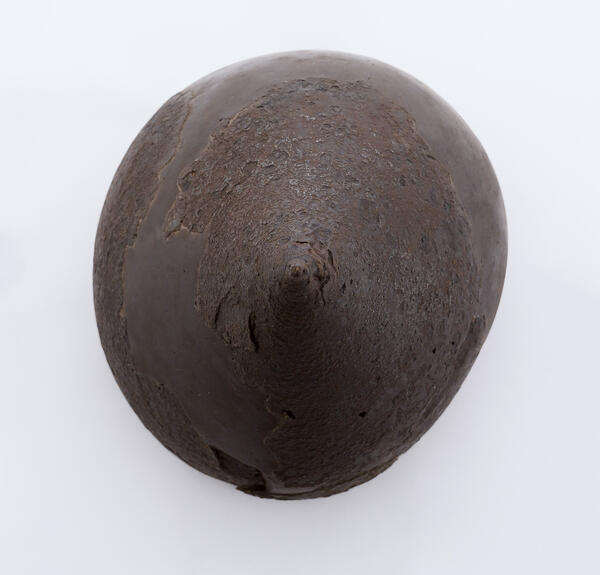
#4
Conical helmet
#6
The first helmets appeared in Russia at the end of the 9th century. The headgear had an elongated shape, while Western European counterparts were shorter. Russian helmets were better protected against striking and chopping weapons, which glided on a smooth surface. The height of the crest prevented direct hits, allowing only for a side blow. This could cause concussion or “stun” the warrior.


The helmet was fastened under the chin with a strap to ensure that the warrior did not lose it during battle, with a coif worn under it. In Russia, coifs made from wolf or badger fur were most common, though felt coifs were occasionally used as well.


In “The Tale of the Battle with Mamai”, it is mentioned that during the battle, the Grand Prince’s armor was “all beaten and ulcerated, yet the prince himself did not have any mortal wounds on his body”. The Grand Prince definitely wore a reliable helmet to protect himself from enemy blows.


In the Russian chronicles, there is another example of armor use. In 1151, during an internecine battle on the banks of the Rut River (in today’s Kiev Oblast), the great Kiev prince Izyaslav Mstislavovich was knocked off his horse. The prince’s guards, in the heat of battle, did not recognize him and wanted to kill him. One of the soldiers struck Izyaslav’s helmet with a sword. The helmet “bore an image of Great Martyr Saint Panteleimon”. The soldier’s blow “struck the helmet to the forehead”. However, Izyaslav managed to remove his helmet and was recognized.

#3

Conical helmet

#7
View in the State Catalogue
read morehide
00:00
00:00
1x

Conical helmet

Creation period
the 13th–14th centuries
Dimensions
23,5x24x21,4 cm
Technique
iron; forging, riveting
0
Point your smartphone camera to open in the app
Share
VkontakteOdnoklassnikiTelegram
Share on my website
Copy linkCopied
Copy
Open in app
To see AR mode in action:
  1. Install ARTEFACT app for 
  2. iOS or Android;
  3. Find and download the «Paintings in Details» exhibition
  4. Push the «Augmented reality» button and point your phone's camera at the painting;
  5. Watch what happens on your phone screen whilst you flip through the pictures.
 
We use Cookies
Cookies on the Artefact Website. We use cookies to ensure that we give you the best experience on our website. If you continue without changing your settings, we'll assume that you are happy to receive all cookies on the Artefact website. However, if you would like to, you can change your cookie settings at any time.
Learn more about useHide
Content is available only in Russian

X

Нашли опечатку?...

%title%%type%