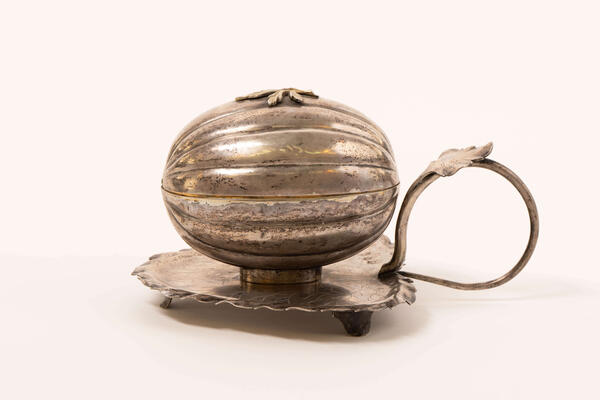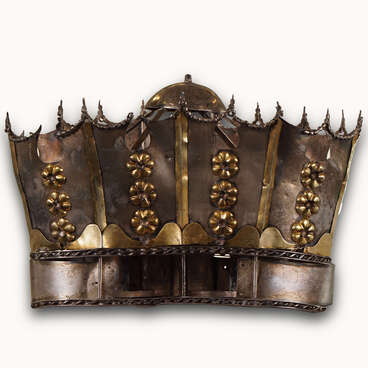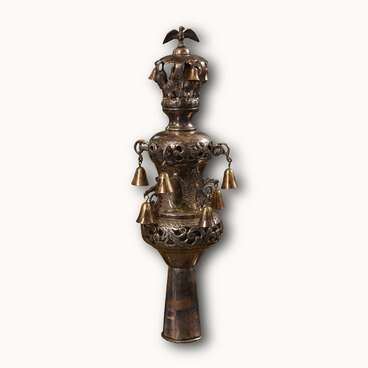
A besamim is a spice vessel used for the ritual of Havdalah, the separating with the Sabbath. The seventh day of the week on the Jewish calendar is the Shabbat, a day of rest and prayer. The tradition goes back to God’s Covenant, who created the world for six days and rested on the seventh. The beginning of the Sabbath is solemnly celebrated by lighting candles and reciting kiddush, a special blessing over wine in a festive goblet.
“Havdalah” literally translates as “separation”: this ritual concludes the Sabbath day and sets the Jew up for the work week. It is performed on Saturday evening, an hour after sunset, because, in Judaism, days do not change at midnight, but at sunset. Women light candles because the commandment says, “Remember the Sabbath day to keep it holy.” And men recite the blessing over a goblet of wine.
This prayer includes the following words:
“You have given us the ability to comprehend Your Torah and taught us to obey the laws established according to Your will. And You, Most High, have separated the holy from the mundane, light from darkness, Israel from the nations, the seventh day from the six work days.”
All the prohibitions of the Sabbath day, and there are 39 of them, are valid as long as this text is pronounced. To soften the bitterness of separation with the Sabbath, pleasant incense is used during the Havdalah. The box of aromatic spices is called “hodesh” or “besamim”. Jewish law does not specify what spices must be in it, one can choose them according to one’s taste. Inhaling the aroma, the whole family undergoes a ritual of purification. After the ritual, it is customary to extinguish the candle and begin the meal in honor of the separation with Shabbat Queen.
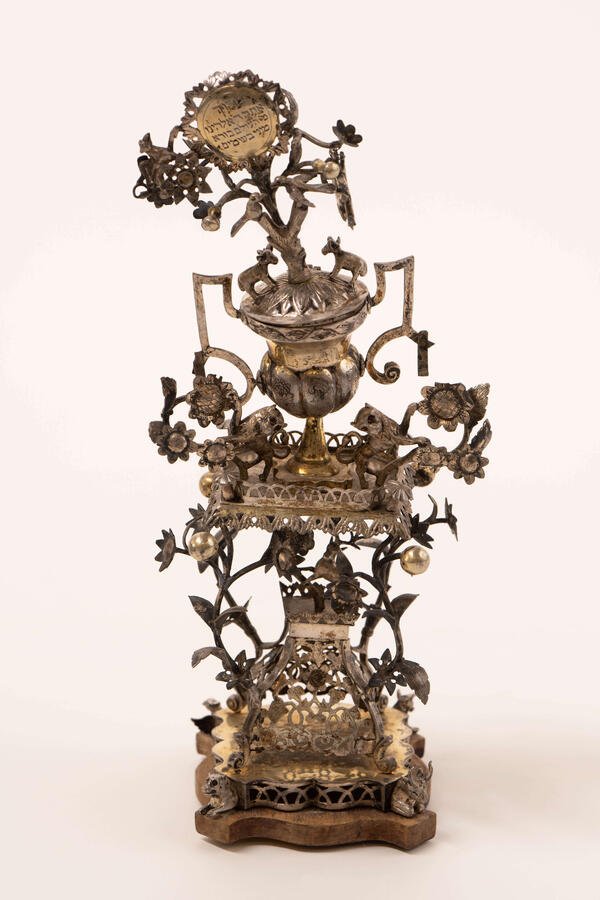
Silver vessels for spices are among the favorite products of Jewish artisans. Herbal, floral, and interior motifs were very popular for the design of besamim. The three-tiered besamim with a rich baroque vase in the center looks exquisite and solemn. The composition is completed by a plant with small flowers. The plant looks like a sunflower. On the smooth surface of the flower is an engraved thanksgiving text in Hebrew. At the bottom, there is a pair of small animal figures.
“Havdalah” literally translates as “separation”: this ritual concludes the Sabbath day and sets the Jew up for the work week. It is performed on Saturday evening, an hour after sunset, because, in Judaism, days do not change at midnight, but at sunset. Women light candles because the commandment says, “Remember the Sabbath day to keep it holy.” And men recite the blessing over a goblet of wine.
This prayer includes the following words:
“You have given us the ability to comprehend Your Torah and taught us to obey the laws established according to Your will. And You, Most High, have separated the holy from the mundane, light from darkness, Israel from the nations, the seventh day from the six work days.”
All the prohibitions of the Sabbath day, and there are 39 of them, are valid as long as this text is pronounced. To soften the bitterness of separation with the Sabbath, pleasant incense is used during the Havdalah. The box of aromatic spices is called “hodesh” or “besamim”. Jewish law does not specify what spices must be in it, one can choose them according to one’s taste. Inhaling the aroma, the whole family undergoes a ritual of purification. After the ritual, it is customary to extinguish the candle and begin the meal in honor of the separation with Shabbat Queen.
Silver vessels for spices are among the favorite products of Jewish artisans. Herbal, floral, and interior motifs were very popular for the design of besamim. The three-tiered besamim with a rich baroque vase in the center looks exquisite and solemn. The composition is completed by a plant with small flowers. The plant looks like a sunflower. On the smooth surface of the flower is an engraved thanksgiving text in Hebrew. At the bottom, there is a pair of small animal figures.