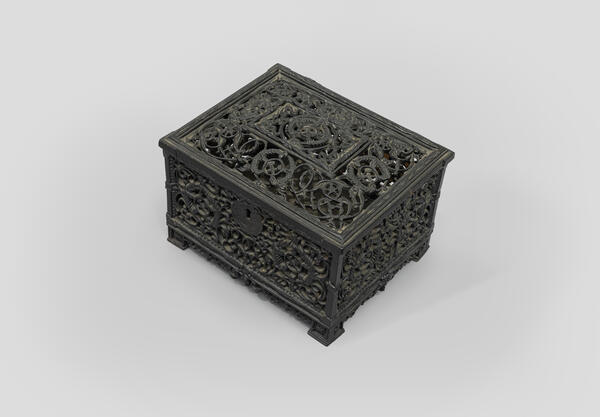
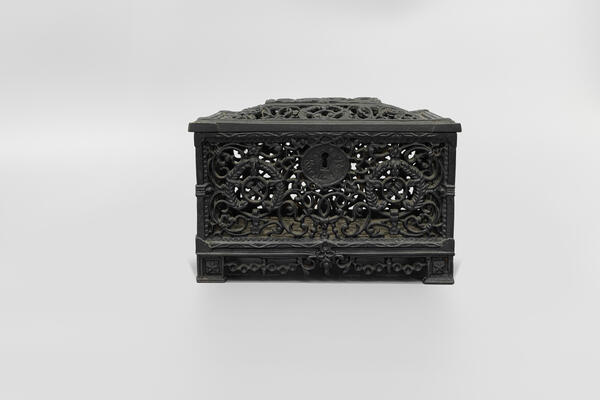
Kasli casting originated in 1747. Yakov Rodionovich Korobkov, a merchant from Tula, founded a factory that specialized in producing iron and cast iron in the Southern Urals. He chose this location because of the large reserves of metal and unique molding sand in the region. There was also enough wood for making charcoal.
Four years later, the factory was purchased by the industrialist Nikita Nikitich Demidov. In the late 1750s, the plant also started producing copper and passed into the ownership of one of Nikita Demidov’s sons who had the same name. In 1805, Peter Grigoryevich Demidov took over the Kasli Foundry. Several years later, it was sold to the first-guild merchant Lev Ivanovich Rastorguyev for 700,000 rubles.
The company began to employ artists, chasers, and other professionals. Thanks to the skilled management, it quickly gained international recognition, and the number of cast iron products increased several times. In the 1820s, Grigory Fedotovich Zotov became the manager. It was this Ural craftsman who introduced German techniques into Russian manufacturing. This contributed to the high quality of artistic casting. The range of products expanded quickly.
A milestone in the history of the Kasli Foundry was the Paris Exposition of 1900 where the participants showcased their achievements in applied art. Foundry craftsmen created a cast-iron pavilion in the Byzantine style, designed by the Russian architect and artist Yevgeny Yevgenyevich Baumgarten. The pavilion was hailed as a masterpiece of casting and received the highest award at the exhibition.
After the Russian Revolution of 1917, the Kasli Foundry faced several challenges. The equipment was outdated, and the workshops were empty. It was only in the 1930s that artistic casting was resumed. However, during the Great Patriotic War, the foundry switched to wartime production, supplying shells and mines to the army. After the war, it resumed artistic casting. In the 1950s, the founder and craftsmen Semyon Mikhailovich Gilyov became a prominent figure in the industry. He was known for his work on jewelry boxes and other patterns. In 1957, he led the restoration of the 1900 cast-iron pavilion, which is now kept in the Yekaterinburg Museum of Fine Arts.