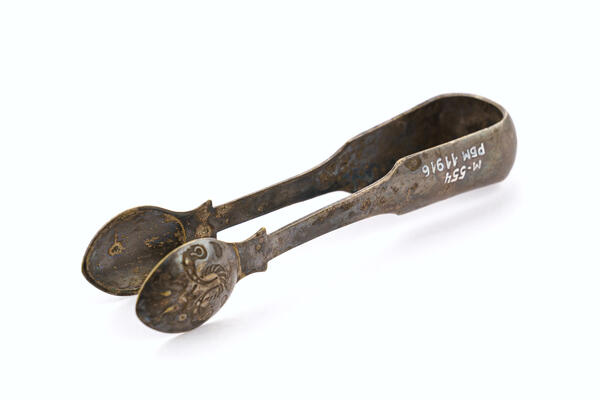
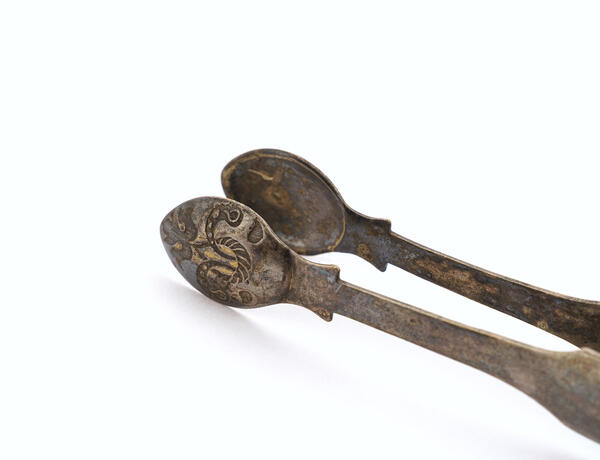
Sugar tongs began to be used in the 18th century in England, when sweet tea became popular. Their use highlighted the importance of sugar in society in the 18th and 19th centuries, when it was seen as a “symbolic ingredient of the Enlightenment era”. This piece of tea equipment was used to transfer sugar from a bowl to the cup. The popularity of sugar tongs peaked in the 19th century.
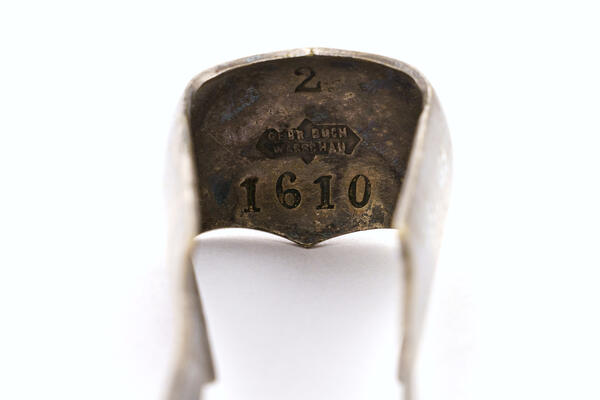
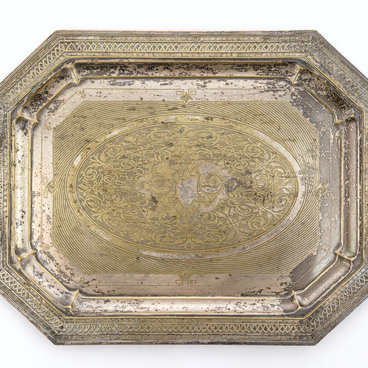
In Russia, at the turn of the 20th century, tongs manufactured at the “Brothers Buch” factory in Warsaw were quite popular. This factory produced silver-plated cutlery.
Until the early 1850s in Russia, there was only one method of silvering: a thin layer of silver was soldered onto a copper base and then rolled. Products manufactured using this method were called silver-plated.
In the early 1850s, a groundbreaking method of electroplating silver onto a metal base was invented. It included a high-voltage electrolysis process. This technique offers a major advantage in that it allows for the application of extremely thin layers of silver (or gold) onto metal surfaces, leading to more economical use of precious metals and a significant reduction in the cost of the finished product. Furthermore, unlike other methods, this process does not require copper to serve as the sole substrate, as alloys such as brass and nickel silver can also be used. By the late 19th century, electroplating had largely replaced traditional silver-plating.
In addition to tongs, large and durable sugar nips were also used. These were needed to remove pieces of sugar from sugarloaf. Sugar in the 19th century was unrefined, yellowish in color and was sold in large compressed blocks. The owner of the house would chip sugar off a large loaf. People had sugar with their tea. Crushed sugar was served in a sugar bowl. There were also nips designed for both cutting and transferring sugar.
In Russia and later in the Soviet Union, sugar tongs were manufactured until the 1960s, as solid lump sugar was still in use.