With the expansion of railways in the 19th century, a distinct professional community emerged in the Russian Empire — one defined not only by uniforms but also by specialized gear that signaled affiliation with the railway department. Among its members, the locomotive engineer (or machinist) held a position of high status and responsibility.
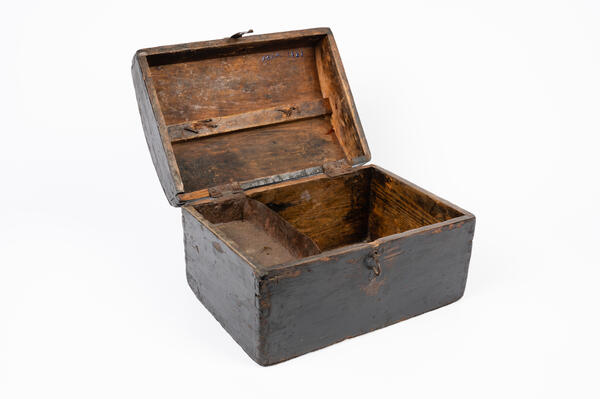
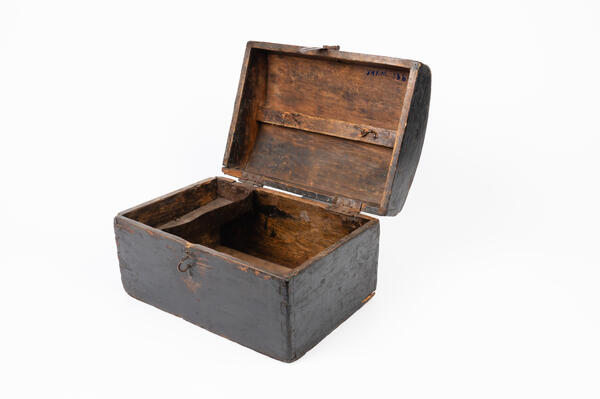
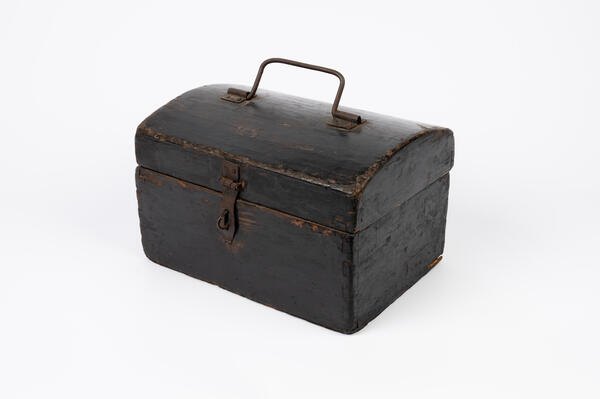
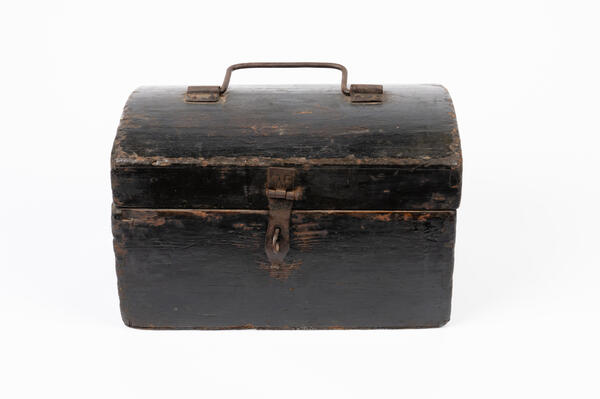
A true symbol of this profession — and a constant companion on every journey — was not just a travel chest, but a professional tool kit affectionately nicknamed the “barrel organ” or “hurdy-gurdy”. Engineers packed everything essential for long trips into this sturdy case: spare clothing, food, tools, personal items, and official documents. Such a chest was typically commissioned only after promotion — at minimum to assistant engineer or locomotive engineer. If a man was seen walking down the street carrying a tin or wooden chest reinforced with iron bands, locals immediately recognized him as a driver — and many would respectfully tip their hats in acknowledgment of his vital role.
The nicknames “barrel organ” and “hurdy-gurdy” came from the sound the chest made: tools and metal parts inside would rattle with every step, and aboard the moving train, their rhythmic clinking echoed at each rail joint — reminiscent of the wheezing, repetitive melody of the musical instrument.
For safety reasons — especially since the chest was kept in the locomotive cab near the blazing firebox — these cases were usually made of light metal or wood sheathed in tin or iron. Ventilation holes were often drilled into the sides, and an interior pocket held paperwork and logbooks. During the Great Patriotic War, it became common to adorn the case with a red star, a proud emblem of patriotism and service to the military rail network.
Today, the traditional driver’s chest is no longer part of a railway worker’s daily gear. After World War II, in the Soviet Union, leather briefcases replaced wooden chests, and modern Russian Railways (RZD) now presents top employees with branded bags as honors. Yet the terms “barrel organ” and “hurdy-gurdy” remain deeply rooted in railway lingo and are still used to refer to simple cases that engineers carry.
Now, the faithful companion of locomotive engineers can be found only in museums. The Unecha Local Lore Museum preserves one such rare example: a fully wooden chest, painted black, once owned by an assistant engineer at Unecha Station. He personally donated this cherished artifact to the museum — a quiet tribute to the legacy of those who kept the rails alive.