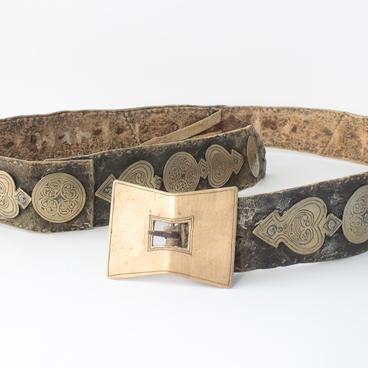
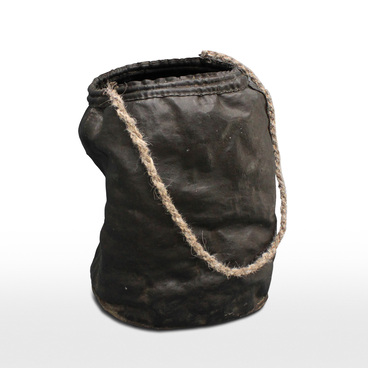
The extensive silver collection of the Museum of History and Ethnography named after the local historian Andrey Savvin and represents a particularly valuable part of the collection, which features a diverse range of traditional types of jewelry made by Sakha artisans.
The museum staff have been compiling this exhibition for many years. It introduces the forgotten names of Yakut masters and the history of folk art. The collection includes a large number of women’s jewelry, which traditionally was an integral part of the national costume.
Earrings are one of the obligatory decorative amulets of Yakut women, which accompanied them throughout their lives. Earrings were attributed the power of protective charms. According to Yakut beliefs, ears are a special, sacred part of the body, the receptacle of the human soul.
During the rite “Ajyysyt tardar” when a woman asked for a child, the white shaman “brought” a boy through her right ear and a girl through her left ear.
The Vilyui Yakuts believed that the “buor kut” or “soul of the earth” was in the ears, from where it sometimes came out in the evenings, and also showed itself to a man before his imminent death.
The Dolgan women had a very ancient belief. The women believed that without ear piercing after their death the evil spirit abaasy could make spoons out of them.
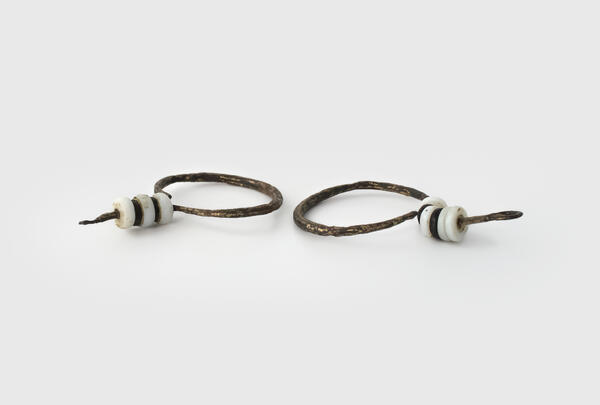
One of the ancient artifacts in the collection is the copper wire earrings. They are bent into a ring and decorated with black and white porcelain beads. There are five beads on each of the earrings. There is a small hook at the end of each ring — apparently a flat coin-shaped pendant was previously attached to it.
These earrings were worn several at a time, from
one to three on each side, so there were several holes in each lobe. The
exhibit was found in 1986 in the area “At Uulappyt”, not far from the village
of Dirin. The earrings were connected with each other by a deerskin cord and
were placed separately from the remains. This type of jewelry was in use until
the end of the 18th century, when it was replaced by metal pendants of other
forms. As researchers note, earrings in the form of a question mark were mainly
common in the Turkic-speaking areas.