Font
Color
Graphics
Изображение точки

To see AR mode in action:

1. Install ARTEFACT app for iOS or Android;

2. Find the exhibition «The Ethnography of Transbaikal»

3. Push the «Augmented reality» button and point your phone's camera at the exhibit;

Скрыть точки интересаПоказать точки интереса
Показать в высоком качестве

Sava Lukich, Golovin, Treaty, Guns

0
Open in app
#1
Sava Lukich, Golovin, Treaty, Guns
#2
Sava Lukich Vladislavich-Raguzinsky
#3
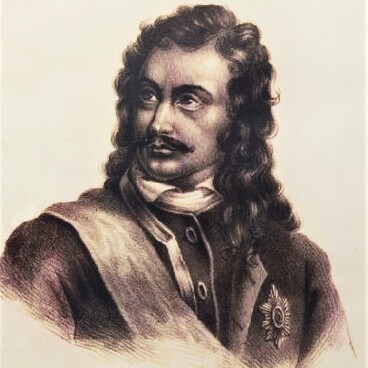
The museum houses a photocopy of a portrait of Sava Vladislavich-Raguzinsky. In the 1720s, he served as a Russian ambassador to the Qing Empire, which was located in present-day China. Furthermore, he founded the Transbaikal town of Troitskosavsk, nowadays called Kyakhta.

Sava Vladislavich came from a noble family. He was born in 1699 in Ragusa (Dubrovnik, Croatia) in Serbian Herzegovina, which was part of the Ottoman Empire at that time. He was given an additional surname which indicated his place of birth, and became Vladislavich-Raguzinsky.

As a young man, the future diplomat was involved in trade in France, Spain, and Italy. His successful work helped him to get to Constantinople, where he was noticed by Russian ambassadors Prince Vasily Golitsyn and Yemelyan Ukraintsev.

Sava Vladislavich-Raguzinsky ran their errands and eventually became an unofficial employee of the Russian embassy. Among other things, he managed to obtain the texts of treaties of Ottoman, France, Venice, England and Austria. These documents helped the Russian side to prepare for the conclusion of a ceasefire in the Russo-Turkish War of 1686–1700.

In 1703, Sava Vladislavich-Raguzinsky visited Moscow for the first time, where he was introduced to Peter I. The emperor liked the guest and after the visit Peter granted him the right to open his shops in any Russian city for the next ten years. In the following years the term was prolonged several times.

Sava Vladislavich-Raguzinsky befriended the emperor and became one of his trustees. He was an advisor to Peter I on the Balkan issues, the diplomat’s native region, and accompanied him during the Pruth River campaign against the Ottoman Empire in 1711.

In 1715, Vladislavich-Raguzinsky was appointed Russian ambassador to the Italian principalities. Peter trusted him a lot and authorized him to negotiate with the Pope. In 1722, by an emperor’s order the diplomat translated the work of the Dalmatian abbot Mavro Orbini, “The Realm of the Slavs” into Russian.

In 1722, when Sava Vladislavich-Raguzinsky came back from Italy, Peter the Great asked him to head the Russian embassy in China. The former merchant was considered perfect for this position: there were many unresolved border and trade issues between Russia and China at that time, with which the ambassador had to deal.

Vladislavich-Raguzinsky left for China only in 1725, after the emperor’s death. Over the years, he negotiated several agreements and managed to solve many trade issues.
#4
Полное наименование: Sava Lukich Vladislavich-Raguzinsky, Art copy Bukhogolova I.V. from lithography after P. Andreev’s drawing
Размер: 30×20 cm
Дата: 2020
Место: Chita
Техника: paper, typographic printing
Коллекция: Ethnography
#5
Fyodor Alexeyevich Golovin
#7
Count Fyodor Golovin was a trustee of Peter the Great and the head of the Foreign Affairs Department of the Russian Empire. He was responsible for establishing relations with neighboring countries, including China, and for solving border issues in Transbaikalia. A photocopy of his portrait is displayed at the Transbaikal Regional Museum.

Fyodor Golovin was born in 1650 into a boyar family. In his youth he received an excellent education and fluently spoke English and Latin. Golovin started his service as a pantler — an official who was responsible for court dinners and royal banquets.

In 1686, Golovin was sent to the Amur River, “for treaties and to calm the quarrels with the Chinese emperor”. At that time military clashes often occurred on the Russian-Chinese border. Irkutsk governors reported to the Russian government that the situation in the region was tense, and the Mongol khans threatened “to come to your, our great sovereign, Selenginsky ostrog, and the good Selenginsky people who pay yasak in the Selenginsky district live in great fear…” Golovin had to resolve the conflict.

In 1689, he signed the Treaty of Nerchinsk with the Chinese side. Russia secured the Siberian lands and a state border along the Argun River was established. The document gave start to the Russian-Chinese relations.

On the way back Golovin ordered to build the Transbaikal towns of Nerchinsk and Udinsk in place of border fortresses, and strengthen them with additional artillery. For the successful mission in the east of the country, Fyodor Golovin was granted the position of Governor-General of Siberia.

From 1699 until his death, Golovin was the second person in the state after the Emperor Peter the Great. He was in charge of foreign policy of the country and defended Russian interests in international affairs, especially in the diplomatic war with Sweden.

During his leadership, Russia opened several permanent embassies abroad. Fyodor Golovin managed the Diplomatic, Military Sea and Yamsky Prikazi (departments), and headed the Armory, the Golden and Silver Chambers. He organized the work of Nerchinsk silver mines and increased the production of silver coins in the country.
#6
Полное наименование: Fyodor Alexeyevich Golovin, Art copy Bukhogolova I.V. from a portrait of an unknown author
Размер: 30×20 cm
Дата: 2020
Место: Chita
Техника: paper, typographic printing
Коллекция: Ethnography
#8
The Treaty of Kyakhta
#10
The Transbaikal Regional Museum of Local Lore houses a photocopy of the “Treaty of Kyakhta” concluded in 1727 between the Russian Empire and the Qing Empire, modern China. It was signed on the bank of Kyakhta river on October 21st (November 1st by the New Style).

The document confirmed the terms of the treaties of Nerchinsk (1689) and Burinsk (1727), which regulated political, economic and border issues between the two countries.

The new treaty had 11 articles. It legally established that the Russian Spiritual Mission in Beijing would support and develop the Russian-Chinese relations. In fact, it was considered an unofficial diplomatic mission of Russia in China. The document also provided an opportunity to open an Orthodox church at the Russian Embassy Court.

The Treaty of Kyakhta determined the rules of diplomatic correspondence between the Russian Senate and the Chinese Tribunal of Foreign Relations (The Lifan Yuan). It also noted how to officially address the emperors of both countries.

In addition, the representatives of Russia and the Qing Empire agreed to stop all legal cases against border defectors, which had accumulated by 1727, and in the future to mutually extradite them without delay or investigation. Any conflicts on the border were to be resolved by the border administration with representatives from both sides.

The Treaty also reopened the Russian-Chinese caravan trade and established its rules. The number of personnel of a Russian caravan — a group of merchants and traders — could not exceed 200 people. Russia could send a caravan to Beijing every three years. In the border settlements — Nerchinsk, Tsurukaitu and on the bank of the Kyakhta River — a duty-free sale of goods was organized.

The Treaty of Kyakhta defined Russia’s relations with China for the next century. In the second half of the 19th century the countries concluded new pacts — the Treaty of Aigun in 1858, the Treaty of Tientsin in 1858 and the Treaty of Peking in 1860. They incorporated some terms from the 1727 document.
#9
Полное наименование: The Treaty of Kyakhta, reprint from the publication Collection of treaties between Russia and China. 1689-1881 [ed. D. Peshchurov]. — St. Petersburg: publication of the Ministry of Foreign Affairs, 1889.
Коллекция: Ethnography
Техника: paper, typographic printing

#11
Matchlock gun
#13
The Transbaikal Regional Museum of Local Lore houses a matchlock gun made at the end of the 18th century. There is a special hole on its body to which a burning rod was brought in order to ignite the powder and make a shot.

Another type of gun was called a flintlock gun, which had a piece of flint inside. When the trigger was pulled, the flint struck a steel plate and the sparks ignited the gunpowder.

In the European part of Russia, matchlock muskets were most common. The first Russian explorers of Siberia used both types. It was not always possible to find the match cord in cold and damp climates, so the locals and the military installed flintlock mechanisms into the matchlock guns which were sent to them.

In 1658, the Siberian Cossacks took part in the battle with Manchurian and Korean armies. General Shin Ryu in his diary described the captured trophies — Russian weapons — and marveled at the flintlock mechanisms in the rifles:
#14
We captured 300–400 guns from the enemy… the squad leader sent me one gun. The enemy guns, unlike ours, do not use matchlock. There is a frizzen inside them and a short metal hammer on the outside. Between them is a piece of flint. When it comes down, the metal and the stone hit each other and produce a spark. That is amazing.
#15
The rifles were sent to the first Russian explorers from the central regions of the country. Towns and ostrogs (small fortresses) tried to always have spare ones. In case of shortage, voivodes (local military governors) had to “write about it to the tsar in Moscow… and from Moscow they would send them arquebuses, as many as possible.”

In practice, however, it was not possible to build up stocks: almost all guns were distributed to servicemen, and the ones left in storage were usually in poor condition. In 1682, the Nerchinsk voivode Fyodor Voyeikov wrote to Moscow that “in the town of Nerchinsk… all guns are rusty, and some other weapons are damaged and broken. These guns are useless for shooting … and in Albazinsk… the arquebuses are bad and unreliable. They blow up during shooting and hurt people”. In addition, most Siberian towns and islands did not have gunsmiths who could repair old and broken guns.

Each serviceman was financially responsible for his gun. Thus, they always handled their weapons with extra care.
#12
Полное наименование: Matchlock gun
Техника: metal, casting, forging, woodcarving
Коллекция: Ethnography
Размер: 219×20 cm
Дата создания: the end of the 18th century
Место создания: China
#16
Flintlock
#17
A flintlock was a type of firearm with a piece of flint inside. When the trigger was pulled, the mechanism struck a wheel or a frizzen (a special steel plate), creating a spark, which ignited the gunpowder.

In the 16th–19th centuries, flintlocks were used all over the world. The Russians used guns with a caliber of 17.5 to 21.5 millimeters, weighing about 4 or 5 kilograms. Their shooting range was from 40 to 200 meters.

Another type was called a matchlock gun. There was a touch hole on its body. A burning rod was brought to it and the charge ignited. This method was less convenient: one had to have the match constantly lit and always have matches at hand.

The first explorers of Eastern Siberia used several varieties of firearms: arquebuses, muskets, rifles, as well as carbines, samopal guns (special guns used in Russia in the 17th century) and pistols. They had different mechanisms: both flintlocks and matchlocks. The weapons were brought from Moscow. The government sent large amounts to Tobolsk and Yeniseysk, from where they were distributed to other towns and ostrogs (small fortresses).

A musket is a large-caliber rifle — smoothbore, long and heavy. Its main feature was the buttstock, similar to the modern one, with a thumb rest. As a rule, muskets were brought to Russia from abroad. Because of the heavy body, such weapons could only be fired from a rest: from a log, a hillock or a fence.

Any other gun that was not a musket was called an arquebus. It was lighter and more often had a flintlock mechanism, for which it was not necessary to carry matches.

The pioneering explorers often moved through the taiga and crossed rivers. Thus, they needed a multipurpose weapon that could be used in field conditions and in high humidity. They installed flintlock mechanisms into matchlock muskets that were sent to them, ensuring that they worked even in wet weather.

In the early 19th century gunsmiths began to replace the flint mechanism with a caplock mechanism. Inside, it featured a primer — a soft container with a special substance that was ignited by a hammer.
#18
Полное наименование: Flintlock
Техника: metal, wood; casting, forging, carving
Коллекция: Ethnography
Дата создания: the end of the 18th century
Размер: 211×16 cm
Место создания: China
#19
read morehide
00:00
00:00
1x

Sava Lukich, Golovin, Treaty, Guns

0
Point your smartphone camera to open in the app
Share
VkontakteOdnoklassnikiTelegram
Share on my website
Copy linkCopied
Copy
Open in app
To see AR mode in action:
  1. Install ARTEFACT app for 
  2. iOS or Android;
  3. Find and download the «Paintings in Details» exhibition
  4. Push the «Augmented reality» button and point your phone's camera at the painting;
  5. Watch what happens on your phone screen whilst you flip through the pictures.
 
We use Cookies
Cookies on the Artefact Website. We use cookies to ensure that we give you the best experience on our website. If you continue without changing your settings, we'll assume that you are happy to receive all cookies on the Artefact website. However, if you would like to, you can change your cookie settings at any time.
Learn more about useHide
Content is available only in Russian

X

Нашли опечатку?...

%title%%type%