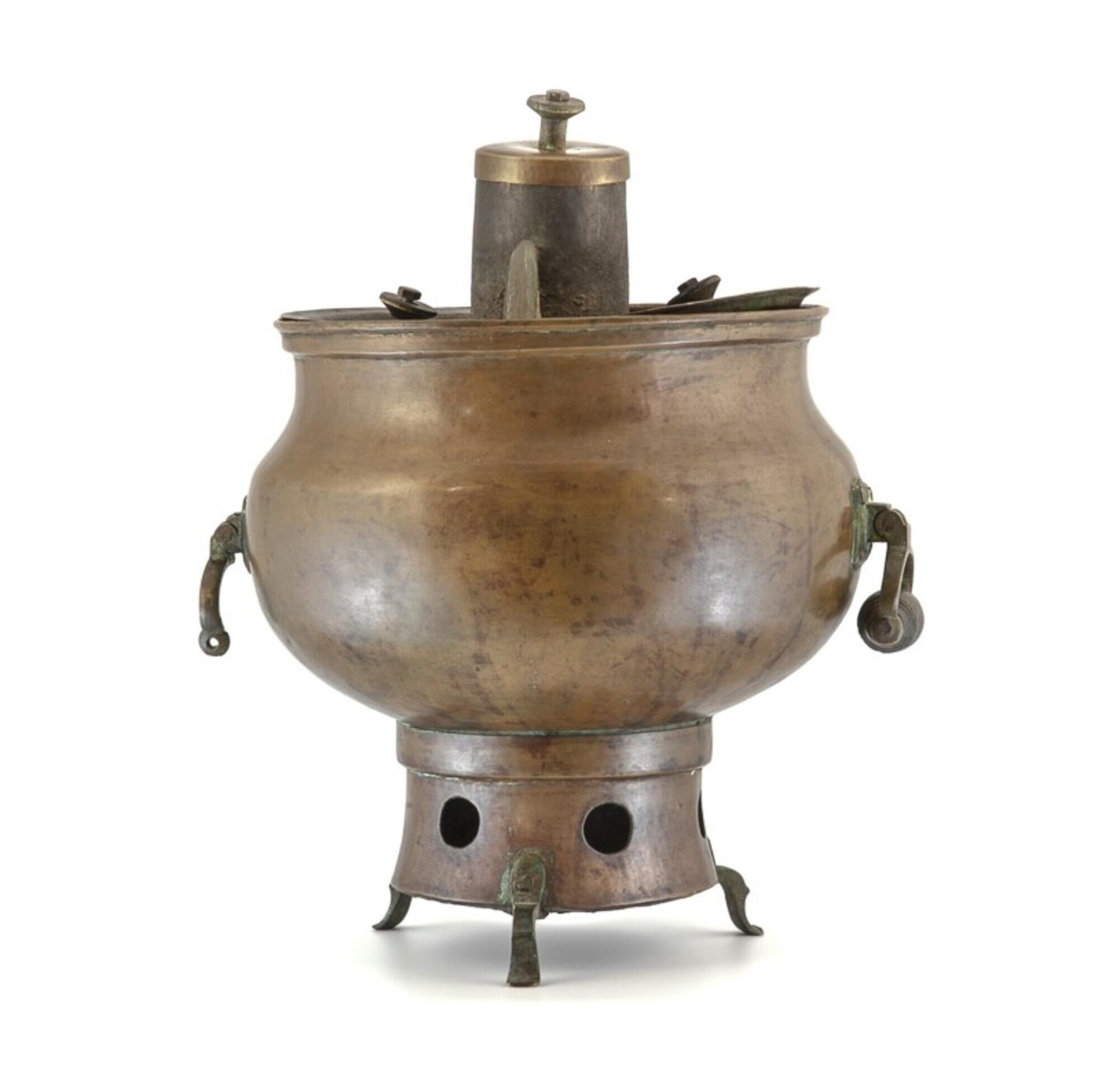


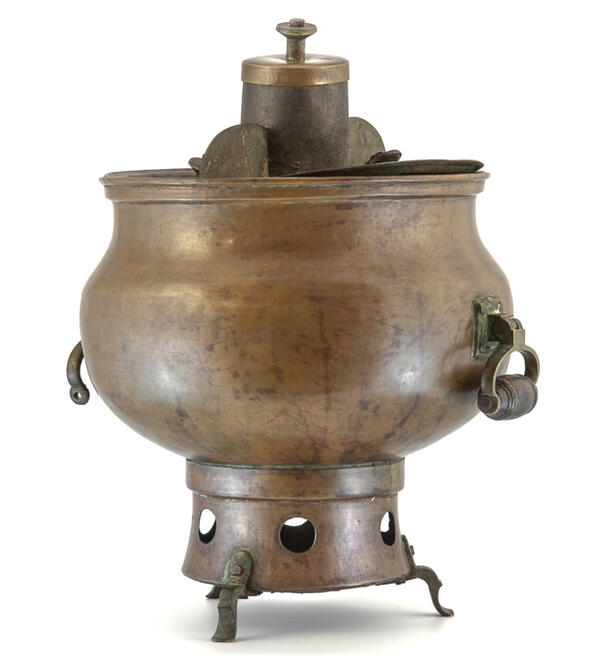
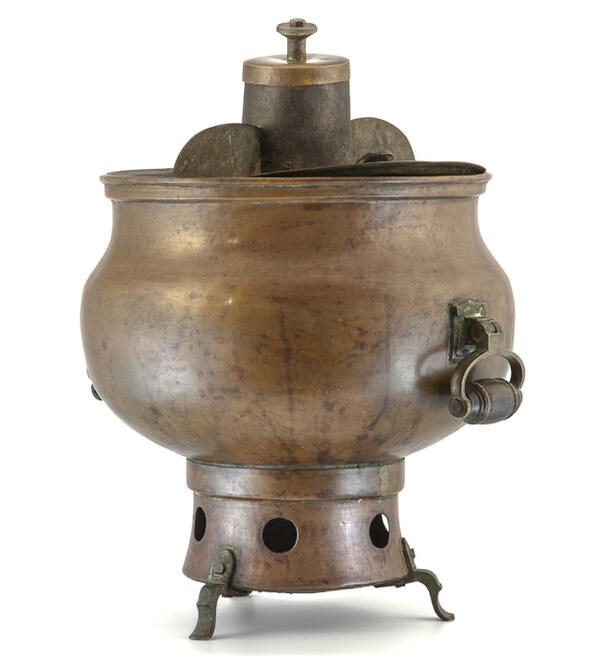
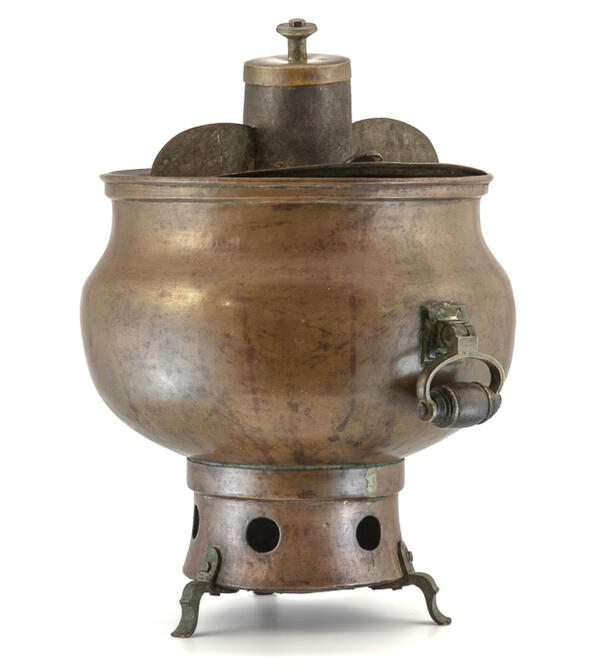
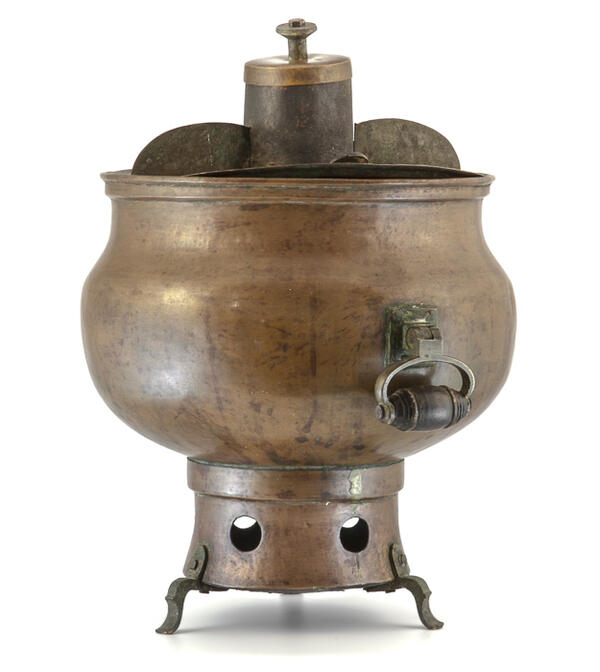
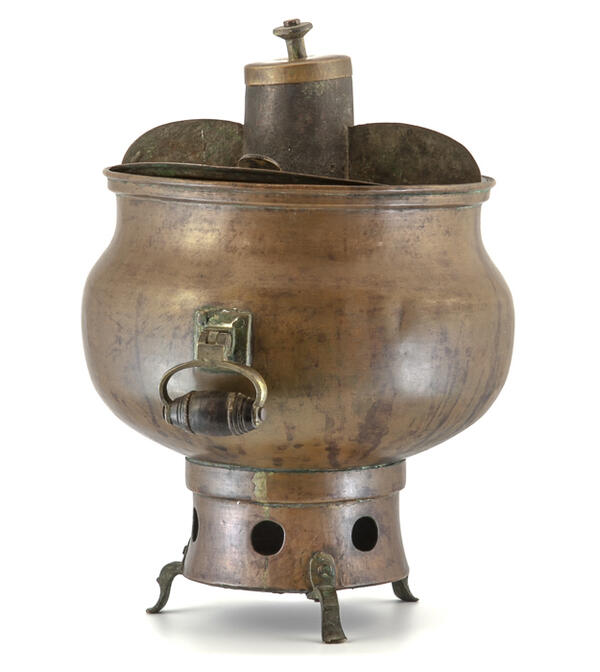
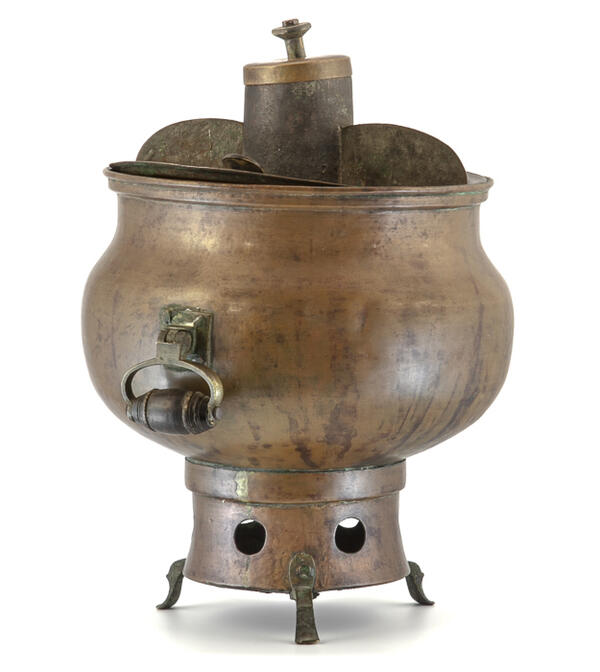
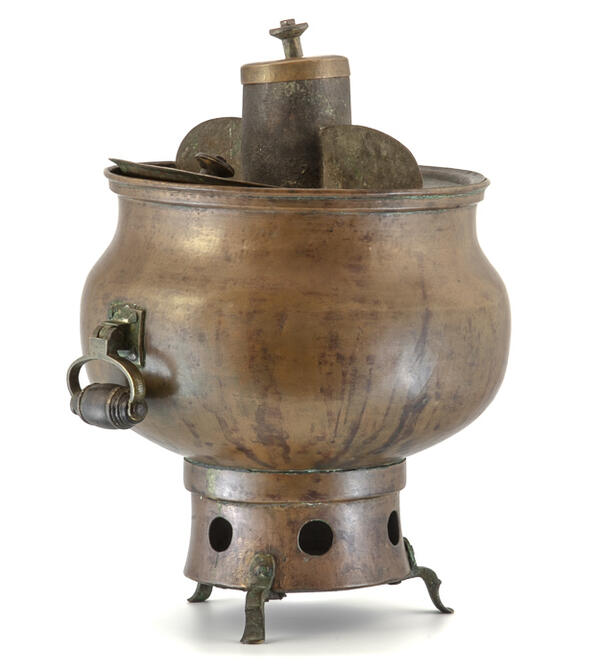
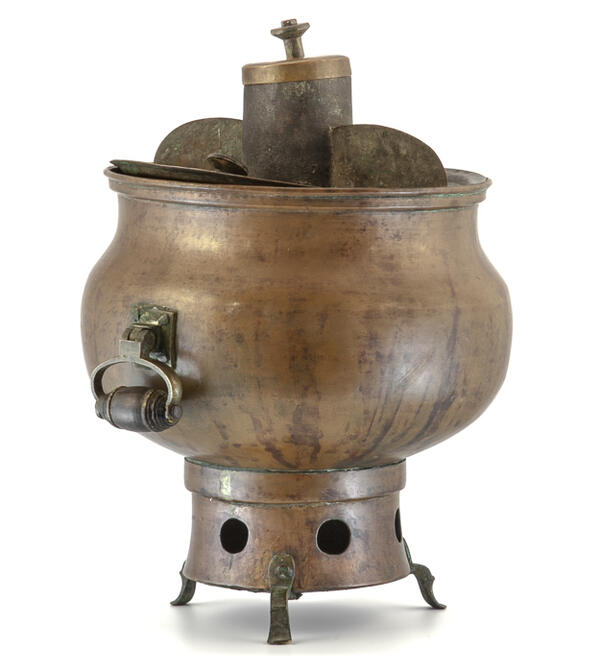
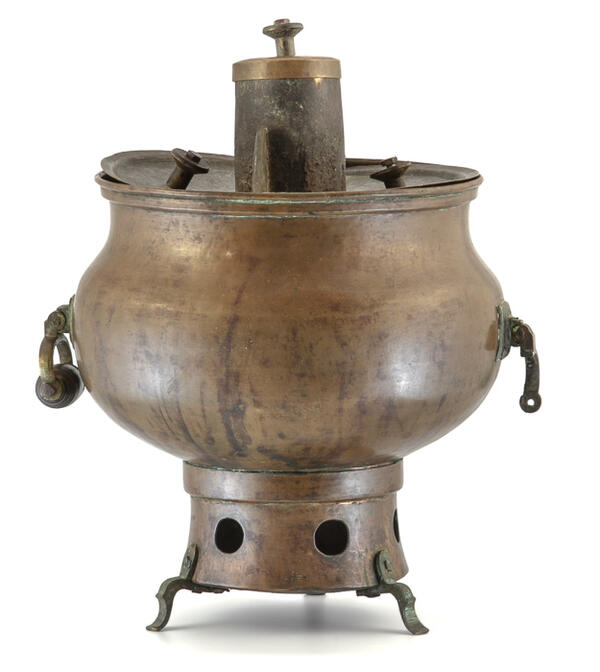
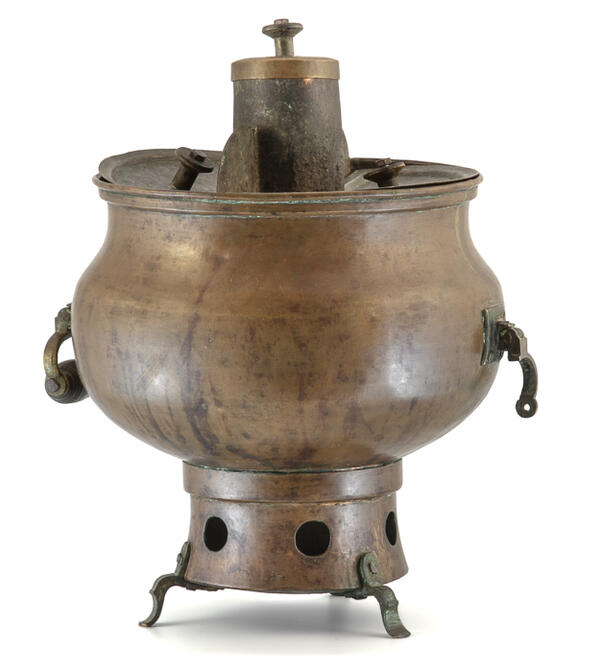
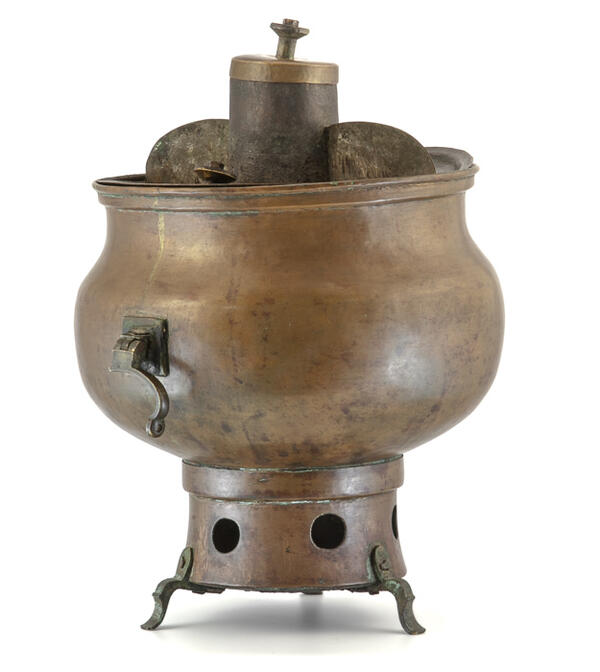
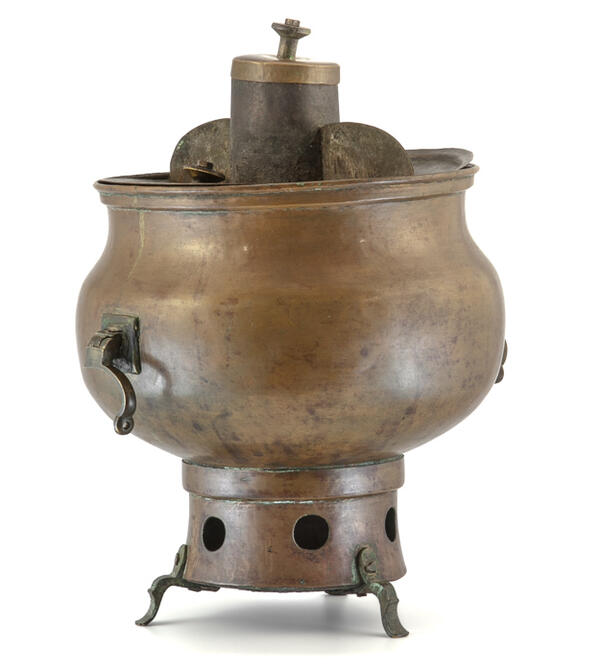
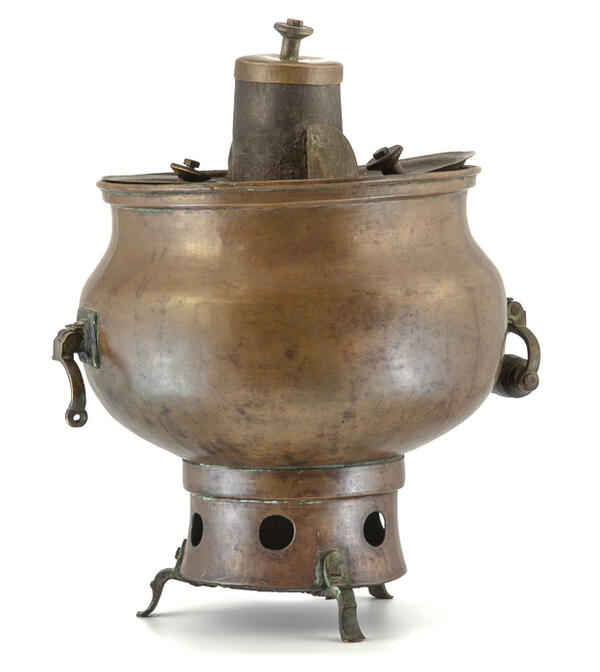
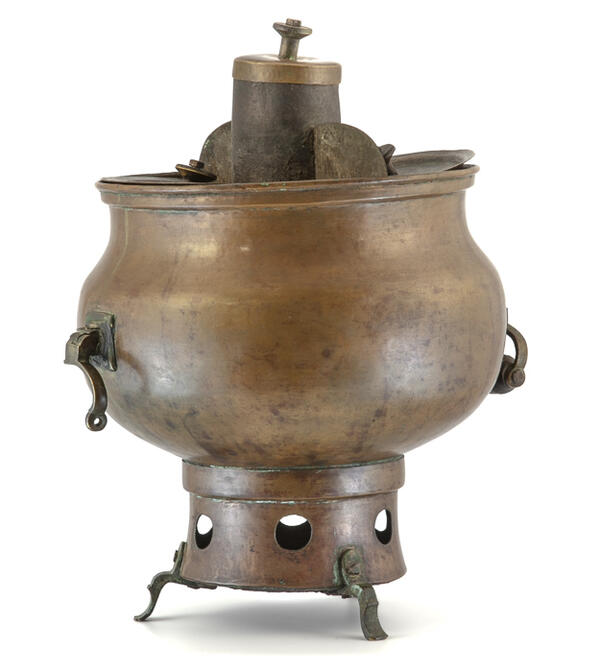
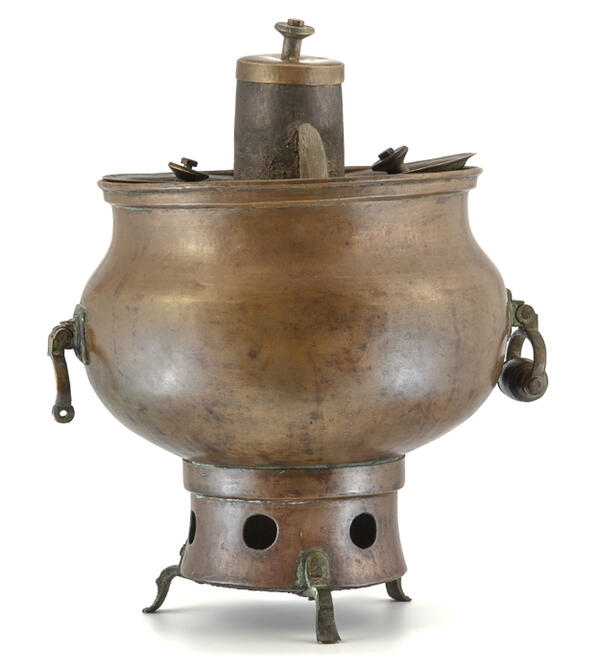
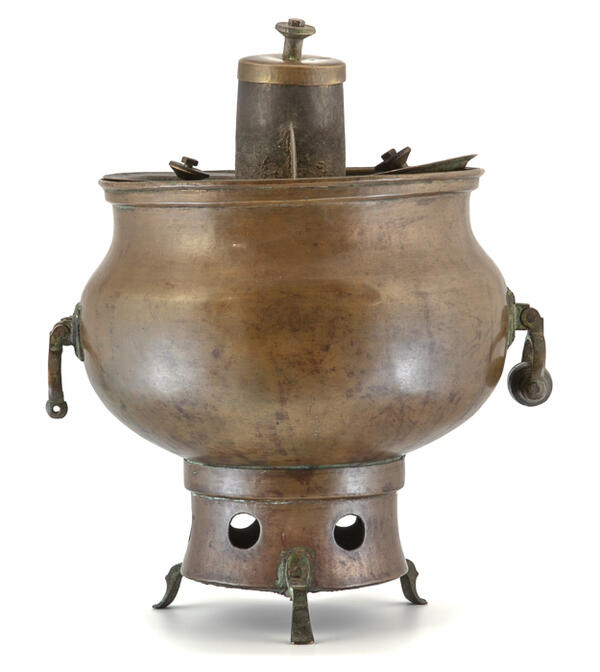
Samovar – kitchen
Creation period
The beginning of the XVIIIth century.
Dimensions
40x31,7x27,7 cm
Technique
copper
0
Open in app#1
#2
“A relative” of Russian samovar was the tea machine, that Peter the First had brought from the Netherlands. Peter the First collected achievements from other countries.
Skilled craftsmen who managed to smelt the first copper samovars, continued improving them. Nowadays, there is a lot of interesting information about various inventions for samovars.
Samovars had various sizes and volumes, shapes, design. Even the principle of heating spiral operation was various.
Later production of the most popular models of samovars was launched. The first copper smelteries producing samovars were built in Tula and beyond the Urals. It was Tula where gunmaker F. I. Lisitsyn founded the first samovar factory.
#3
Expensive samovars with nickel-plating, gold-plating and silver- plating were made to order. They were trimmed with ivory, noble metals, precious stones.
All the charcoal and wood-burning samovars regardless of their design, size, volume were kindled with small-sized wood things — shavings, brushwood, splinter woods, cones. Pine cones and spruce cones were valued especially as fuel because they imparted mild aromatic relish to water.
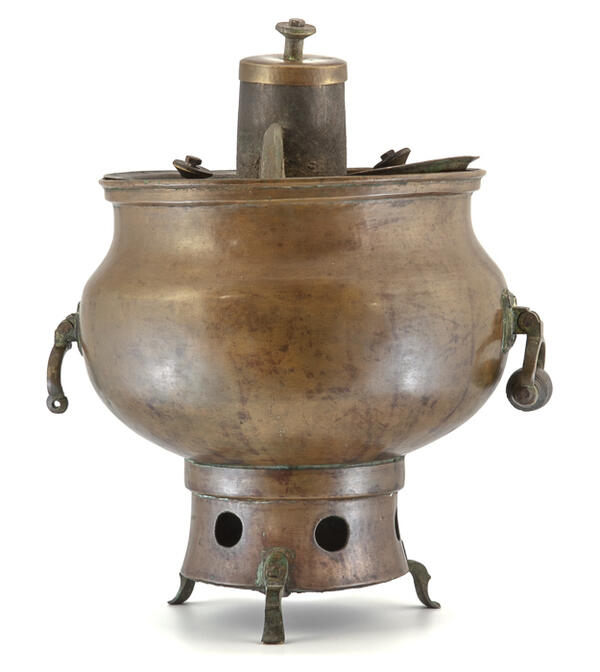
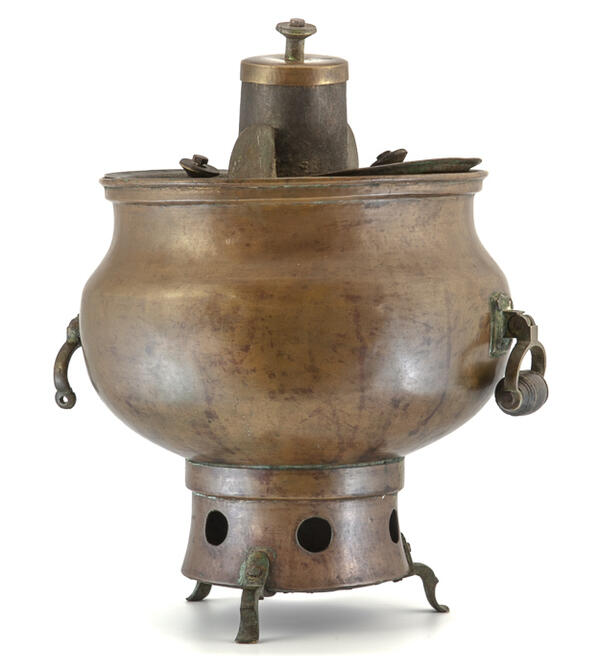
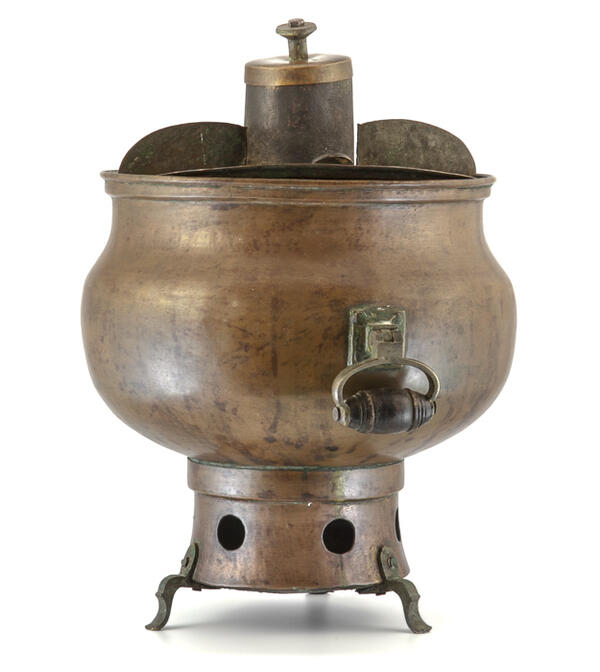
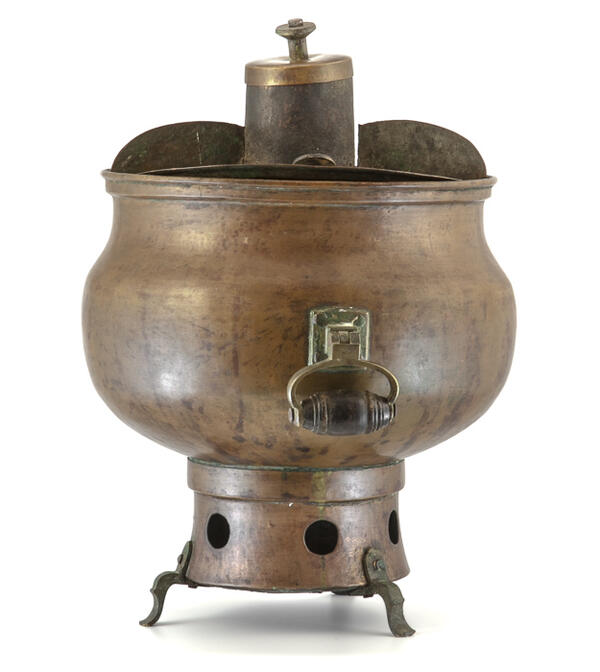
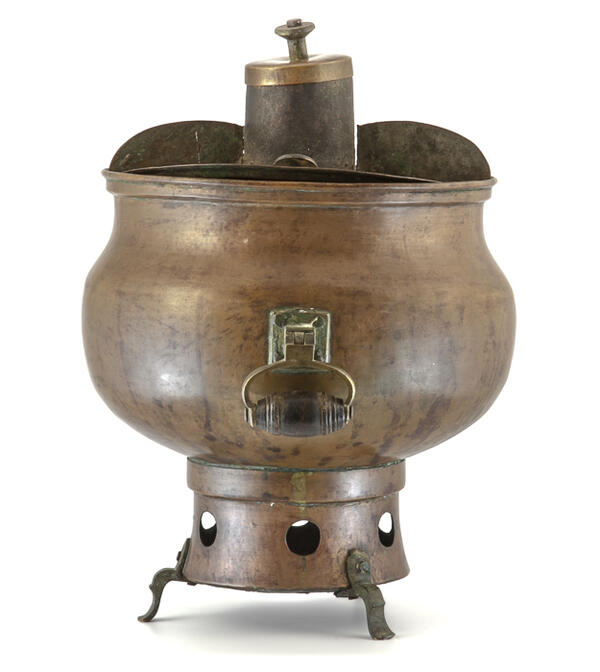
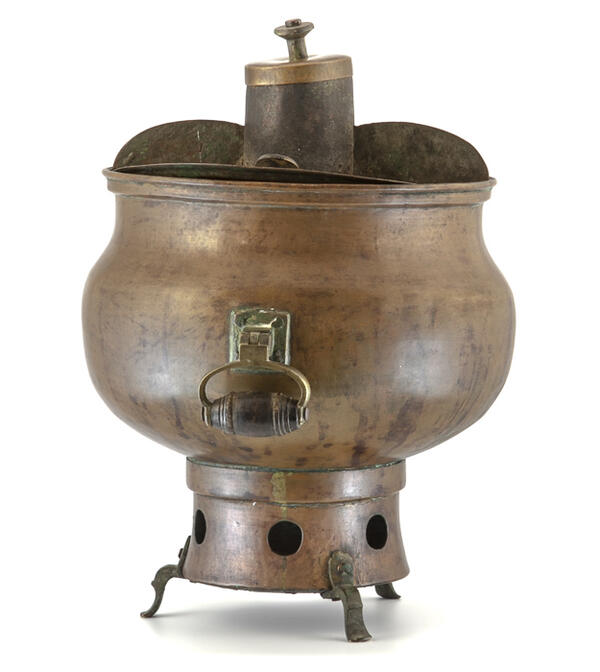
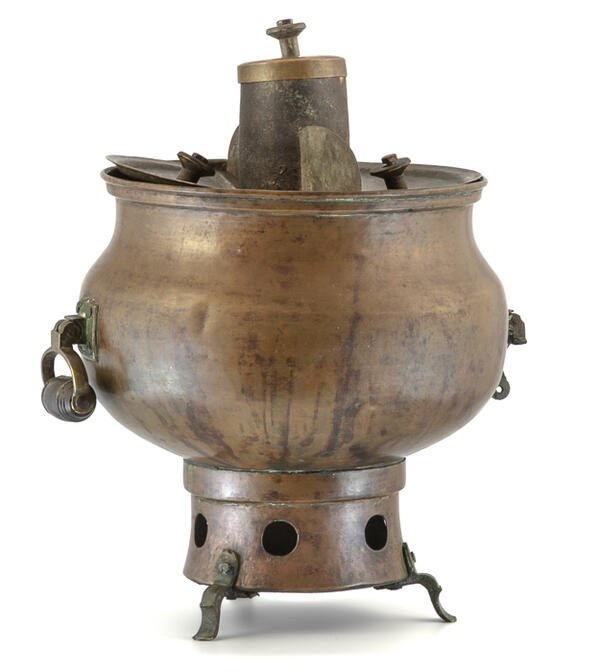
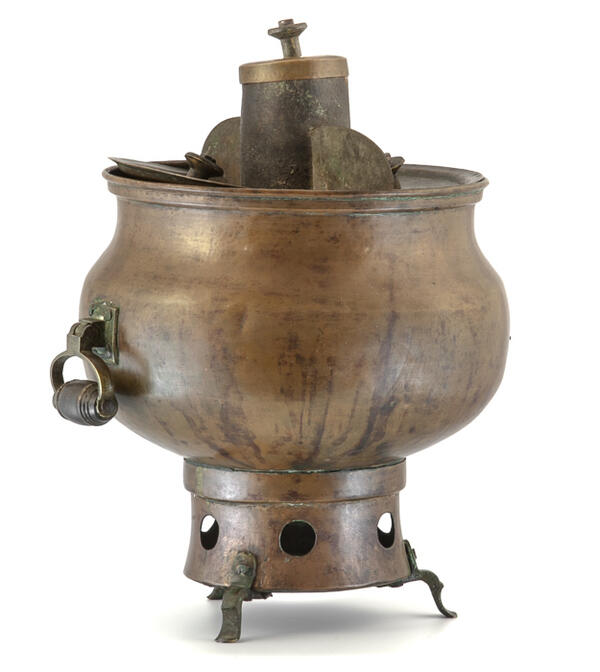
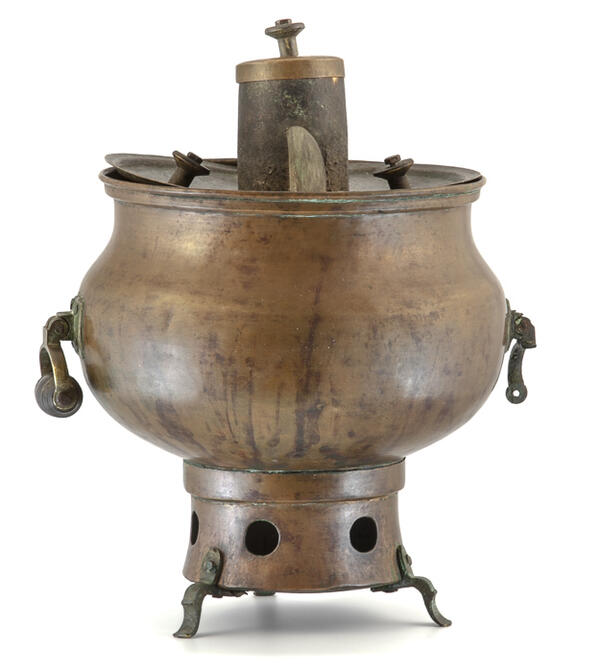
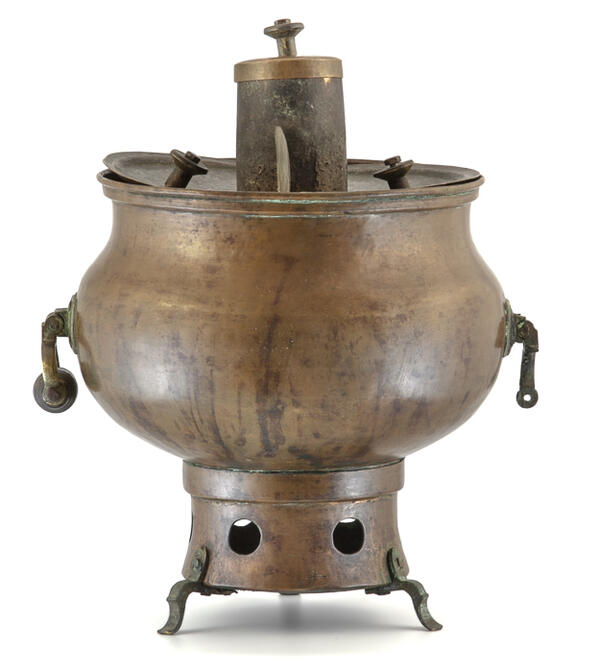
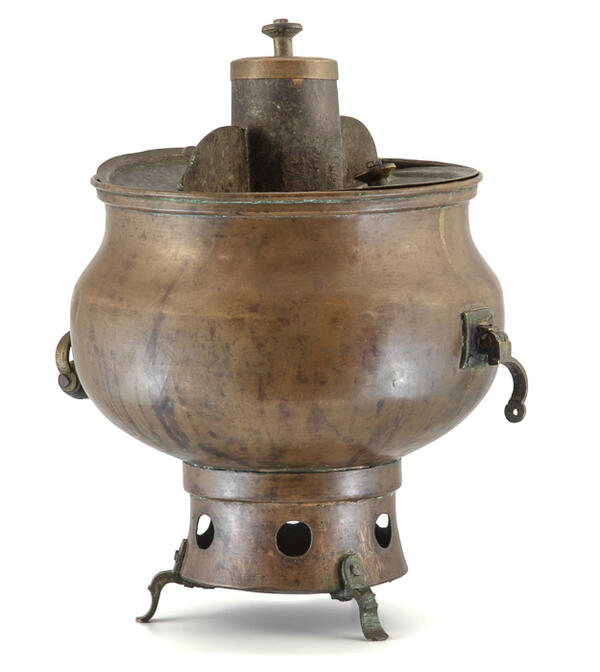
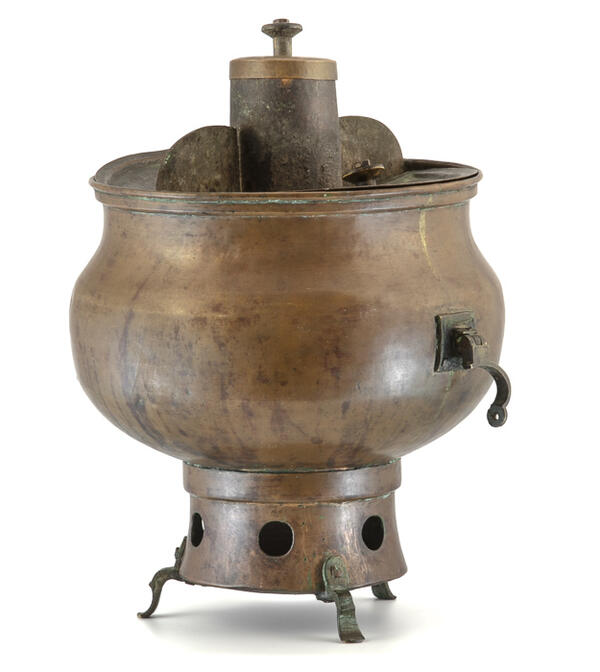
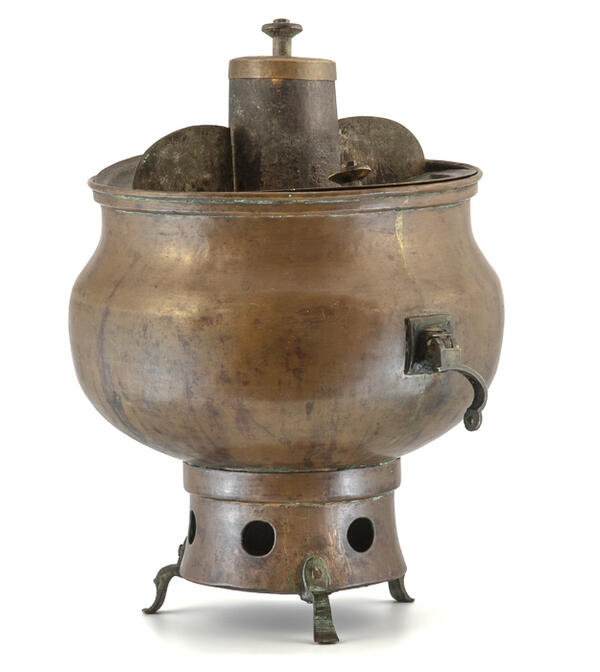
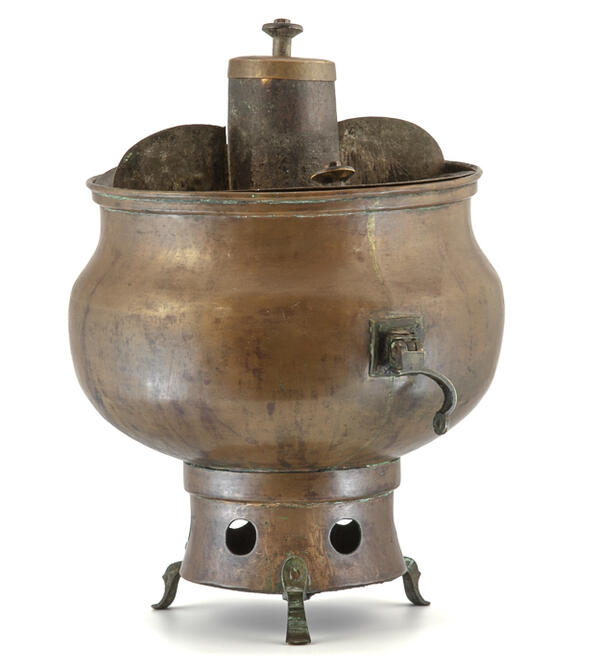
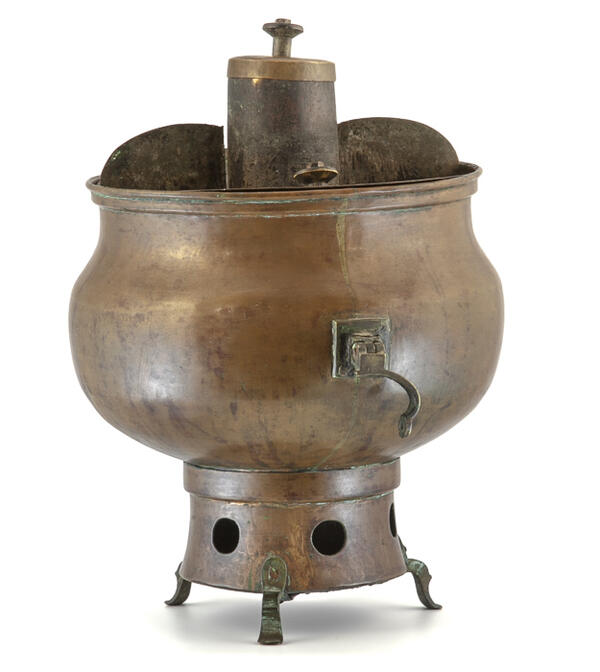
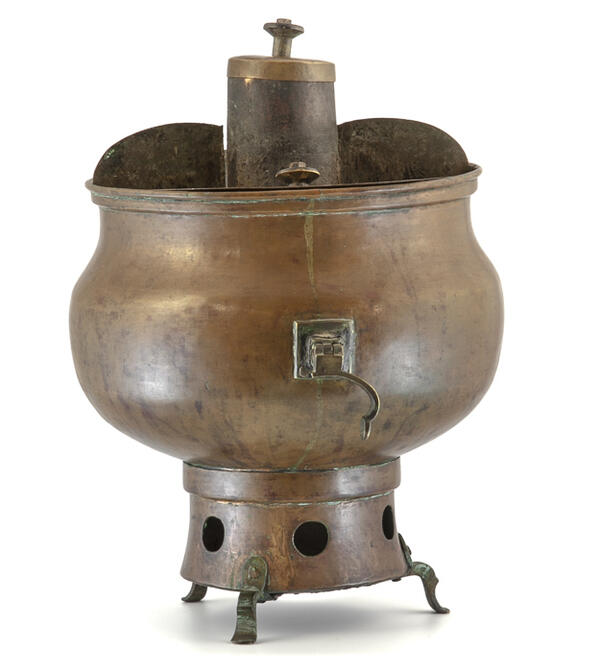
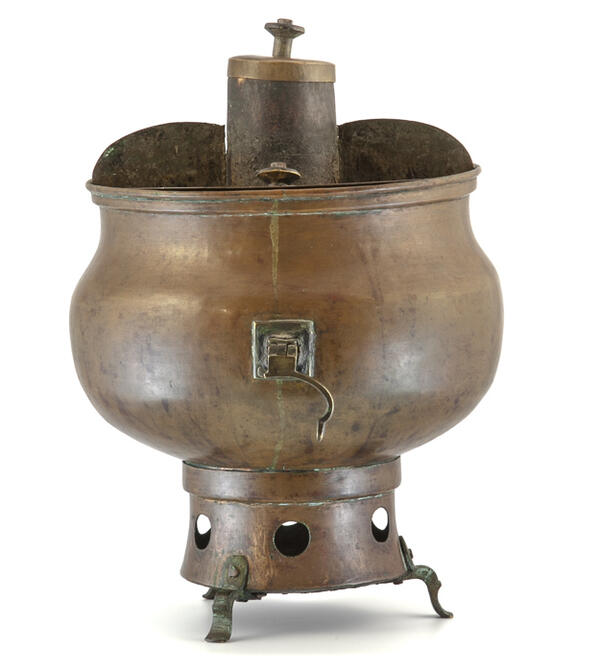
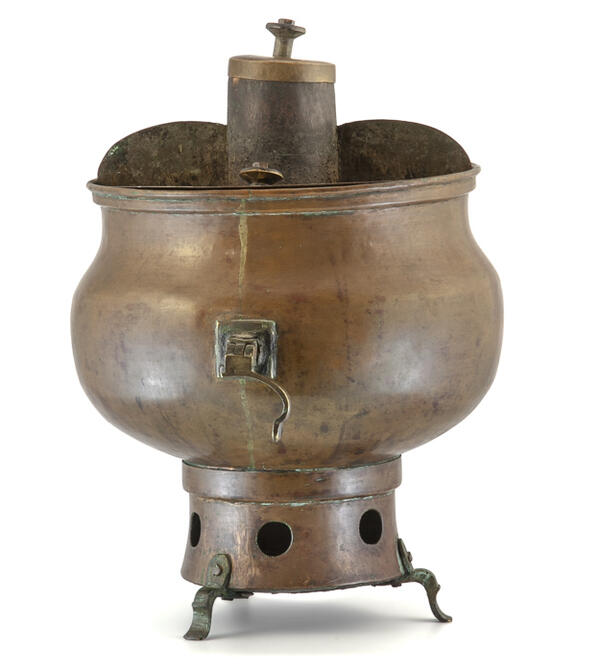
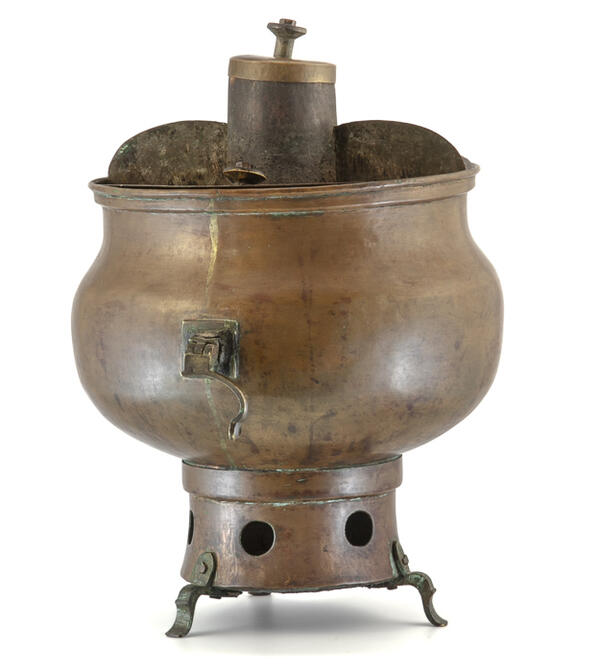
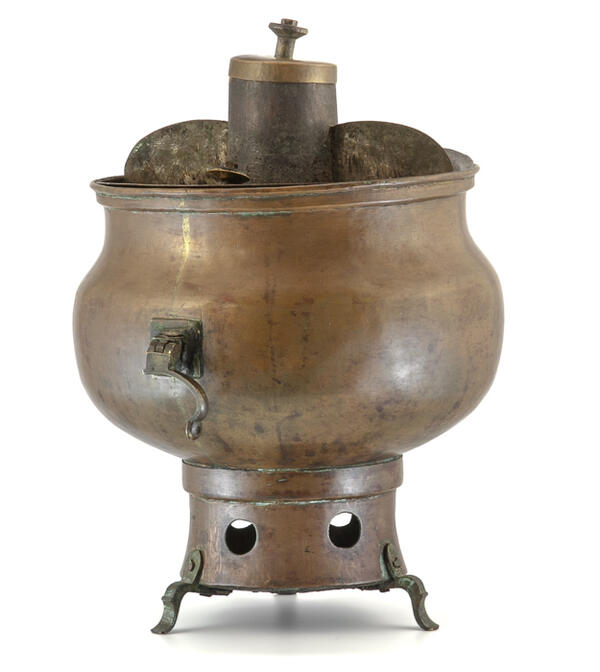
Samovar-kitchen was an interesting and very useful invention too. It looked like a loving cup or a deep pot. The vessel was divided into two or three parts by plates inside. There were two parts for cooking dishes in the samovar and the other part of the samovar was used as a kettle. Each dish was cooked separately in its section. Each part of the samovar-kitchen had a separate lid. The part that was used as a kettle had also a tap for water. Samovar-kitchen was very popular in taverns, inns, hotels, teashops, trade fairs. Travelers who set out on their long journey took a samovar-kitchen with them.
#4
read morehide
00:00
00:00
1x
Samovar – kitchen
Creation period
The beginning of the XVIIIth century.
Dimensions
40x31,7x27,7 cm
Technique
copper
0
 Point your smartphone camera to open in the app
Open in app
Share