

Coal samovars were first produced in Tula in the 18th century. The Lisitsyn brothers’ private factory produced the first boiler or water heater of this type. Charcoal, which was obtained from hardwood, was its fuel. It was bought from the charcoal-burning masters and stored in dry places, as a rule, in hessian sacks. The water in such samovars boiled quickly and remained hot for a long time.
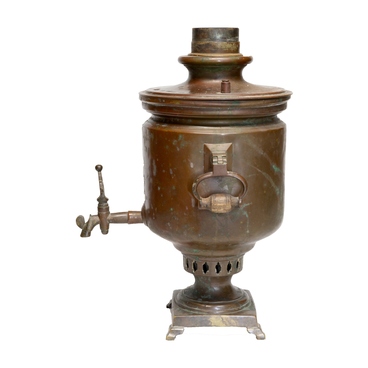
Tula samovars were of different forms: an egg, a ball, a cylinder, or complex shapes. However, all models had fairly similar design. Water was poured into a body. There was a chimney pipe with a grate situated inside its lower part. It was a place for burning coals, which heated water.
A whole construction was usually placed on a drip pan with curly legs. If necessary, it could be removed to shake ash out of a pipe. Two handles were placed on both sides of a body. They were used to lift and carry a samovar. It also had a tight-fitting lid.
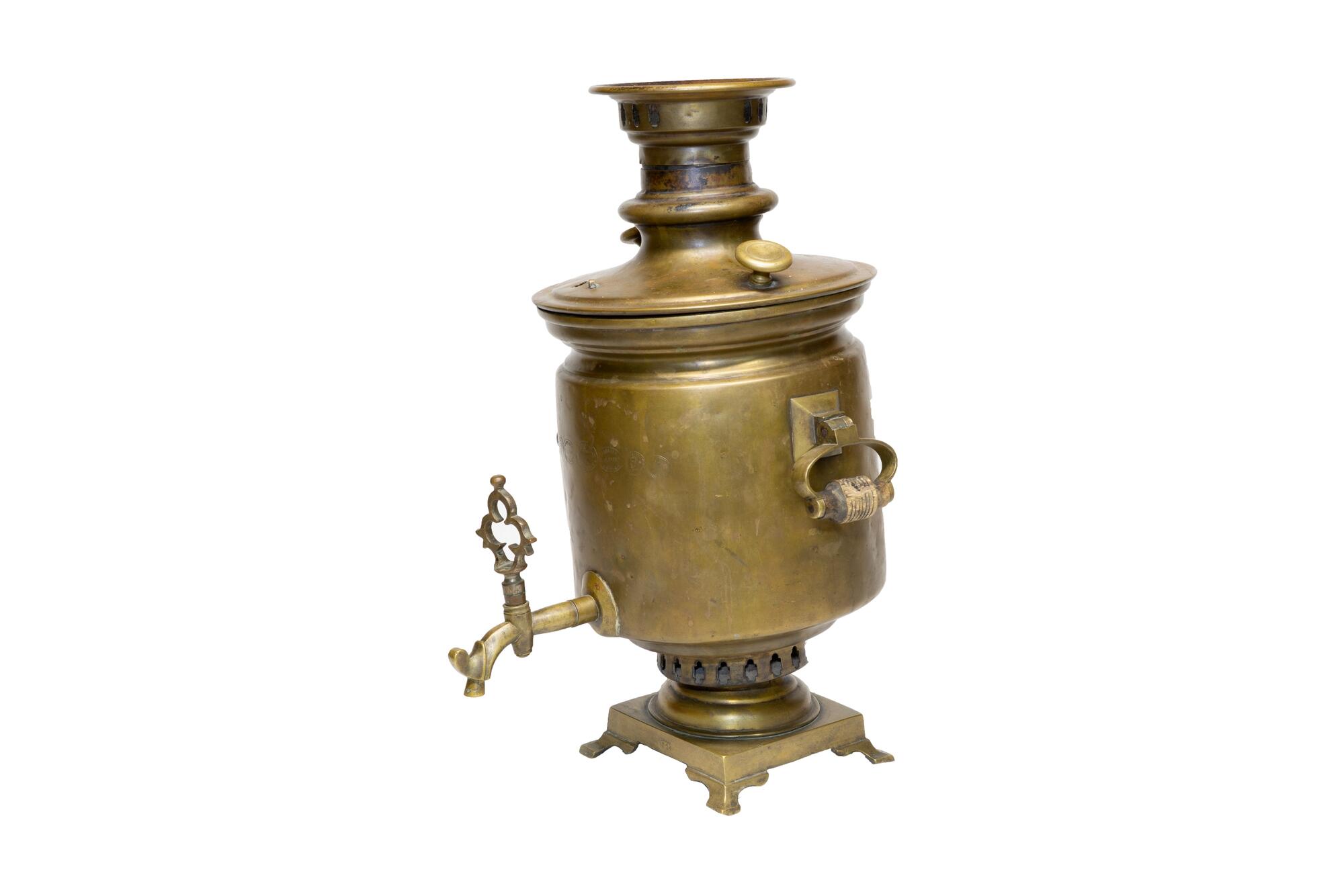
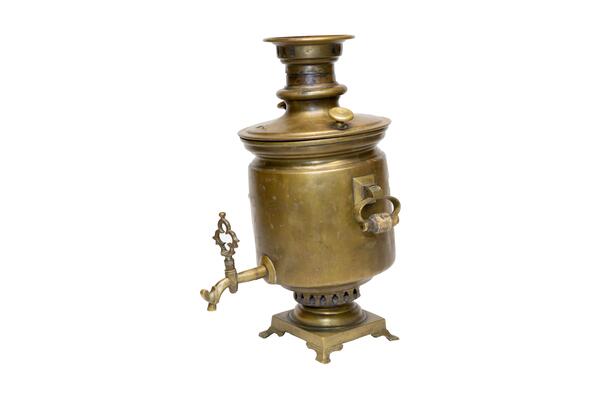
A brass samovar from the collection of Nizhnevartovsk Museum of Local History was made in Tula in 1896. Its cylindrical form is one of the simplest and most common models. Tula craftsmen called such a model “an ordinary pot”. There were two curved cast handles with movable hinges on both sides of a body. Each of them had a wooden insert, which protected hands against burns. There is a figured faucet in the lower part of a samovar. Thanks to it boiled water was poured in cups.
On a lid of a samovar, there was a burner with figured holes. It was usually a place for a teapot, either empty or full. In the first case, burner heat helped to dry it, in the second case, it helped to brew tea better.
Under a body of a samovar there was an ash box with figured holes. It gradually became more narrow downwards, and then expanded again and came to a square four-legged drip pan.
Both in the middle part of a body and on a lid, you can see seven-round and oval medallions. Some of them had remained inscriptions: “Sharlamov”, “Nikolay Trofimov”, “Gridelko”, “Order”, “in Tula”, “For hardworking and art, 1896”. Two medallions depicted stamped portraits of Emperor Nicholas II.
Tula samovars were of different forms: an egg, a ball, a cylinder, or complex shapes. However, all models had fairly similar design. Water was poured into a body. There was a chimney pipe with a grate situated inside its lower part. It was a place for burning coals, which heated water.
A whole construction was usually placed on a drip pan with curly legs. If necessary, it could be removed to shake ash out of a pipe. Two handles were placed on both sides of a body. They were used to lift and carry a samovar. It also had a tight-fitting lid.
A brass samovar from the collection of Nizhnevartovsk Museum of Local History was made in Tula in 1896. Its cylindrical form is one of the simplest and most common models. Tula craftsmen called such a model “an ordinary pot”. There were two curved cast handles with movable hinges on both sides of a body. Each of them had a wooden insert, which protected hands against burns. There is a figured faucet in the lower part of a samovar. Thanks to it boiled water was poured in cups.
On a lid of a samovar, there was a burner with figured holes. It was usually a place for a teapot, either empty or full. In the first case, burner heat helped to dry it, in the second case, it helped to brew tea better.
Under a body of a samovar there was an ash box with figured holes. It gradually became more narrow downwards, and then expanded again and came to a square four-legged drip pan.
Both in the middle part of a body and on a lid, you can see seven-round and oval medallions. Some of them had remained inscriptions: “Sharlamov”, “Nikolay Trofimov”, “Gridelko”, “Order”, “in Tula”, “For hardworking and art, 1896”. Two medallions depicted stamped portraits of Emperor Nicholas II.