Font
Color
Graphics
Изображение точки

To see AR mode in action:

1. Install ARTEFACT app for iOS or Android;

2. Find the exhibition «Ugra Heritage»

3. Push the «Augmented reality» button and point your phone's camera at the exhibit;

Скрыть точки интересаПоказать точки интереса
Показать в высоком качестве

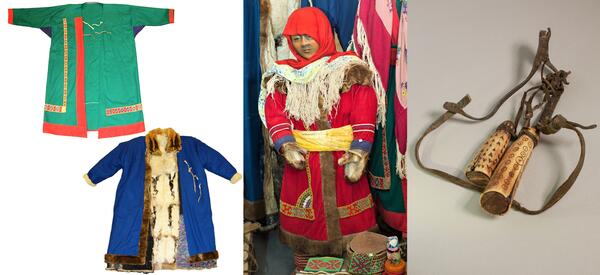
Men’s, Children’s and Women’s sak, Powder flask

Exhibition
0
Open in app
#1
Men’s, Children’s and Women’s sak, Powder flask
#18
P. D. Kayukova
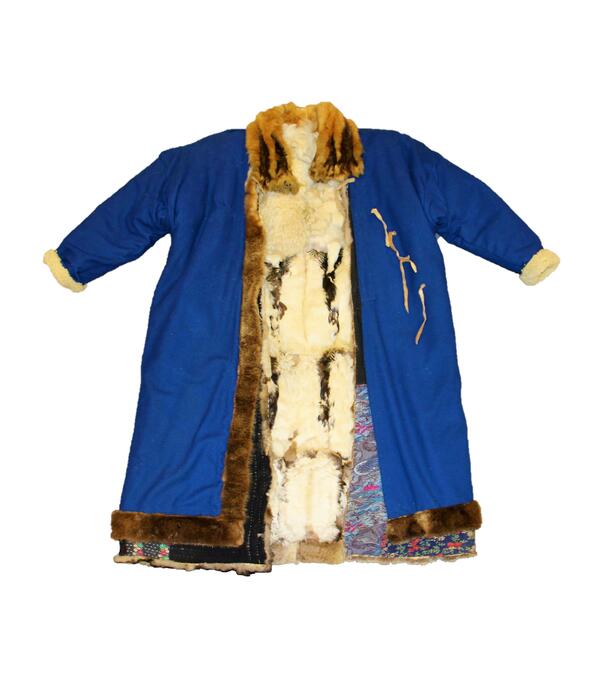
Men’s winter sak
#17
On the territory of the Nefteyugansk District, there are two groups of the Khanty — the Salym and the Yugan Khanty. Differences in their cultures can be traced in language, traditional economy, occupations, and clothing.

After the exploration of Siberia, the Salym Khanty’s way of life began to change, including the attitude to the national costume. The Salym Khanty acquired inexpensive Russian clothes, and almost never wore authentic clothes. The Yugan Khanty, on the contrary, continued to sew from skins, moreover, their traditional outfits are still worn.

For a long time it was believed that in the climatic conditions of the North, clothes could not be worn without fasteners. However, the researchers found out that this is not true. The Museum of the Ob River exhibits a rare men’s winter sak of the Yugan Khanty group. “Sak” is a common name for women’s and men’s unbuttoned clothing.

Sak was sewn from fabric and fur. Each northern ethnic group had its variety of these unbuttoned clothes. The sak of the eastern group, to which the Yugan Khanty belongs, is distinguished by the fact that its right edge is wrapped on the left side, and then kilted with a soft long belt. For the rest of the Khanty groups, the edges are fastened with strings, and the belt is practically not used. According to researchers, the Khanty could inherit the sak from the ancient Turks who came to Siberia from the south. The Turks wore long robes with a wrap on the left, a wide strip of fabric of a different color was sewn along the upper edge.

The men’s winter sak from the Ugra Heritage exhibition was sewn from dark blue cloth and otter fur. On the front side of the exhibit, there are five pairs of ties made of light gray rovduga — buckskin suede. The right edge and bottom of the coat are trimmed with fur. Because of the wrap, only the right side of this coat is mainly decorated. The lining of the winter sak is sewn with tendon threads from sheepskin and skins of black-throated loon, as well as from swan and hare skins.

The Ob-Ugrians often used bird skins for sewing. The first mention of clothing with bird plumage is found in ethnographic sources at the beginning of the 18th century. For the longest time, loon skins were in use among the eastern Khanty — until the beginning of the 20th century. Few clothing items made from the skins of birds have been preserved, because it is a fragile material. The indigenous inhabitants of the Far North hunted the black-throated loon not only for the skin, but also for the meat. Nowadays, loon hunting has been suspended, and in some regions, this bird is included in the IUCN Red List.

Furs, as a lining material, have advantages over buckskin: it is more durable and lightweight, you can move freely and silently in it. The lining made of furs and bird skins guaranteed the owner of the clothes warmth and protection from moisture.
#16
Полное наименование: Men’s winter sak
Автор: P. D. Kayukova
Дата создания: the 1980s
Техника: embossing
Место создания: the Nefteyugansk District
Размеры: sleeve length—46 cm, front length—123 cm
Коллекция: History and Art Museum Complex
№ Госкаталога: 22836293
Правообладатель изображений: History and Art Museum Complex
#19
Feodosia Kayukova
Children’s sak
#20
The Khanty are one of the indigenous peoples of Siberia. The ethnonym “Khanty” is formed from the native name “khante”, which means “human”. In Rus, they were called the Ostyaks. The traditional occupations of the Khanty include river fishing and reindeer herding. From ancient times, they also collected berries and nuts, hunted fur-bearing animals, bears and moose.

These people sewed clothes from animal skins and fur, fish skin and bird skins, broadcloth, linen, and nettle fabrics. Everyday and ceremonial outfits were embroidered with traditional patterns. The style of children’s clothes did not differ from adults’ clothes. However, there were differences in details, decorations, and ornamentation.

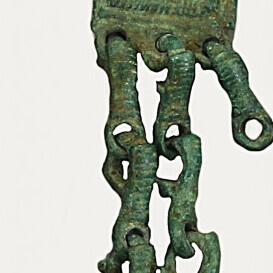
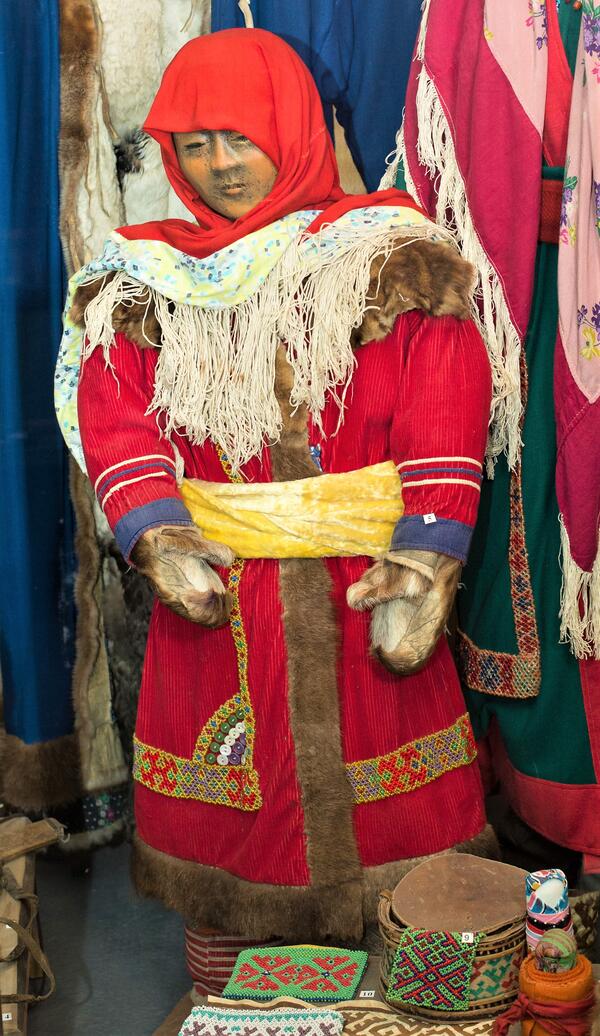
Children’s winter unfastened clothes — the Khanty call it “sak” — were decorated with a special rectangular piece of fabric. It was embroidered with colored buttons and pendants in the form of chains with coins and beads at the ends. It was believed that the ringing of coins and beads scared away evil spirits. This piece of fabric was attached to a fur collar, which was made of squirrel or bird skins.

A children’s fur coat is displayed at the exhibition “Ugra Heritage”. The sak was made in 1990 by Feodosia Kayukova for her daughter from the Tukan 1 settlement in the Nefteyugansk District. The fur coat is made of red velvet. The wide collar made of pieces of squirrel paw fur falls on the chest. The sak lining was made by the craftswoman from the white padded cotton undershirt decorated with blue and red spots. Reindeer fur mittens are sewn to the sleeves of the fur coat. The edges are trimmed with otter fur. The fur of this animal is warm and does not wear out for a long time, so clothes for both children and adults are often sewn from this fur.

The edges of the sak are decorated with an ornamental beaded ribbon. When girls get their first teeth, then their clothes started to be decorated with stripes. Since the sak is wrapped with the right side up, then the right side is decorated more than the left one. Ornaments are placed at some distance from the hemline, along the hem just above the knee, as well as along the bottom of the sleeves. The pattern always indicates which group of the Khanty the owner of the sak belongs to.

Nowadays, the Khanty wear both modern clothes and traditional outfits.
#15
Полное наименование: Children’s sak
Автор: Feodosia Filippovna Kayukova
Дата создания: 1990
Техника: hand sewing
Место создания: the Nefteyugansk District
Размеры: front length—70.5 cm; sleeve length—36 cm
Коллекция: History and Art Museum Complex
Правообладатель изображений: History and Art Museum Complex
#21
Lydia Kayukova
Women’s sak
#22
The ethnographic collection of the museum complex houses traditional women’s clothing of the Yugan Khanty. Unlike men’s clothing, it does not disappear from everyday life so quickly, although its details change over time.

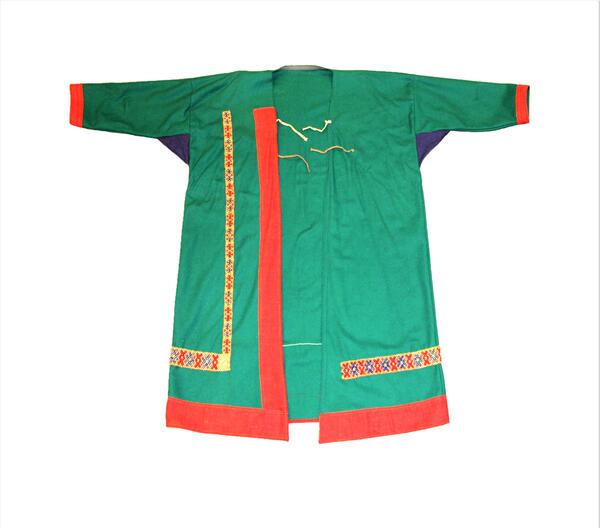
During the day, Khanty women wore a robe over their undershirts — sak. “Sak” is a common name for unfastened clothes of the Ob-Ugrians, made of different materials. The cut of the women’s sak did not differ from the men’s, but it was always below the knees. The right side of the unfastened clothes was wrapped over the left side and attached to it with the help of ties made of fabric, rovduga (suede), or leather.

The sak was usually plain, dark red, dark blue, or dark green fabric was mainly used. The Khanty had superstitions connected with the color of their clothes. For example, it was impossible to go into the forest in a red robe: it was believed that a snake or a bear could attack. No black-colored clothes were worn during the feast.

The Khanty used stripes of contrasting fabric and beaded ornamented overlays to decorate traditional outfits. Such patterns served not only as a decoration: by the ornament on shoes and clothes, it was possible to determine to which family a woman belongs to.

The narrowest stripes were sewn on the ends of the sleeves, the widest one — on the hem. In some cases, for example, during the funeral, beaded jewelry was removed. The researchers suggest that the Yugans could initially wear plain clothes. It was not possible to establish the time period when the tradition to sew stripes of contrasting fabric on women’s unfastened clothes started. Until now, this remains a subject of discussion among researchers.

The summer women’s sak from the exhibition “Ugra Heritage” was made in 1993. It was sewn by Lydia Kayukova from the Kayukovs settlement, located in the Nefteyugansk District. The material for the sak was a dark green broadcloth. The craftswoman’s robe is finished with red and blue cloth stripes. The right side is fastened with two pairs of ties. Beads of orange, red, blue, and green colors were used to create the decorations. The Khanty women sew and wear saks even today, they preserve the traditions of making national clothes.
#6
Полное наименование: Women’s sak
Автор: Lydia Ivanovna Kayukova
Дата создания: 1993
Техника: sewing, beading
Место создания: the Nefteyugansk District
Размеры: front length—109 cm, sleeve length—37 cm
Коллекция: History and Art Museum Complex
Правообладатель изображений: History and Art Museum Complex
#23
Powder flask
#24
In the 16th century, Western Siberia became part of the Russian state. Russian hunters received from the local population the knowledge necessary to survive in a harsh and still unexplored area, they learned how to get their own food. But they themselves had also contributed to the habitual way of life of the Ob-Ugrians, including cropping. The arrival of the Russians is associated with the spread of firearms in Siberia, which by the 19th century had practically supplanted longbows and crossbows of local hunters.

Firearms came into the use of the Ob-Ugrians gradually. Hunters with rifles killed more animals than with bows, and the sounds of shots frightened game away. Therefore, those who used traditional hunting methods reacted negatively to the innovations.

The first weapons were muzzle-loading and used gunpowder. Therefore a powder flask, a container for storing and carrying a small amount of gunpowder, became an obligatory attribute of a hunter’s equipment. In addition to it, the Khanty carried measures for gunpowder, bags for wads, bullets and pellets.

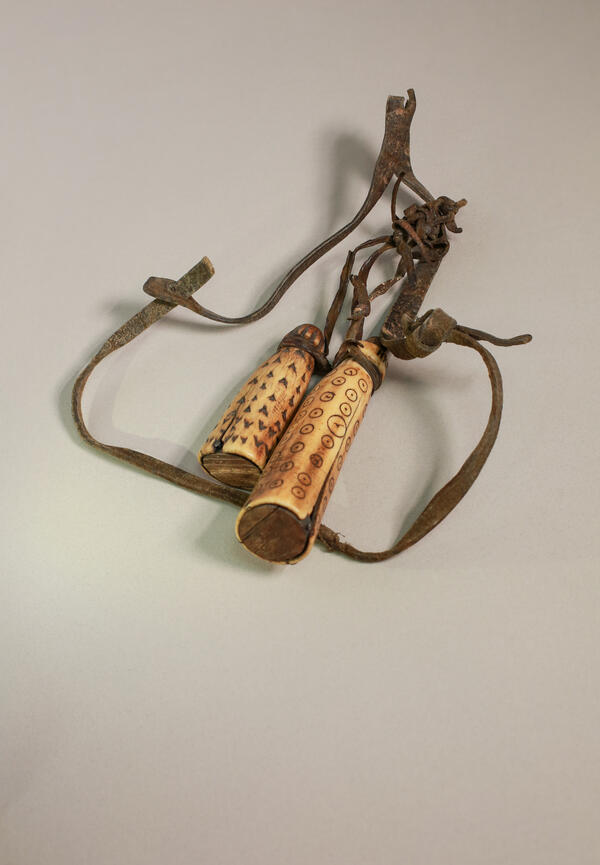
There were several types of powder flasks: round wooden ones and vessels made of cow horn. Studies showed that, despite the availability of wooden devices, the Khanty continued to make powder flasks from the horns of their domestic reindeer. The flasks were tightly closed with a cork and could be tied to the belt with thin leather straps.

The cost of gunpowder had always been high, so its storage and use was treated responsibly. Powder flasks were made light, comfortable and durable. Among all other hunting equipment they stood out by their graceful forms and special decorative design.

The powder flask from the funds of the Nefteyugansk History and Art Museum Complex was made in the 1990s. Horn, wood and tendon threads were used in its creation. The ornaments in the form of circles and triangles were applied to the product. The drawings were stamped. The object was found on the territory of an abandoned settlement located near the river Samsonovka.
#12
Полное наименование: Powder flask
Дата создания: the 1990s
Техника: woodworking, dressing
Место создания: the territory of the modern Nefteyugansk District
Размеры: hight— 13.5 cm and 9 cm
Коллекция: History and Art Museum Complex
Правообладатель изображений: History and Art Museum Complex
#14
read morehide
00:00
00:00
1x

Men’s, Children’s and Women’s sak, Powder flask

Exhibition
0
Point your smartphone camera to open in the app
Share
VkontakteOdnoklassnikiTelegram
Share on my website
Copy linkCopied
Copy
Open in app
To see AR mode in action:
  1. Install ARTEFACT app for 
  2. iOS or Android;
  3. Find and download the «Paintings in Details» exhibition
  4. Push the «Augmented reality» button and point your phone's camera at the painting;
  5. Watch what happens on your phone screen whilst you flip through the pictures.
 
We use Cookies
Cookies on the Artefact Website. We use cookies to ensure that we give you the best experience on our website. If you continue without changing your settings, we'll assume that you are happy to receive all cookies on the Artefact website. However, if you would like to, you can change your cookie settings at any time.
Learn more about cookie useHide
Content is available only in Russian

X

Нашли опечатку?...

%title%%type%