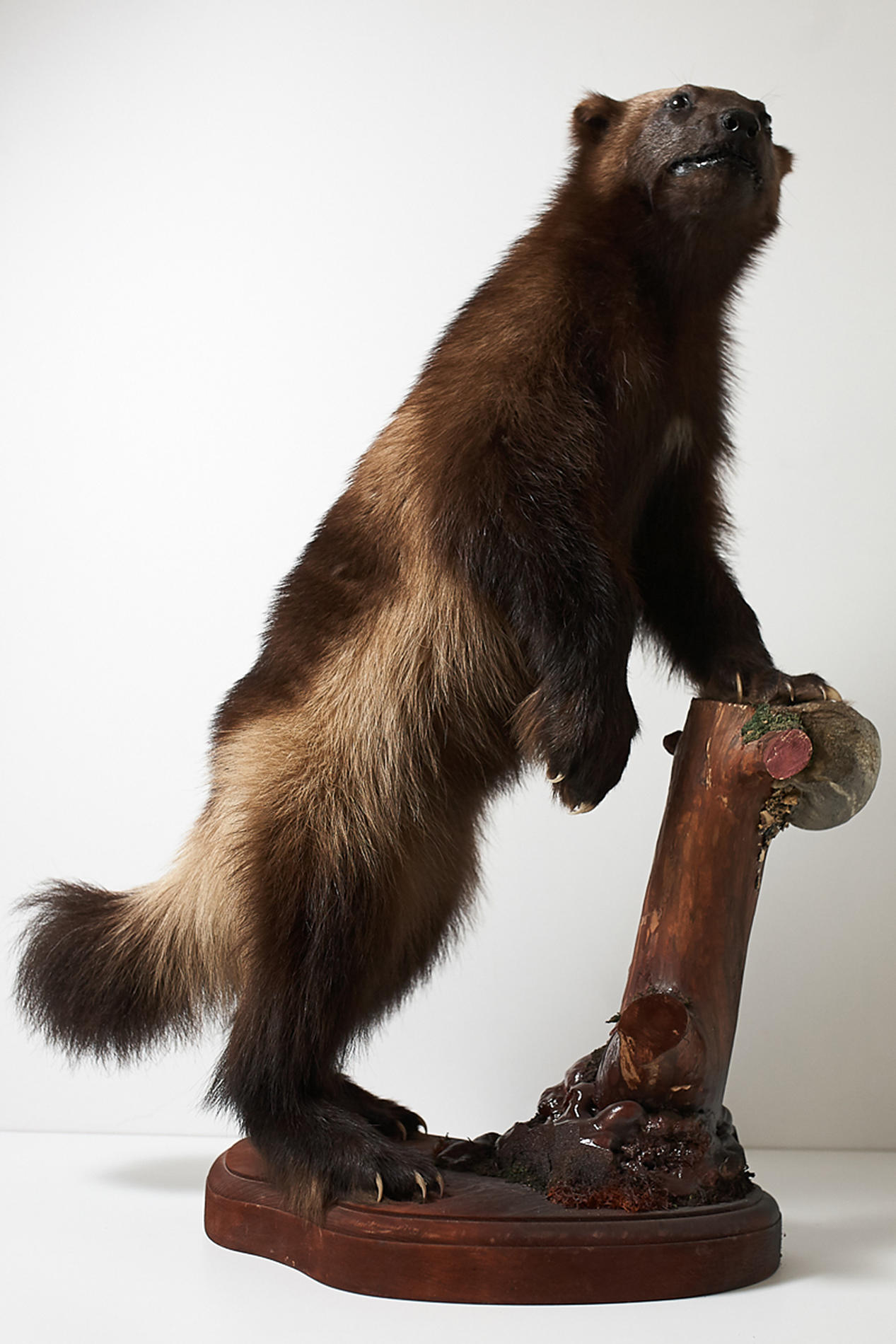


Wolverine is one of the largest representatives of the marten family, second only to the size of marine and South American otters. By its appearance, this giant marten resembles a miniature bear. It was not without reason that the Scandinavian peoples had a belief that every fourth year a brown bear was born which for some reason was unable to grow to the size of an adult animal and became a wolverine.
The average weight of the male wolverine is 15–20 kg; there are individuals whose weight reaches 30 kg, but those are much less common. Females are lighter about a third; they weigh in the range of 10-15 kg. The length of the body is from 70 to 105 cm. The height at the shoulders is 35-50 cm. The body is squat, tightly built, with round head. The hind legs are longer than the front ones, and the broad five-fingered feet are armed with curved sharp claws.
The color of the animal’s fur ranges from dark brown to brownish black. On the sides of its body, from the neck to the tail-head, wolverine has two reddish or light yellow stripes, called “girdle”. The mask on the beast’s face, as well as its chest and neck area, have a lighter shade. A specific feature of the thick and long fur is that it does not get wet or catch hoarfrost.
Despite its vast habitat, this species remains understudied due to the secretive lifestyle that it manages to lead thanks to its outstanding intellectual abilities. Even in the era of drones and camera traps, wolverine is in no hurry to get into the field of the people’s vision. In summer, it feels at home among the fallen trunks in the floodplains of the rivers; in winter, it digs up complex labyrinths at a depth of 1.5–2 m below the surface of powerful snowdrifts. The entrance to the snowy hole is usually suitably arranged in a depression at the base of the bush and is almost invisible.
Wolverine is unpretentious in food. It often feeds on carrion, eating corpses of moose and deer that have fallen under the ice or got killed by wolves. In summer, it enjoys bird eggs, small rodents and ungulate cubs. When hunting independently, it prefers white hares to other prey, pursuing the victim along the trail with inexorable perseverance, like a hound dog. It is very hardy, being able to travel tens of kilometers in deep snow in search for food. Due to the unusually wide feet and membranes between the fingers, its load upon the snow cover is almost 10 times less than that of the reindeer, which gives wolverine an undeniable advantage during winter hunting.
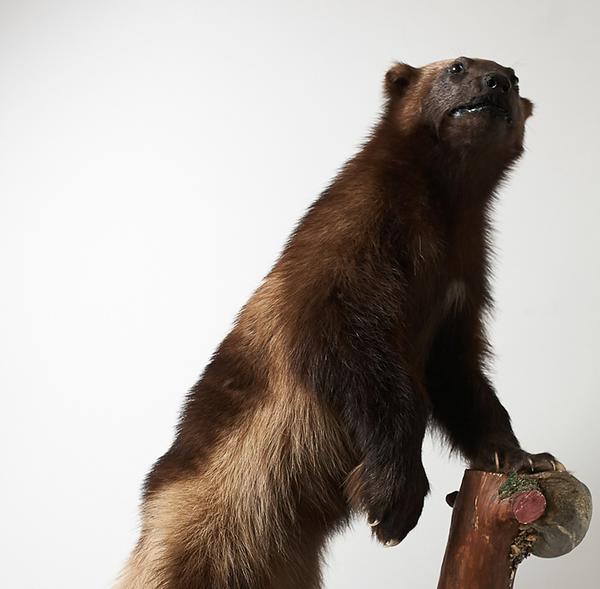
This seemingly clumsy beast is not only capable of indefatigable running, but also climbs trees and swims well; this broadens its ability to feed itself and its offspring. Its long claws and the tail it uses as a balancer help wolverine to climb branches. On the ground, the taiga robber often rises to its hind legs to look around. After making sure that there are no threats around, it lowers itself to its front paws. Males also take a vertical stance; this is a characteristic “fighting pose” of territorial rivalry.
The beast has long been notorious among hunters; this is the other side of its quick wits and stubbornness in obtaining food. This cunning predator easily bypasses ideally disguised traps, cleverly avoids encounters with humans, ruins traps by eating bait and carcasses of captured animals, including sables with their valuable fur. Wolverine gets into hunter huts and wreaks havoc on them, cracking, breaking or tearing to shreds even inedible objects.
Despite these habits, the positive role of this predator is undeniable: it performs the body-snatcher function, removing sick, exhausted and dead animals from the biocenosis.
The average weight of the male wolverine is 15–20 kg; there are individuals whose weight reaches 30 kg, but those are much less common. Females are lighter about a third; they weigh in the range of 10-15 kg. The length of the body is from 70 to 105 cm. The height at the shoulders is 35-50 cm. The body is squat, tightly built, with round head. The hind legs are longer than the front ones, and the broad five-fingered feet are armed with curved sharp claws.
The color of the animal’s fur ranges from dark brown to brownish black. On the sides of its body, from the neck to the tail-head, wolverine has two reddish or light yellow stripes, called “girdle”. The mask on the beast’s face, as well as its chest and neck area, have a lighter shade. A specific feature of the thick and long fur is that it does not get wet or catch hoarfrost.
Despite its vast habitat, this species remains understudied due to the secretive lifestyle that it manages to lead thanks to its outstanding intellectual abilities. Even in the era of drones and camera traps, wolverine is in no hurry to get into the field of the people’s vision. In summer, it feels at home among the fallen trunks in the floodplains of the rivers; in winter, it digs up complex labyrinths at a depth of 1.5–2 m below the surface of powerful snowdrifts. The entrance to the snowy hole is usually suitably arranged in a depression at the base of the bush and is almost invisible.
Wolverine is unpretentious in food. It often feeds on carrion, eating corpses of moose and deer that have fallen under the ice or got killed by wolves. In summer, it enjoys bird eggs, small rodents and ungulate cubs. When hunting independently, it prefers white hares to other prey, pursuing the victim along the trail with inexorable perseverance, like a hound dog. It is very hardy, being able to travel tens of kilometers in deep snow in search for food. Due to the unusually wide feet and membranes between the fingers, its load upon the snow cover is almost 10 times less than that of the reindeer, which gives wolverine an undeniable advantage during winter hunting.
This seemingly clumsy beast is not only capable of indefatigable running, but also climbs trees and swims well; this broadens its ability to feed itself and its offspring. Its long claws and the tail it uses as a balancer help wolverine to climb branches. On the ground, the taiga robber often rises to its hind legs to look around. After making sure that there are no threats around, it lowers itself to its front paws. Males also take a vertical stance; this is a characteristic “fighting pose” of territorial rivalry.
The beast has long been notorious among hunters; this is the other side of its quick wits and stubbornness in obtaining food. This cunning predator easily bypasses ideally disguised traps, cleverly avoids encounters with humans, ruins traps by eating bait and carcasses of captured animals, including sables with their valuable fur. Wolverine gets into hunter huts and wreaks havoc on them, cracking, breaking or tearing to shreds even inedible objects.
Despite these habits, the positive role of this predator is undeniable: it performs the body-snatcher function, removing sick, exhausted and dead animals from the biocenosis.