Font
Color
Graphics
Изображение точки

To see AR mode in action:

1. Install ARTEFACT app for iOS or Android;

2. Find the exhibition «Urazovo Local History Museum»

3. Push the «Augmented reality» button and point your phone's camera at the exhibit;

Скрыть точки интересаПоказать точки интереса
Показать в высоком качестве

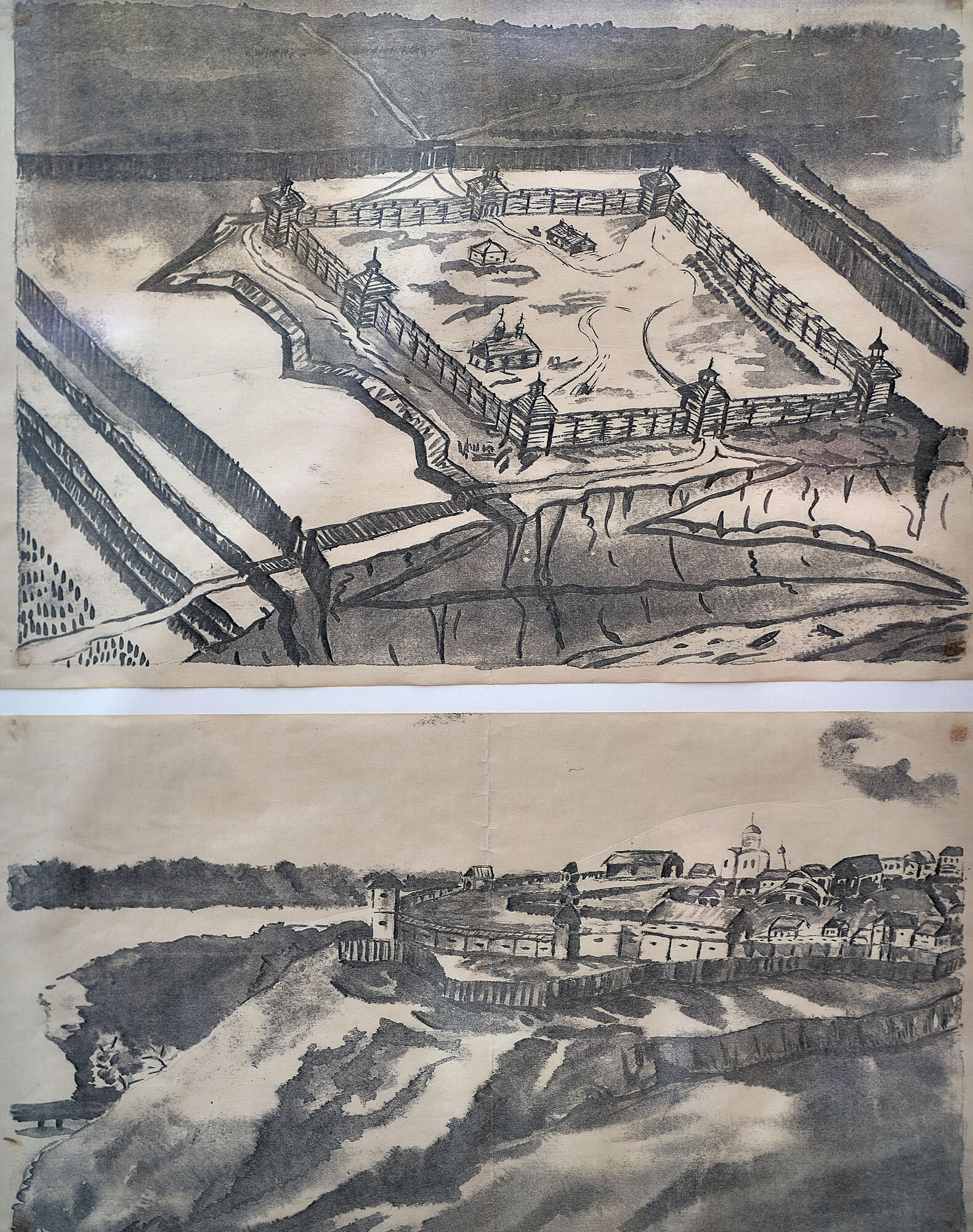
Drawing Fortress Valuyka

Creation period
1990s
Place of сreation
the town of Valuyki
Dimensions
41x50 cm
Technique
Paper
1
Open in app
#1
Fortress Valuyka
#2
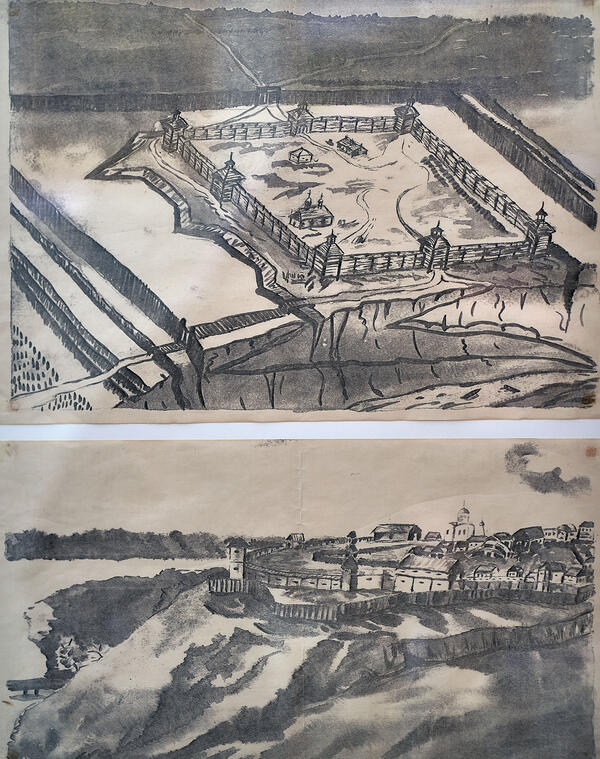
The collection of the Urazovo Local History Museum includes a drawing of the fortress Valuyka.

At the end of the 16th century, the frequent and devastating raids of ‘military people’ — ‘thieves’ Cherkas’, Crimean and Nogai Tatars, prompted the Russian sovereign to begin the construction of fortified towns on the southern “borderland”. In the official papers of the late 16th — first half of the 17th centuries, the name “Polish Ukraine” or simply “Field” (in Russian — “Pole”) was firmly entrenched. The “Polish” towns, that is, towns located on the Field (in Russian — “na Pole”), included: Belgorod, Borisov (until 1612), Voluyka, Voronezh, Yelets, Kursk, Lebedyan, Livny, and Oskol. The first Russian fortress towns on the Field were erected in places from which it was more convenient to observe the movement of military people along the “sakms” or “paths” — the ways they followed inland in order to plunder and rob the civilian population.

The fortress Valuyka (at present — the town of Valuyki) was erected next to the main invasion routes of the Izyum and Kalmius “sakms”. It played an important role in the defense system of the southern border area. The defenders of the fortress combined the service of the sovereign with housekeeping and daily concerns. In 1599, with the prince Koltsov-Mosalsky and the head Sudok Myasnoy, church utensils were sent to the construction site. In general, very little information is known about the life of the fortress in the Time of Troubles, because the dispatching of military governors to serve in Valuyki was resumed only in 1613.
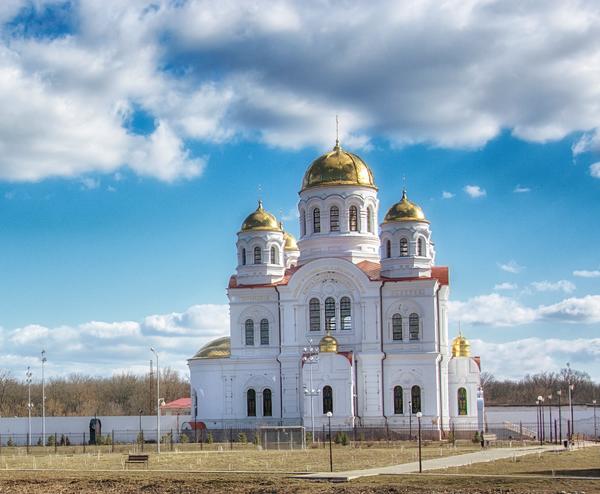
#5
St. Nicholas Cathedral of the Assumption Nicholas Monastery of Valuyki
#6
According to the 1614 census, 646 people lived in the town. After 12 years, the population had grown up to 774 people. When the city was founded, two churches were erected: in the fortress — the cathedral church of the Purification of the Icon of the Most Holy Mother of God of Vladimir, and beyond its borders, at the confluence of the Valuy and Oskol rivers — the Church of St. Nicholas the Wonderworker. According to legend, one citizen during haymaking discovered the icon of St. Nicholas the Wonderworker, he took it to the city, but the next day the found item was discovered in the same place, so the residents erected a chapel there, which became the beginning of the Pristanskiy Monastery of St. Nicholas the Wonderworker — by the name of the pier, located nearby. At present it is known as the Assumption Nicholas Monastery of Valuyki.

Now on the right bank of the Valuy River, where the first fortress was built, a symbolic fortress wall has been erected — one of the architectural landmark of the town.
#7
read morehide
00:00
00:00
1x

Drawing Fortress Valuyka

Creation period
1990s
Place of сreation
the town of Valuyki
Dimensions
41x50 cm
Technique
Paper
1
Point your smartphone camera to open in the app
Share
VkontakteOdnoklassnikiTelegram
Share on my website
Copy linkCopied
Copy
Open in app
To see AR mode in action:
  1. Install ARTEFACT app for 
  2. iOS or Android;
  3. Find and download the «Paintings in Details» exhibition
  4. Push the «Augmented reality» button and point your phone's camera at the painting;
  5. Watch what happens on your phone screen whilst you flip through the pictures.
 
We use Cookies
Cookies on the Artefact Website. We use cookies to ensure that we give you the best experience on our website. If you continue without changing your settings, we'll assume that you are happy to receive all cookies on the Artefact website. However, if you would like to, you can change your cookie settings at any time.
Learn more about useHide
Content is available only in Russian

X

Нашли опечатку?...

%title%%type%