

The adobe stove was the mainstay of every house in the past and has retained this role in many villages up to this day. It was designed to keep the houses warm, cook food, facilitate the recovery of the ill family members, and to boil water for bathing and doing laundry. To avoid smoke and soot and to retain heat for a longer time, people used alder or sanded birch and tried to avoid resinous pine or spruce.
People used the stove to boil, steam, fry, bake, and simmer food. Different pots and grips helped the housewife make various soups, porridge, pies, meat, fish, and homemade bread.
If the stove was big enough, it could be used for bathing. Once it became hot, the burning wood was removed, the surface was lined with straw and pots with hot water were put inside. Tableware was disinfected in the stove — for example, milk buckets were heated with juniper branches once a week to get rid of bacteria. The wood ash that remained in the stove was used for cleaning fabrics and utensils.
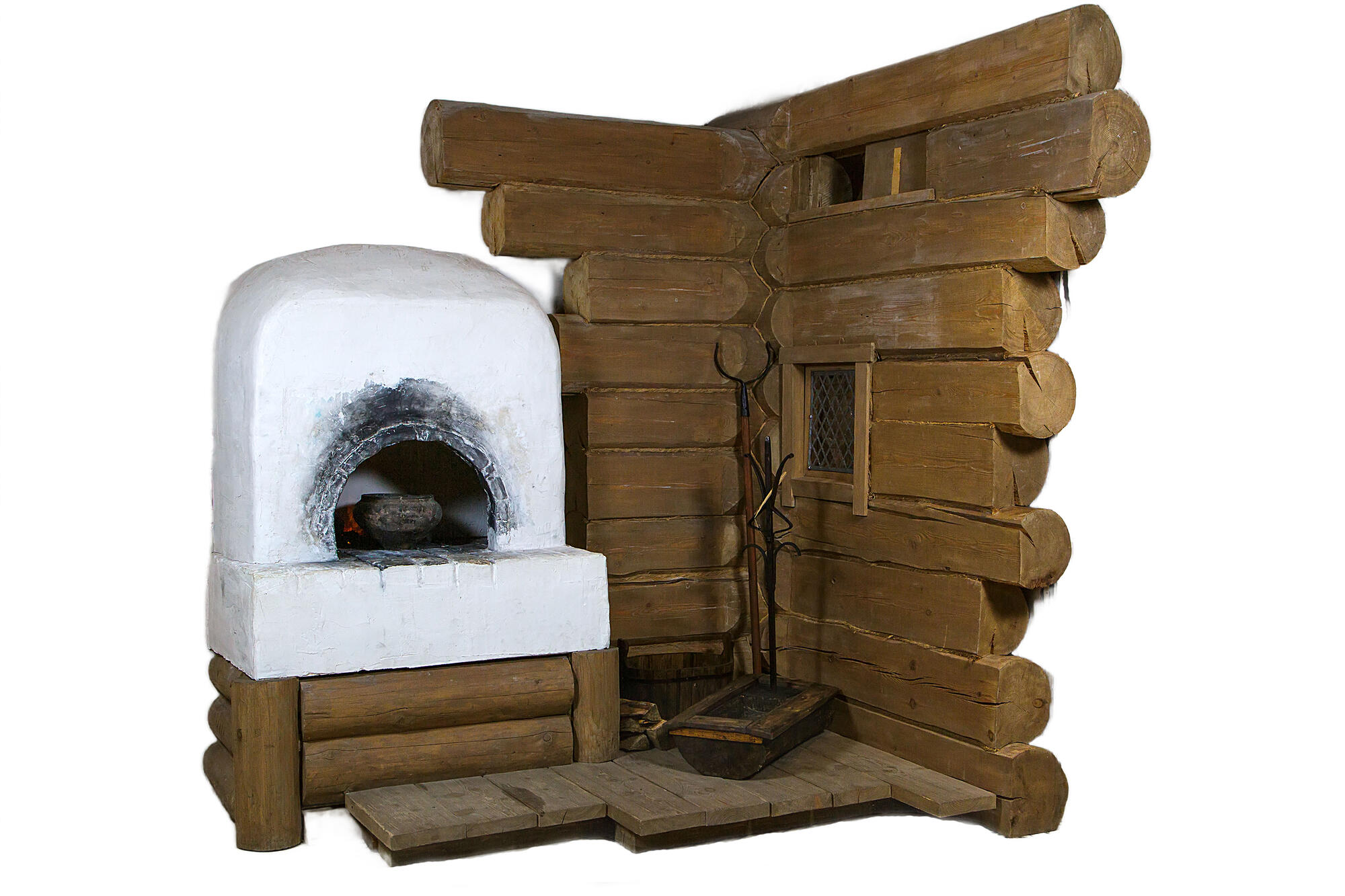
Adobe stoves were located in the corner of the dwelling, or near one of its walls. They were often mounted on a wooden platform covered with boards. A thick layer of clay was laid on top of the boards, and a firebox was arranged to burn fuel or store the dishes. It was no more than half a meter above the floor level. The stove walls were made of clay that had been placed into a wooden frame. The finished structure was fired several times.
More than ten adobe ovens of varying degrees of preservation have been discovered on the territory of the Tula Kremlin. Since the inside of the furnace was constantly subjected to intense heat, the bricks gradually began to crack. Whenever possible, they were repaired: cracks were covered with clay, individual bricks were replaced, and the surface was leveled. But sometimes parts of the firebox had to be rebuilt.
Judging by the shape and size of the wooden bases, the stoves in the Kremlin buildings were almost square with each side about two meters long. The walls could be up to 45 centimeters thick. Tula stoves were primarily intended for heating the house and cooking, and the surfaces of their walls were carefully whitened. The stoves in rich houses were lined with bright tiles. The presented model helps to visualize the mainstay of a simple medieval house.