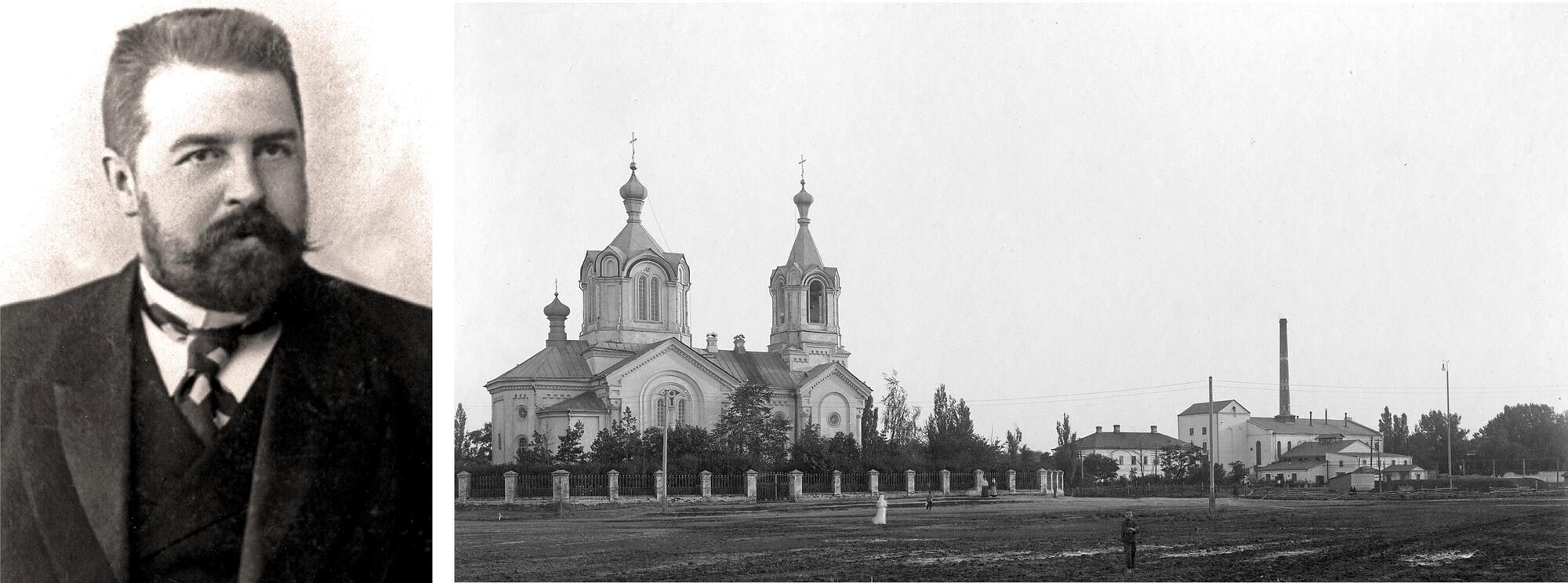


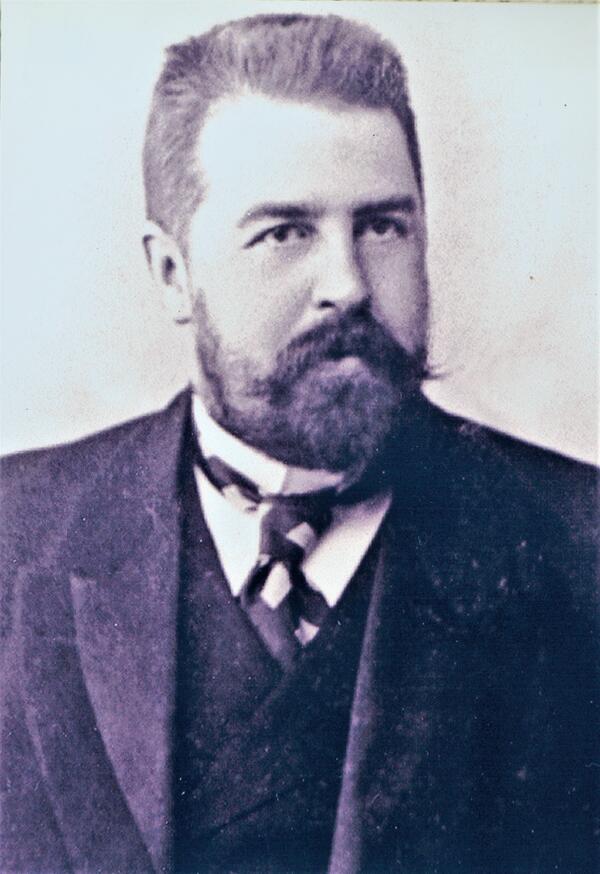
The photo depicts Alexander Rebinder, state councilor, marshal of the nobility of Volchansk uyezd, co-owner of Shebekino estate in 1892–1918. His family founded several industrial enterprises and agricultural farms in Shebekino, set up workshops, a school, a college, and a hospital.
Alexander Rebinder was born in 1869, in the family of Alexander Rebinder, Infantry General, and Maria Tolstaya, great-granddaughter of Mikhail Kutuzov, the Commander-In-Chief. He married a graduate of the Smolny Institute for Noble Maidens, a maid of honor of the Imperial Court, Catherine Tatischeva. She gave birth to four children. The family permanently resided in Shebekino.
In 1892, Alexander Rebinder became co-owner and manager of the Shebekino estate. The other owners were his relatives: his elder brother Nicholas Rebinder, who lived with his family in Kharkiv and St. Petersburg, and his sister Maria Rebinder, who was a maid of honor and also lived in the capital. They visited Shebekino only in summer.
By the end of the 19th century, a sugar refinery, wine distillery, brick factory, machine workshops, and a watermill were operating in Rebinder Shebekino estate. In 1905–1915, Alexander Rebinder set up a power plant, killing house, tannage, and veterinary bacteriological laboratory there.
In addition, Alexander Rebinder built a two-story multi-family residential house with steam heating, sewage, and electricity for his workers, and approximately 20 one-story houses for families with many children. On Rebinder’s money a hospital for inpatient treatment, a non-classical secondary school for the white — collar employees’ children were built up in Shebekino, as well as primary schools in the villages.
During 25 years of Shebekino estate managing, Alexander Rebinder turned it into one of the advanced farms of Russia; therefore, he was awarded the Order of Saint Vladimir, 4th class. Rebinder accepted the February Revolution favorably, but it became difficult to manage large-scale industrial enterprises: headmen came to the factories to control the production, and the peasants made the most of the highly charged political situation and plundered.
Right before the Germans had occupied the Shebekino, in 1918, Alexander Rebinder and his relatives were executed by shooting in Titovsky Bor. The place of his burial is unknown until the present.
Alexander Rebinder was born in 1869, in the family of Alexander Rebinder, Infantry General, and Maria Tolstaya, great-granddaughter of Mikhail Kutuzov, the Commander-In-Chief. He married a graduate of the Smolny Institute for Noble Maidens, a maid of honor of the Imperial Court, Catherine Tatischeva. She gave birth to four children. The family permanently resided in Shebekino.
In 1892, Alexander Rebinder became co-owner and manager of the Shebekino estate. The other owners were his relatives: his elder brother Nicholas Rebinder, who lived with his family in Kharkiv and St. Petersburg, and his sister Maria Rebinder, who was a maid of honor and also lived in the capital. They visited Shebekino only in summer.
By the end of the 19th century, a sugar refinery, wine distillery, brick factory, machine workshops, and a watermill were operating in Rebinder Shebekino estate. In 1905–1915, Alexander Rebinder set up a power plant, killing house, tannage, and veterinary bacteriological laboratory there.
In addition, Alexander Rebinder built a two-story multi-family residential house with steam heating, sewage, and electricity for his workers, and approximately 20 one-story houses for families with many children. On Rebinder’s money a hospital for inpatient treatment, a non-classical secondary school for the white — collar employees’ children were built up in Shebekino, as well as primary schools in the villages.
During 25 years of Shebekino estate managing, Alexander Rebinder turned it into one of the advanced farms of Russia; therefore, he was awarded the Order of Saint Vladimir, 4th class. Rebinder accepted the February Revolution favorably, but it became difficult to manage large-scale industrial enterprises: headmen came to the factories to control the production, and the peasants made the most of the highly charged political situation and plundered.
Right before the Germans had occupied the Shebekino, in 1918, Alexander Rebinder and his relatives were executed by shooting in Titovsky Bor. The place of his burial is unknown until the present.


