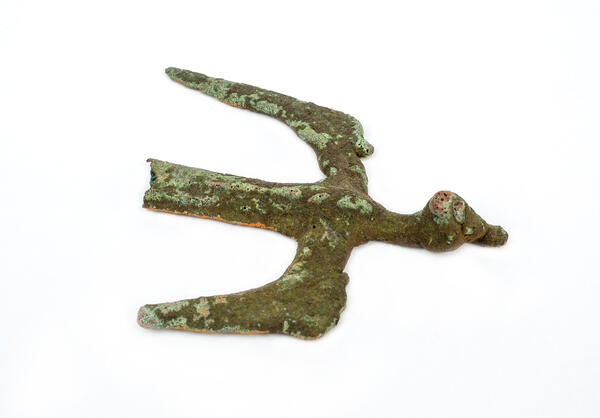
Bronze bird figurines were created in the early Iron Age, around the 7th — 3rd centuries BC. They were made by Itkul artisans.
At that time, the Itkul archaeological culture existed in the Urals. The archaeologist Konstantin Salnikov, who was the first to research and describe the settlement on Lake Itkul, coined this name.
The Itkul people lived along the eastern slope of the Ural Mountains, from the upper reaches of the Rezh River to Lake Chebarkul. They kept cattle, fished and made pottery.
It is known that the Itkul people knew how to use metal — bronze and copper — to make arrowheads and spears, knives, swords, daggers, sewing needles, tableware, jewelry and other items.
Bird figurines were often found by archaeologists among other Itkul bronze items. Their exact purpose is unknown, but scientists have suggested that the figurines served as shaman’s guides and assistants and were used in magical rituals and sacrifices.
However, the term “shaman” cannot be directly applied to the Itkul culture, since researchers do not know for sure whether shamanic cults existed at the time. The hypothesis is based on the fact that the neighboring cultures, which have been better studied, also used these attributes. For example, among many peoples of Siberia, shamans made hats and costumes with beaks and wings.
The bird symbol is present in all world cultures. Most often, it was associated with the divine. These animals could dwell in heaven and on earth at the same time, so they were considered mediators between gods and people.
Later the bird began to be associated with the human soul, and its flight — with the transmigration of the soul of the deceased. The flocks that traveled from north to south and back were believed to connect two worlds: the world of the dead (the north) and the world of the living (the south).
The earliest bird images appeared in the Urals in the Paleolithic era, about 30 — 10 thousand years ago. They were found among the drawings on the rocks, as well as the small figures made of stone, bone, and mammoth tusk. In the Iron Age, people mastered new materials, so they began to make small birds from bronze and copper.
At that time, the Itkul archaeological culture existed in the Urals. The archaeologist Konstantin Salnikov, who was the first to research and describe the settlement on Lake Itkul, coined this name.
The Itkul people lived along the eastern slope of the Ural Mountains, from the upper reaches of the Rezh River to Lake Chebarkul. They kept cattle, fished and made pottery.
It is known that the Itkul people knew how to use metal — bronze and copper — to make arrowheads and spears, knives, swords, daggers, sewing needles, tableware, jewelry and other items.
Bird figurines were often found by archaeologists among other Itkul bronze items. Their exact purpose is unknown, but scientists have suggested that the figurines served as shaman’s guides and assistants and were used in magical rituals and sacrifices.
However, the term “shaman” cannot be directly applied to the Itkul culture, since researchers do not know for sure whether shamanic cults existed at the time. The hypothesis is based on the fact that the neighboring cultures, which have been better studied, also used these attributes. For example, among many peoples of Siberia, shamans made hats and costumes with beaks and wings.
The bird symbol is present in all world cultures. Most often, it was associated with the divine. These animals could dwell in heaven and on earth at the same time, so they were considered mediators between gods and people.
Later the bird began to be associated with the human soul, and its flight — with the transmigration of the soul of the deceased. The flocks that traveled from north to south and back were believed to connect two worlds: the world of the dead (the north) and the world of the living (the south).
The earliest bird images appeared in the Urals in the Paleolithic era, about 30 — 10 thousand years ago. They were found among the drawings on the rocks, as well as the small figures made of stone, bone, and mammoth tusk. In the Iron Age, people mastered new materials, so they began to make small birds from bronze and copper.