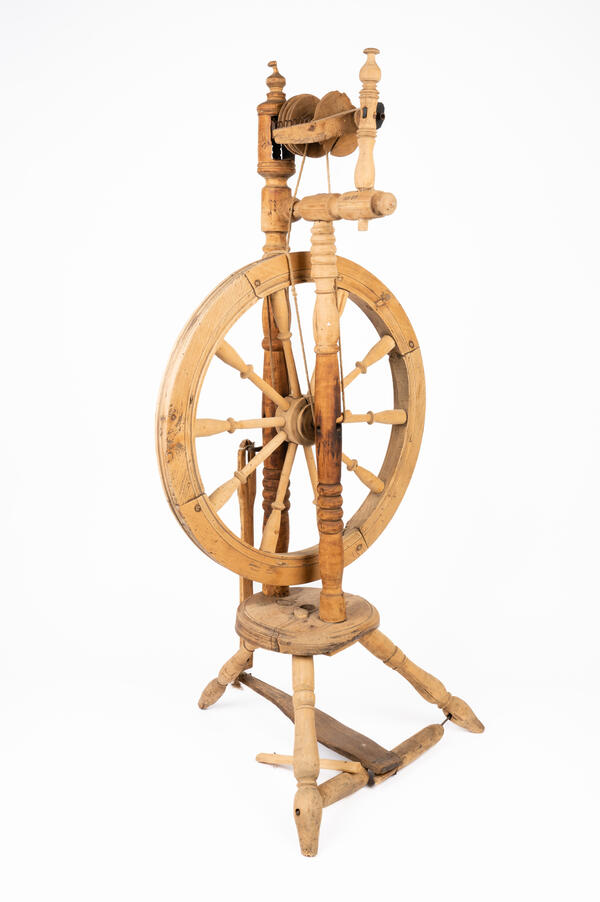
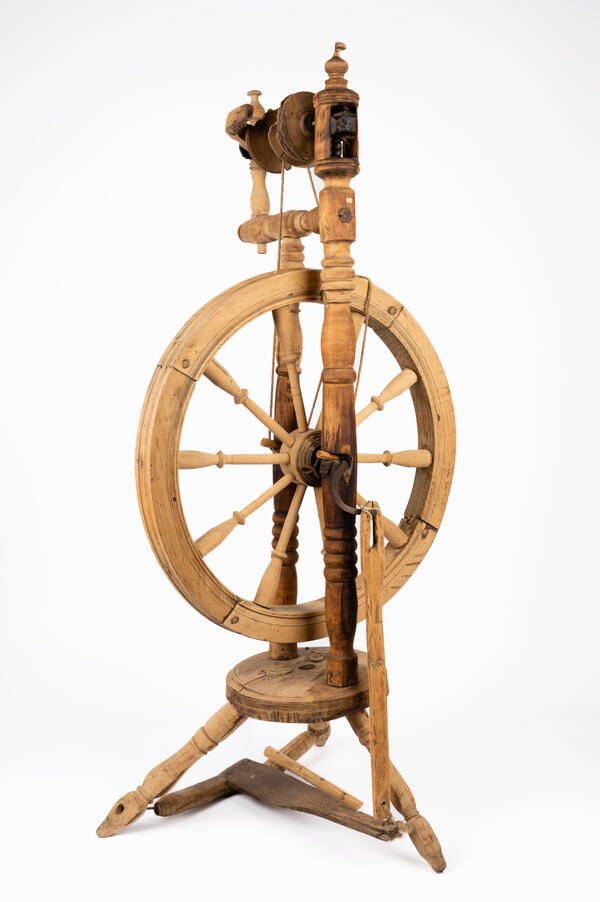
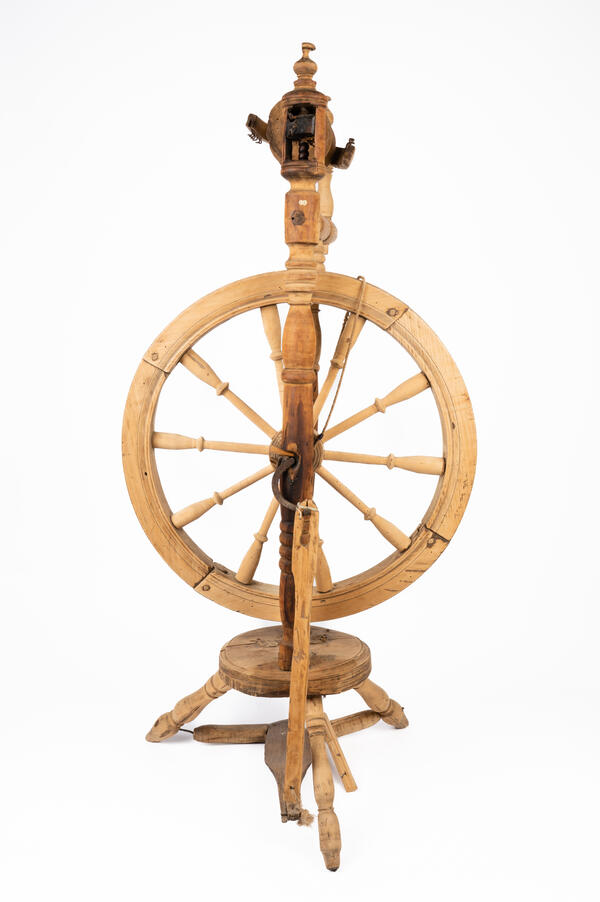
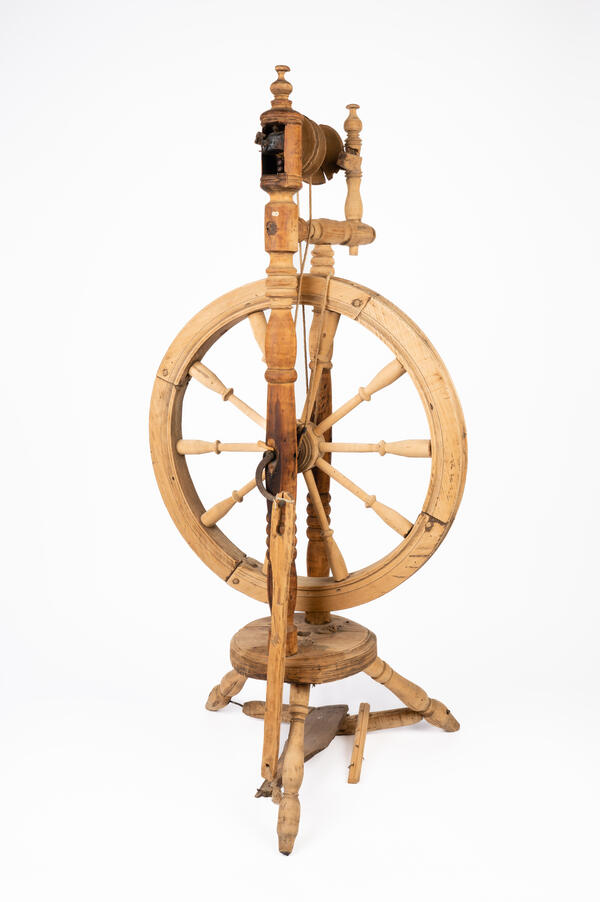
In the Unecha Local Lore Museum, one object in the “Traditional Peasant Life” section commands particular attention: the spinning wheel (known locally as a samopryadka — from “samo” meaning “self” and “pryast” meaning “to spin”). This device is fundamental to understanding the traditional material culture of the Russian people.
A wooden spinning wheel was an essential feature of the peasant home. Typically, a father or a suitor would present one to a bride as a gift. The most prized spinning wheels, often adorned with intricate carvings or paintings, were passed down as family heirlooms through generations.
Spinning was a constant in a woman’s life, from childhood to old age. In Russia, this craft was practiced from September through March — the “dark season” after the year’s field work was finished. The labor was hard and monotonous, but it was lightened by social gatherings. Women would sing songs, tell fairy tales, and talk as they worked.
Spinning was also woven into the fabric of ritual and custom. A girl would burn the first thread she ever spun, mix the ashes with water, and drink it, believing this would bring her luck in her craft. At weddings, the groom would smash the bride’s old spinning wheel and present her with a new one, symbolizing the start of their new life together.
The technology of spinning evolved over time. The earliest method used a simple hand-held distaff. This was superseded in the 17th century by the spinning wheel, a technology borrowed from Europe. Its operation was simple in principle but required skill: the spinner pressed a foot pedal to turn a large wheel, which, via a drive band, rotated the spindle and twisted the fiber into thread. A key feature of the Russian spinning wheel was its vertical design, unlike the horizontal frames common in many European countries.
Hand-spinning was extremely labor-intensive. Even a highly skilled craftswoman could produce no more than 300 meters of yarn in a single day. Creating a thread that was both thin and even required immense dexterity, a skill girls began learning as early as eight to ten years old.
The spinning wheel’s influence is deeply embedded in the Russian language and culture. The words for “time” (vremya) and “spindle” (vereteno) share an ancient root meaning “to rotate”. From the world of women’s work came enduring expressions like “the thread of fate” and the “red thread” — symbols of connection, destiny, and continuity.
Spinning and weaving remained quite popular in rural Russia until the mid-20th century. Today, the craft is far from forgotten. The spinning wheel is now used with reverence by artisans, folk artists, and participants in folk festivals, ensuring this vital thread to the past remains unbroken.