#1
Dowry: towel end, a silk napkin
#2
#3
#4
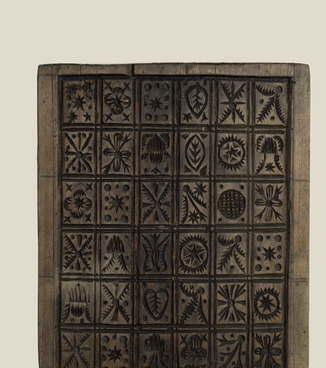
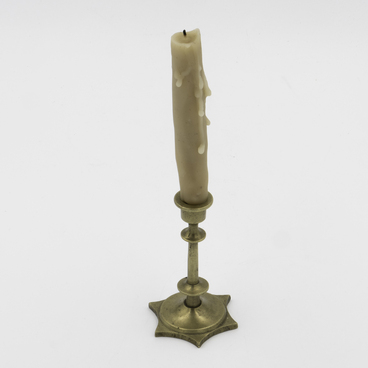
Traditionally, a girl began to prepare for marriage long before the wedding and the appearance of a potential groom. First of all, the preparations concerned the dowry of the future bride. Sometimes caring parents began to collect it on the same day when a girl was born in the family. The mother put pieces of cloth, shawls, scarves, bed linen, and rugs in a special trunk. Then the girl herself continued collecting: she wove canvases, embroidered towels, knitted tablecloths, and homemade rugs. The dowry also included a featherbed, a pillow, and a quilt. Often, kitchen utensils and even livestock were added to it.
On the wedding day, it was customary to demonstrate the wealth of the bride showing off the quantity and quality of the dowry. To do this, large trunks with what the girl had managed to collect, were placed on the cart during the wedding procession. Some of them were opened so that people could see things from there, for example, a samovar. The richer the bride’s dowry was, the higher the opinion was of her family. In such cases, people said that the groom was lucky. But sometimes the bride was from a poor family, and in that case, the groom had to buy the dowry, so as not to disgrace himself in front of people.
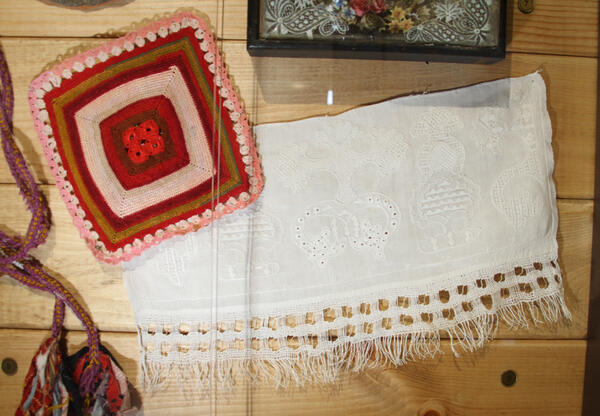
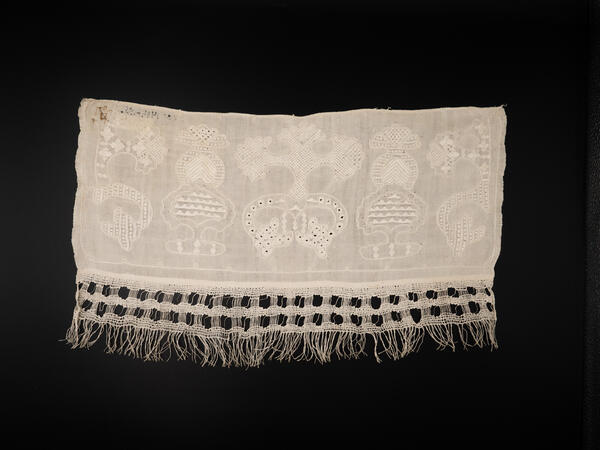
The museum collection includes several items of a wedding dowry. Among them is the end of the towel, decorated with an ornament. On it, one can see the image of the World Tree and the image of the Mother Goddess. According to the museum documents, the items most likely belonged to Agnia Yudina, the daughter of the Krasnoyarsk merchant-bibliophile Gennady Yudin (or even were made by her).
In the Krasnoyarsk Regional Museum of Local History, there are several things made by Agnia Yudina, which testify to the brilliant unique talent of the girl. However, her fate was tragic. She never started a family. After the revolution and the civil war, she and the rest of the family lost part of her property and privileges. And in 1932, together with her brother Leonid, she was arrested during the so-called golden campaign — a series of fabricated arrests that affected gold miners and entrepreneurs of the region. Soon she was released. And in 1933, she died of typhus.
On the wedding day, it was customary to demonstrate the wealth of the bride showing off the quantity and quality of the dowry. To do this, large trunks with what the girl had managed to collect, were placed on the cart during the wedding procession. Some of them were opened so that people could see things from there, for example, a samovar. The richer the bride’s dowry was, the higher the opinion was of her family. In such cases, people said that the groom was lucky. But sometimes the bride was from a poor family, and in that case, the groom had to buy the dowry, so as not to disgrace himself in front of people.
The museum collection includes several items of a wedding dowry. Among them is the end of the towel, decorated with an ornament. On it, one can see the image of the World Tree and the image of the Mother Goddess. According to the museum documents, the items most likely belonged to Agnia Yudina, the daughter of the Krasnoyarsk merchant-bibliophile Gennady Yudin (or even were made by her).
In the Krasnoyarsk Regional Museum of Local History, there are several things made by Agnia Yudina, which testify to the brilliant unique talent of the girl. However, her fate was tragic. She never started a family. After the revolution and the civil war, she and the rest of the family lost part of her property and privileges. And in 1932, together with her brother Leonid, she was arrested during the so-called golden campaign — a series of fabricated arrests that affected gold miners and entrepreneurs of the region. Soon she was released. And in 1933, she died of typhus.
#5
Full name: Towel end with an embroidered stylised image of the Mother Goddess
Author: Agnia Yudina
Date: mid-19th century
Technique: hand embroidery
Place: Yeniseysk Governorate
Copyright: Krasnoyarsk Regional Museum of Local History
Dimensions: 39×23 cm
Goskatalog Number: 13215134
Date: mid-19th century
Technique: hand embroidery
Place: Yeniseysk Governorate
Copyright: Krasnoyarsk Regional Museum of Local History
Dimensions: 39×23 cm
Goskatalog Number: 13215134
#6
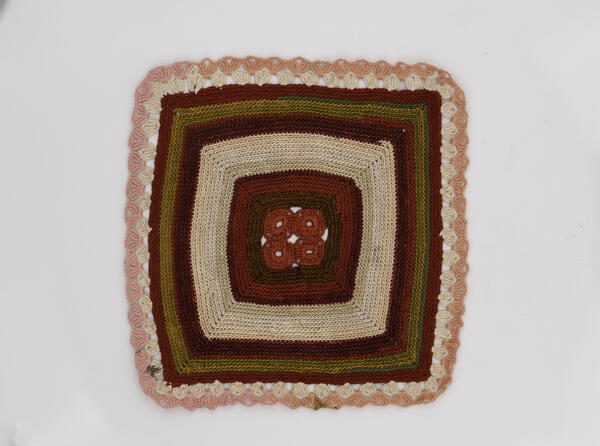
Dowry: a silk napkin
#7
#8
Collecting a dowry for a bride had been one of the most important tasks since ancient times. Often, a girl would start to prepare for a wedding from the very childhood, collecting possessions for future family life. The richer her dowry was, the higher the status of her family was. In this way, the parents demonstrated their well-being to attract a noble and rich husband for their daughter. Also, the dowry was considered a mandatory contribution that the wife made to the family economy since her husband consequently provided for her and the children. In marriage, it also remained under the wife’s control.
Peasant families made a dowry of basic necessities. It included household items: bed linen, fabrics, lace, crockery, and other household utensils that could be of use to a young family. The more affluent social classes added jewelry, money, and other valuable things to the dowry. In the bride’s house, the dowry was kept in a large trunk, which was proudly displayed on the wedding day to show the talents and wealth of the girl. After the wedding, the trunk was sent to the husband’s house. However, it was possible to get married without a dowry. In this case, though, there was a very small chance to get a catch.
For the girl, the dowry was often associated with the opportunity to increase her social status in society. The reason being that a bride with a rich dowry could marry a man of an impoverished, but noble family, for which it was important to combine the title and possessions. Noble families often supplemented the dowry of their daughters with land documents, money, and peasant serfs.
The napkin from the museum collection belonged to Agnia Yudina, the daughter of the Krasnoyarsk merchant-bibliophile Gennady Yudin. The museum has several things made by the girl, which testify to her brilliant unique talent. However, the fate of Agnia was tragic. She never married, and after the revolution and the civil war, she lost part of her property and privileges, like the rest of her family. In 1932, together with her brother Leonid, she was arrested during the so-called golden campaign — a series of fabricated arrests that affected gold miners and entrepreneurs of the region, and in 1933 she died of typhus.
Peasant families made a dowry of basic necessities. It included household items: bed linen, fabrics, lace, crockery, and other household utensils that could be of use to a young family. The more affluent social classes added jewelry, money, and other valuable things to the dowry. In the bride’s house, the dowry was kept in a large trunk, which was proudly displayed on the wedding day to show the talents and wealth of the girl. After the wedding, the trunk was sent to the husband’s house. However, it was possible to get married without a dowry. In this case, though, there was a very small chance to get a catch.
For the girl, the dowry was often associated with the opportunity to increase her social status in society. The reason being that a bride with a rich dowry could marry a man of an impoverished, but noble family, for which it was important to combine the title and possessions. Noble families often supplemented the dowry of their daughters with land documents, money, and peasant serfs.
The napkin from the museum collection belonged to Agnia Yudina, the daughter of the Krasnoyarsk merchant-bibliophile Gennady Yudin. The museum has several things made by the girl, which testify to her brilliant unique talent. However, the fate of Agnia was tragic. She never married, and after the revolution and the civil war, she lost part of her property and privileges, like the rest of her family. In 1932, together with her brother Leonid, she was arrested during the so-called golden campaign — a series of fabricated arrests that affected gold miners and entrepreneurs of the region, and in 1933 she died of typhus.
#9
Full name: Dowry: a silk napkin, crocheted
Author: Agnia Yudina
Date: the early 20th century
Technique: crochet
Place: Yeniseysk Governorate
Copyright: Krasnoyarsk Regional Museum of Local History
Dimensions: 19×19 cm
Goskatalog Number: 11248085
Date: the early 20th century
Technique: crochet
Place: Yeniseysk Governorate
Copyright: Krasnoyarsk Regional Museum of Local History
Dimensions: 19×19 cm
Goskatalog Number: 11248085
#10
Ministry of Culture of the Russian Federation
read morehide
00:00
00:00
1x
Dowry: towel end, a silk napkin
2
 Point your smartphone camera to open in the app
Open in app
Share