

Jewelry-making was one of the Tatar people’s most common ethnic crafts. The master Tatar jewelers wrought sold, silver, copper, and other metals into intricate creations. This was usually what villagers did in their spare time when they were not busy with farm work. In most cases, whole families of craftsmen joined into an impromptu artel—workers' association—and made jewelry as a team. One craftsman would design the jewelry piece, a group of others would decorate it, the next group would polish it, and so on.
During the winter, jewelers left their homesteads to search for work in other areas, sometimes close by, and sometimes far away. Among other places, they traveled to Bashkortostan, Siberia, Kazakhstan, and Central Asia. Therefore, Tatar-made jewelry spread around other regions, quickly becoming popular and highly sought-after. That was how the Kazakh, Uzbek, and Bashkir women fell in love with the traditional Tatar chulpas.
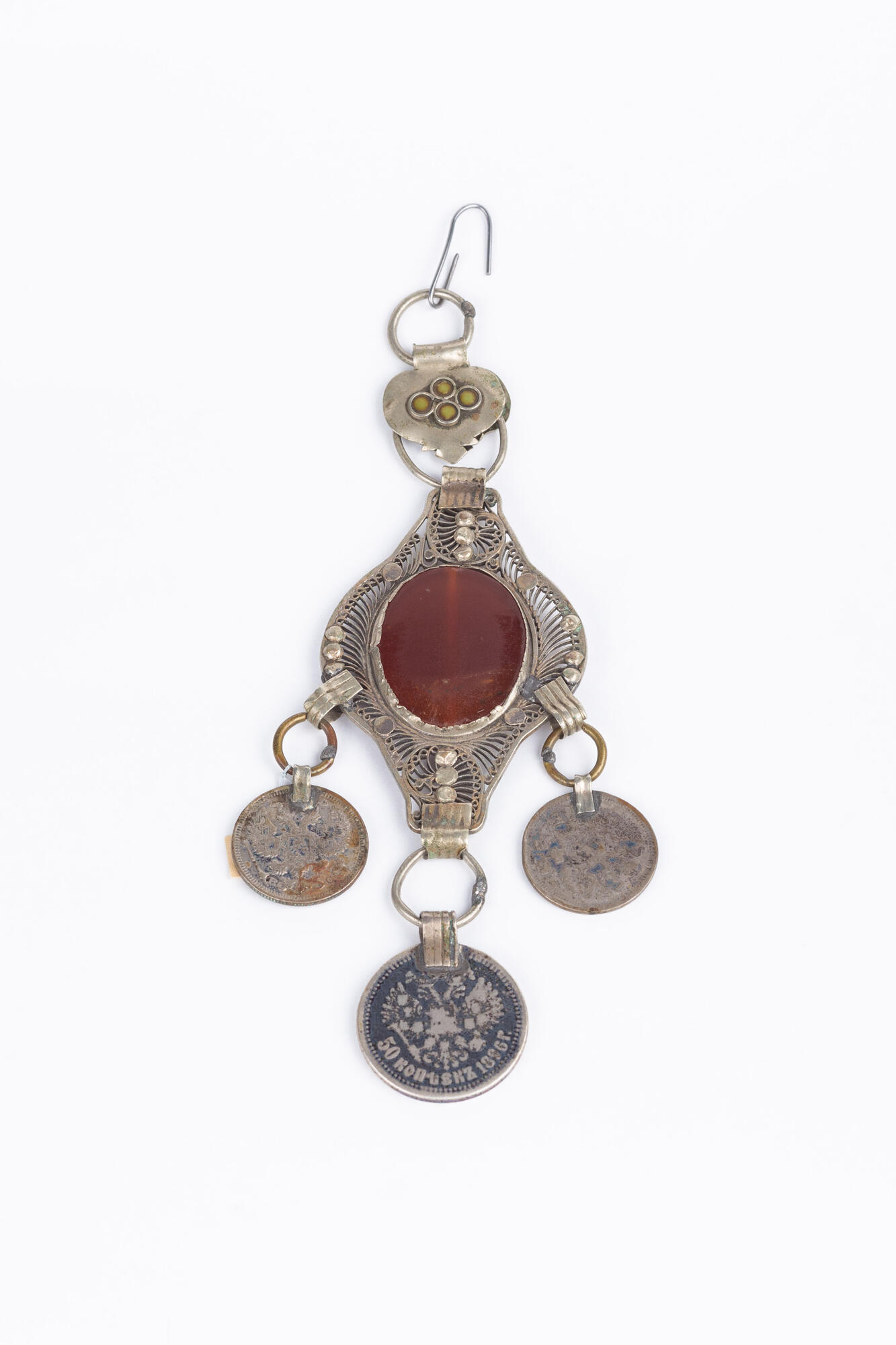
Our collection includes an antique chupla: a special accessory for a woman’s braid. In the past, women would braid the chulpa pendants into their hair by using special ribbons. As a woman walked about, the pendants would jingle against one another. The resulting pleasant sound was believed to ward off evil spirits.
A single chulpa pendant would usually consist out of several metal plates of different sizes. There were several techniques for making and adorning such plates: skan' (filigree), casting, or etching. Chulpas also had a system of additional adornments, usually smaller metal plates or coins.
The shape of a chulpa varied, from a star to a fan. The most common flat filigreed chulpas were sail-shaped. Chulpas that were completely covered in etchings were much rarer.
The number of metal plates in a chulpa, as well as the method of joining the plates together, was highly important. Certain chulpa varieties had two or three plates, but sometimes the number of elements in a single chulpa was as high as six or even nine. The heavier parts of the pendant were secured with a special ‘yoke’ technique: the plates were attached to two braids at once, in two or three tiers. The chulpa adornments often included exquisite arrangements out of coins and even large gemstones in a metal setting.
During the winter, jewelers left their homesteads to search for work in other areas, sometimes close by, and sometimes far away. Among other places, they traveled to Bashkortostan, Siberia, Kazakhstan, and Central Asia. Therefore, Tatar-made jewelry spread around other regions, quickly becoming popular and highly sought-after. That was how the Kazakh, Uzbek, and Bashkir women fell in love with the traditional Tatar chulpas.
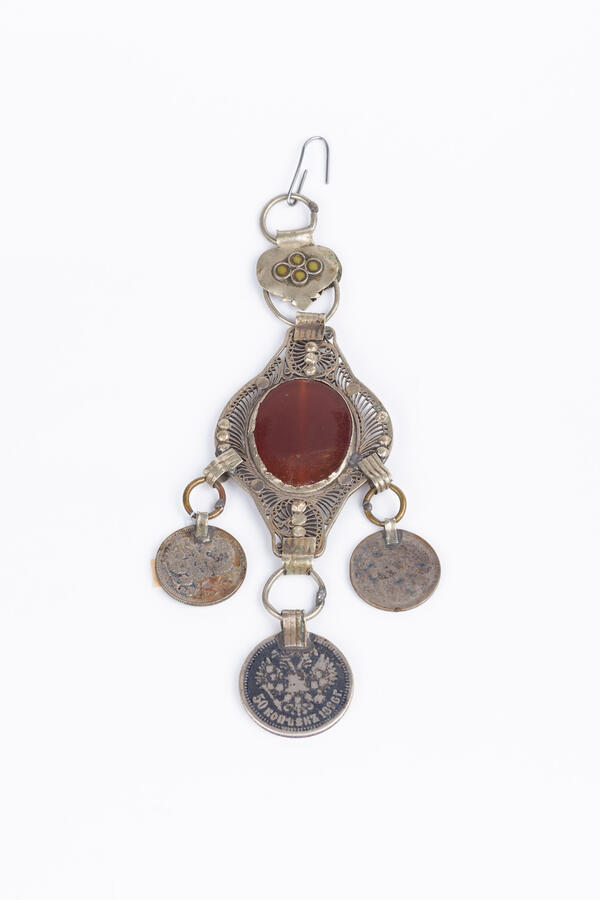
Our collection includes an antique chupla: a special accessory for a woman’s braid. In the past, women would braid the chulpa pendants into their hair by using special ribbons. As a woman walked about, the pendants would jingle against one another. The resulting pleasant sound was believed to ward off evil spirits.
A single chulpa pendant would usually consist out of several metal plates of different sizes. There were several techniques for making and adorning such plates: skan' (filigree), casting, or etching. Chulpas also had a system of additional adornments, usually smaller metal plates or coins.
The shape of a chulpa varied, from a star to a fan. The most common flat filigreed chulpas were sail-shaped. Chulpas that were completely covered in etchings were much rarer.
The number of metal plates in a chulpa, as well as the method of joining the plates together, was highly important. Certain chulpa varieties had two or three plates, but sometimes the number of elements in a single chulpa was as high as six or even nine. The heavier parts of the pendant were secured with a special ‘yoke’ technique: the plates were attached to two braids at once, in two or three tiers. The chulpa adornments often included exquisite arrangements out of coins and even large gemstones in a metal setting.