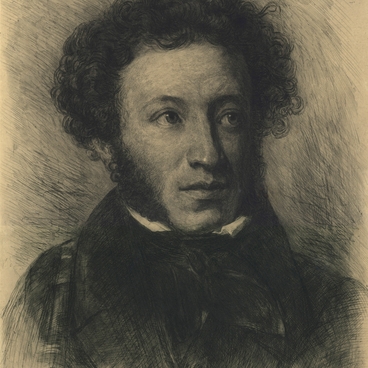
The Irbit Museum of Fine Arts houses a caricature portrait of Ivan Fyodorovich Gorbunov — an acclaimed actor, national favorite, and master of storytelling. The work was created by Alexander Ignatievich Lebedev (1830–1898), a gifted mid-19th-century artist and graduate of the Imperial Academy of Arts.
This image belongs to Lebedev’s celebrated series “Caricature Album of Contemporary Russian Figures”, produced between 1867 and 1869. Lebedev gained fame for his uncanny ability to capture the essence of a person’s character: his caricatures were not merely humorous but deeply insightful — like miniature novels. The lithographic technique he employed allowed him to fully showcase his remarkable artistic talent.
Ivan Fyodorovich Gorbunov was one of the most outstanding theatrical figures of his era. He began his career at Moscow’s Maly Theater and later moved to St. Petersburg, where he became a star of the Alexandrinsky Theater. His monologues and satirical sketches — depicting the lives of ordinary people, merchants, and petty officials — were immensely popular. Many of his characters and even specific phrases entered the national consciousness and became widely known across Russia.
In this image, Lebedev masterfully conveys Gorbunov’s distinctive persona. The actor’s recognizable features — a prominent nose, expressive eyes, and an ever-present twinkle of wit — evoke his stage presence so vividly that viewers can almost hear his voice and imagine his performances. Notably, Lebedev chose to depict him in simple, unassuming attire, underscoring Gorbunov’s closeness to the common people and his lack of aristocratic pretension — a reflection of the actor’s modest personal life.
Gorbunov’s performance style can be seen as a precursor to modern stand-up comedy: he performed alone, using only a chair and, occasionally, a balalaika as props. Everything else relied on his acting skill, inexhaustible charisma, and the magnetic charm of a consummate storyteller.
Lebedev’s albums were far more than simple entertainment. Through portraits of prominent cultural and public figures — actors, writers, artists, and intellectuals — he offered a vivid mirror to Russian society. His works subtly yet powerfully exposed social vices and injustices. In mid-19th-century Russia, the creative intelligentsia played a vital role in shaping public opinion, and Lebedev, through his caricatures and other memorable works, was regarded as a leading voice among progressive artistic circles. Contemporaries admired his unique gift: beneath the surface playfulness of his art lay sharp observation and an unflinching truth about life.