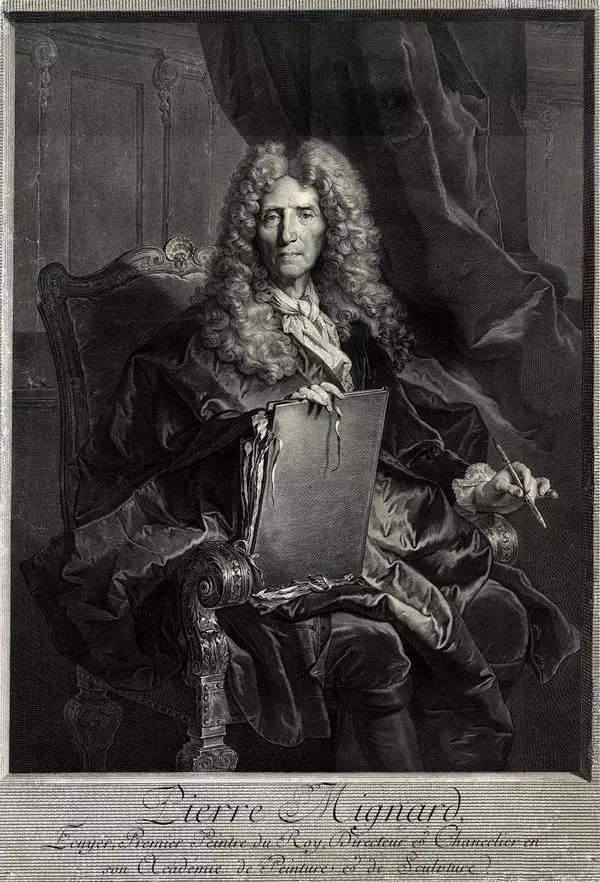
The Irbit Museum of Fine Arts holds a print by Georg Friedrich Schmidt titled “Portrait of Kirill Razumovsky”, after the original by Louis Tocqué from the collection of the Tretyakov Gallery. Schmidt was a preeminent engraver of the 18th century. He was appointed court artist to the Prussian king in 1744 and elected an academician of the Royal Academy of Painting and Sculpture in Paris as early as 1742. During his time in Russia, he specialized in portraits of statesmen and members of the highest nobility.
Tocqué painted Kirill Grigorievich Razumovsky when the count served as Hetman of the Zaporozhian Host (Ukraine). Accordingly, the artist depicted him in the ceremonial uniform of a general, adorned with the Orders of St. Andrew the Apostle the First-Called and the Order of the White Eagle. Schmidt’s work faithfully reproduces this image: Razumovsky stands holding the hetman’s mace — a traditional symbol of Cossack authority — while a sword hangs at his belt. At his feet lie battle banners and signal drums, underscoring his martial stature and readiness for campaign. It is worth noting that the hetmanate was abolished in 1764, and, as a compensation, Razumovsky was appointed field marshal — despite never having participated in a single military battle.
Kirill Razumovsky hailed from a Little Russian (Malorussian) Cossack family. His meteoric rise, immense wealth, and distinguished career were largely due to the influence of his elder brother, Alexei Razumovsky, who became the favorite — and, according to persistent rumors, the secret spouse — of Empress Elizabeth Petrovna in 1742. As a result, the entire Rozum family was elevated to nobility under the name Razumovsky, summoned to St. Petersburg, and swiftly integrated into the highest echelons of imperial society, where they wielded considerable influence.
Between 1743 and 1745, Kirill Razumovsky pursued studies in Europe. He returned to Russia at the age of sixteen, already bearing the title of count and the court rank of chamberlain. By the age of eighteen, he was appointed President of the St. Petersburg Academy of Sciences. Renowned as one of the most erudite men of his era, Razumovsky was also a devoted patron of the arts. His extensive painting collection — significantly enriched during his European travels — ranked among the finest in St. Petersburg.