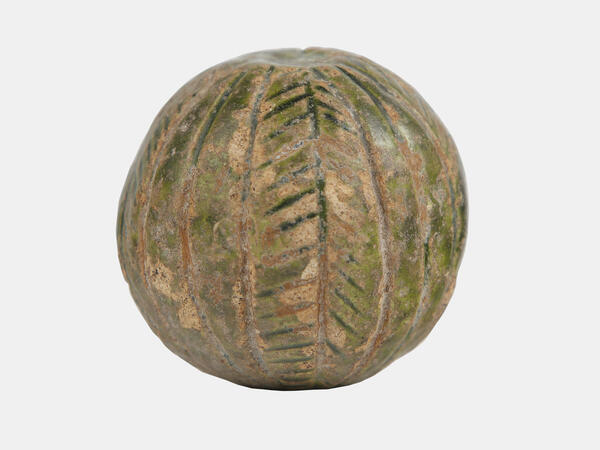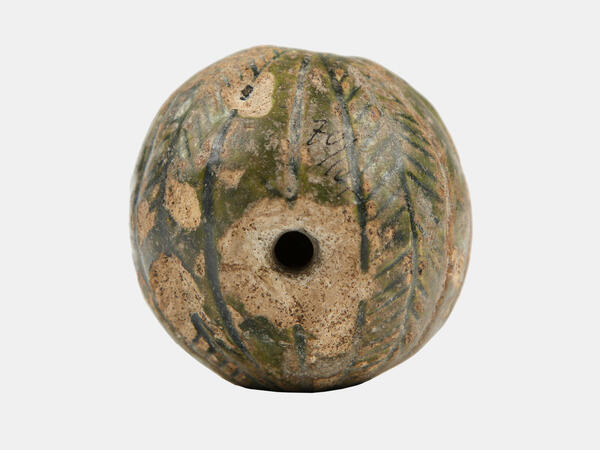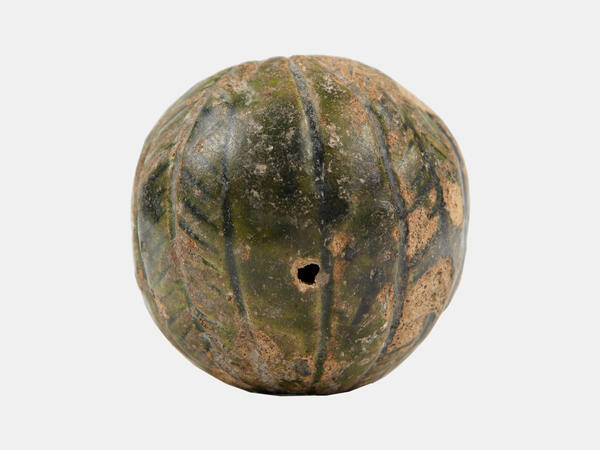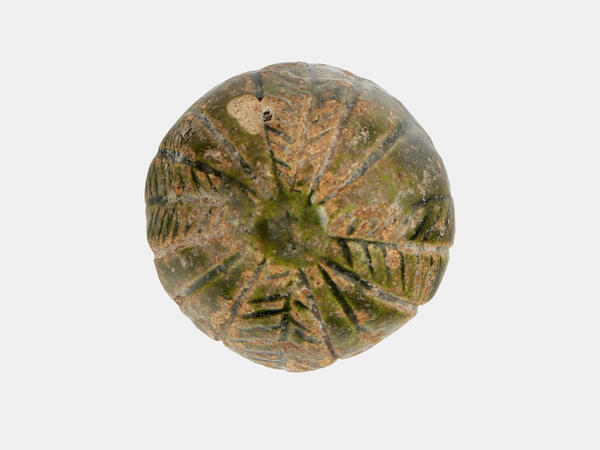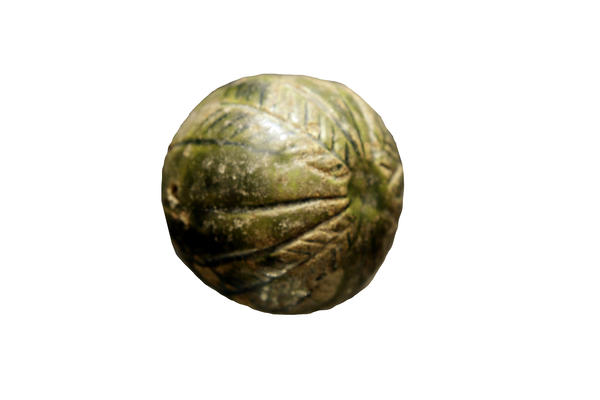
Most of the archaeological finds made on the territory of the Tula Kremlin are pottery items: dishes, whistles, and toys. However, ball-shaped rattles are a quite rare type of noise-making clay toys.
Spherical rattles were made from two symmetrical halves; they were sculpted by hand, or a base mold was used. Before assembling the toys, a noise element — a clay ball or pebble — was placed inside, after which the two halves were fastened together.
Often, before drying, the surfaces of rattles were decorated with relief ornaments in the form of rollers, as well as carved decor. After firing, the rattles were coated with a layer of yellow, brown, or green glaze and then fired again. The rattle could have one or two holes for better sound.
Rattle balls came into use after disc-shaped ones: in the cultural layer of the Tula Kremlin, they appear no earlier than the beginning of the 17th century. Rattles have been known all over the world since ancient times; they were made from wood, clay, bones, horns, and tortoiseshell. The earliest items were found in Ancient Egypt and are more than 5,000 years old.
Rattles were a traditional amulet gift for newborns. People believed that the noise and chime scared away evil spirits that could harm the baby. Old Russian rattles were called “tarakhtushkas”. Rattles produced a quiet noise, which calmed children down and helped them fall asleep faster.
Russian rattles were made from wood, clay, leather, birch bark, and straw. Dried peas, beans, seeds, and beads were put inside. The rattle was often attached to a stick to make it easier for the child to hold it. Painting the toy became more sophisticated over time and developed from simple notches and dots to filigree painted patterns.
The round and spherical shape of the toy was a single symbol of the sun, life, and harvest throughout the world. Rattles were painted with patterns that for a long time retained connections with pagan symbols. The Pomors made rattles-sharkunoks: many cubes were woven from birch bark. Then sticks, seeds, pebbles, and small bones were placed in each of the boxes and they were connected into one cube on a stick.