

In 16th-century Germany, jugs and traditional beer mugs known as beer steins began to be produced of stoneware. They were lavishly decorated with relief images and paintings dedicated to a variety of subject matters.
Stoneware steins were popular in Germany until the 19th century when they had to compete with porcelain and faience mugs. For several decades, their production was discontinued. It was only in the 1870s that Germans became interested in their history and culture and turned to stoneware once again.
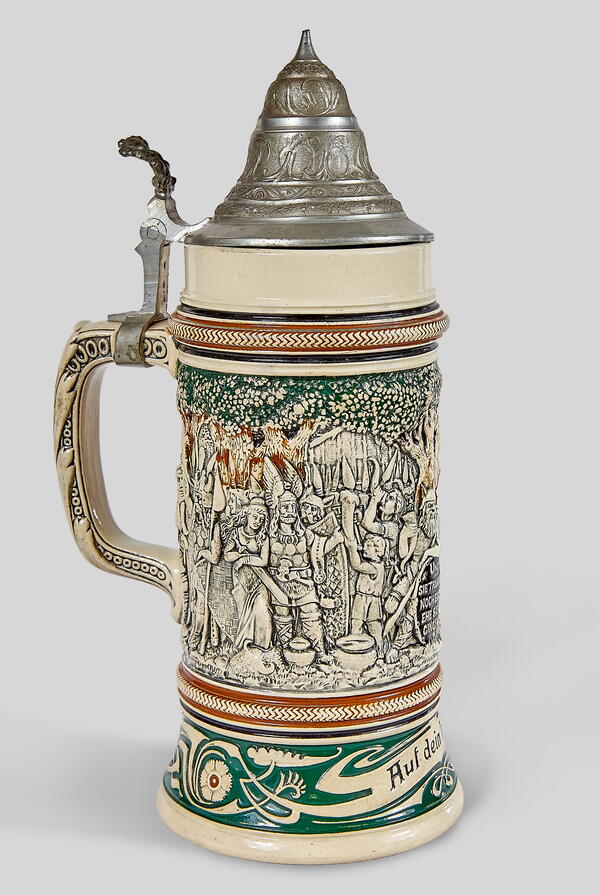
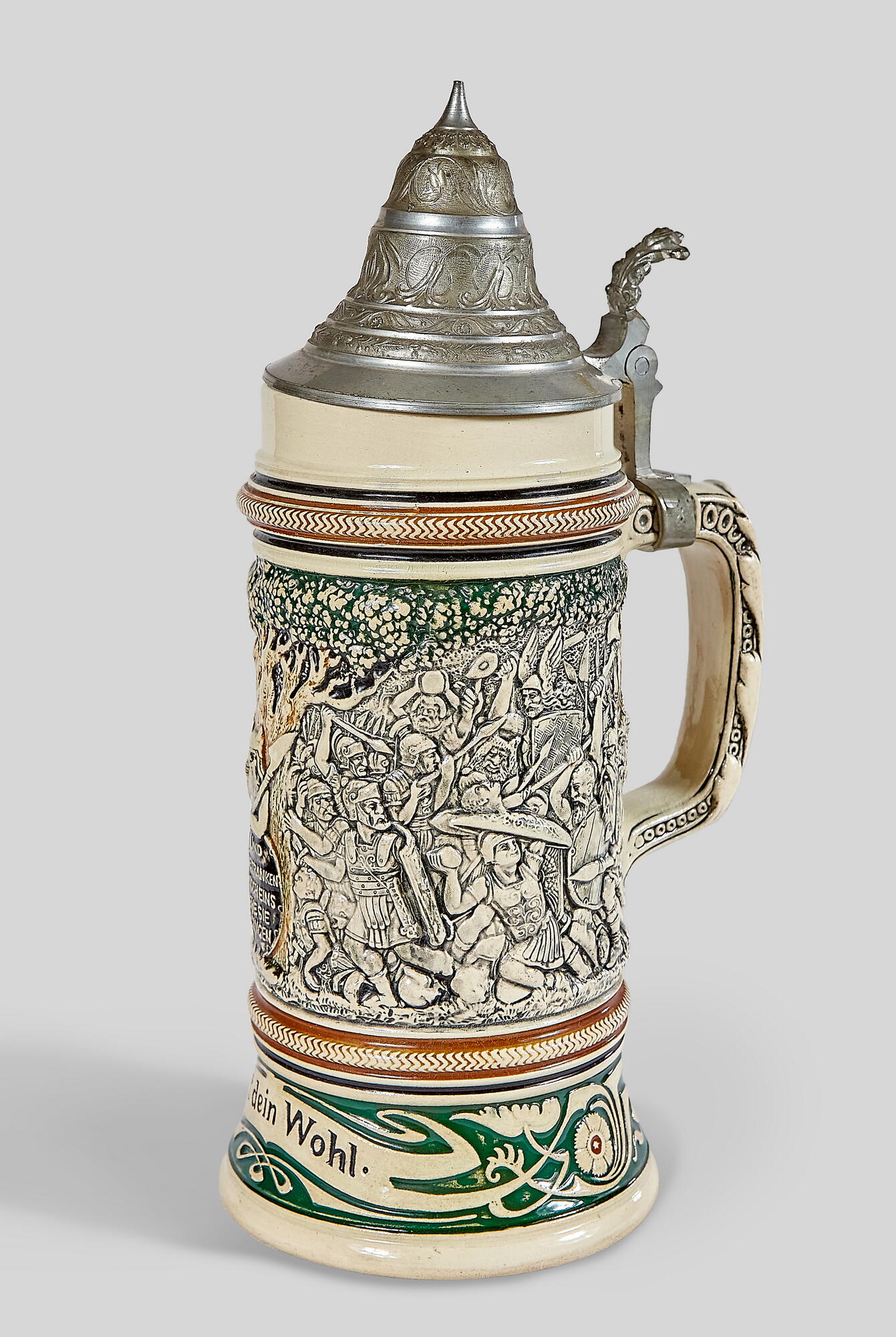
Peter Dümler was among the artists who actively contributed to the revival of traditional crafts. His sketch was used to produce the beer stein from the museum’s collection. The design was created in 1883 at a ceramics factory in the town of Höhr, nowadays known as Höhr-Grenzhausen in the Westerwaldkreis.
The decoration is dedicated to the historical victory of the Cherusci tribe over the Romans in the Teutoburg Forest in the 9th century. The battle is depicted on one side of the mug, and the celebration of victory on the other one. In the center of the composition, against the background of a tree, there is a Germanic warrior with a horn in his hand. He leans on the shield with the inscription that reads,
Stoneware steins were popular in Germany until the 19th century when they had to compete with porcelain and faience mugs. For several decades, their production was discontinued. It was only in the 1870s that Germans became interested in their history and culture and turned to stoneware once again.
Peter Dümler was among the artists who actively contributed to the revival of traditional crafts. His sketch was used to produce the beer stein from the museum’s collection. The design was created in 1883 at a ceramics factory in the town of Höhr, nowadays known as Höhr-Grenzhausen in the Westerwaldkreis.
The decoration is dedicated to the historical victory of the Cherusci tribe over the Romans in the Teutoburg Forest in the 9th century. The battle is depicted on one side of the mug, and the celebration of victory on the other one. In the center of the composition, against the background of a tree, there is a Germanic warrior with a horn in his hand. He leans on the shield with the inscription that reads,