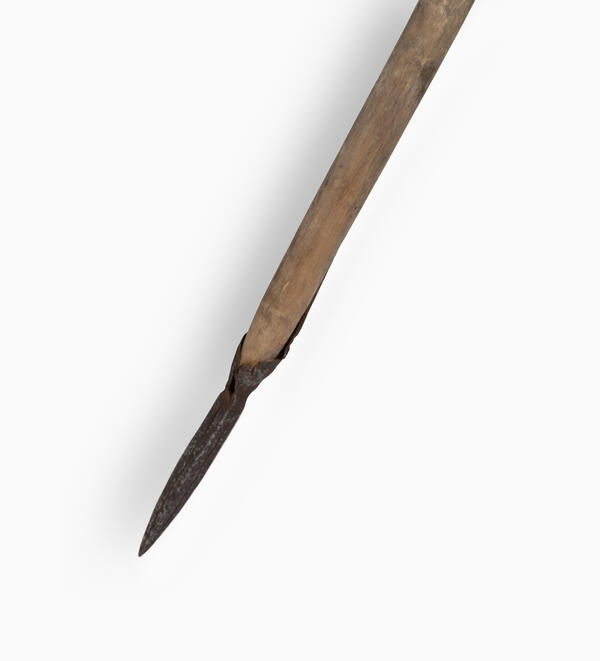
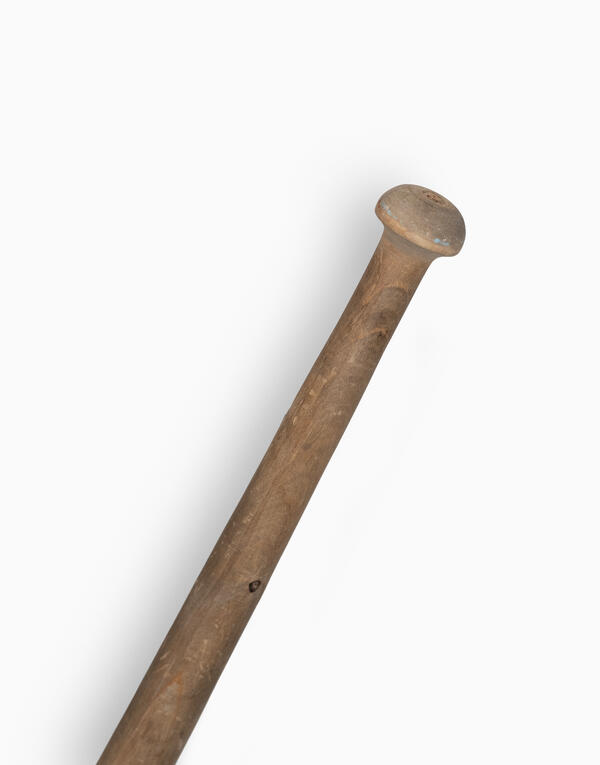
This four-sided ice chisel was designed for cutting holes in ice. It was crafted by artisans in the early 20th century. The exhibit originated in the Onega Uyezd of the Arkhangelsk Governorate. Since ancient times, such an ice chisel with a wooden handle has been used to cut holes in ice on waterbodies and in households. This design was developed over many centuries and was the most convenient option in winter.
The lower metal part was heavy, allowing for a powerful blow. The upper part was lighter, which helped minimize shock vibrations from the ice chisel due to its low center of gravity. The two parts were connected using wrought iron nails. The ice chisel was designed so that the pointed bottom of the wooden handle fit tightly into the conical sleeve, which was forged in the upper metal part.
Depending on the time of year, fishermen used different types of ice chisels. In early winter, when the ice was still thin, they used a light crowbar with a shorter metal part and a longer wooden handle. In the middle of winter, when the ice reached its maximum thickness, they would bring an ice chisel with a heavier and longer metal part and a shorter wooden handle. This is the type of ice chisel that is displayed at the museum.
The tip of the ice chisel was made of steel and had four sides. Usually, it had a sharpened edge on all four sides. Sometimes, there were also ice chisels with a double-edged tip. There were also longitudinal grooves running from the tip to the sleeve, along the center of each side, about three millimeters deep. These grooves were there to allow water to escape when the chisel hit the ice.
The peasants ordered metal parts for their ice chisels from the local blacksmiths. They made the components using scraps of iron objects that had become unusable. Blacksmiths also sold short and thick nails used for fastening the parts together.
The wooden handle was created by the fishermen themselves using dried wood. They chose spruce or birch. This work was done in the spare time after agricultural work or fishing.