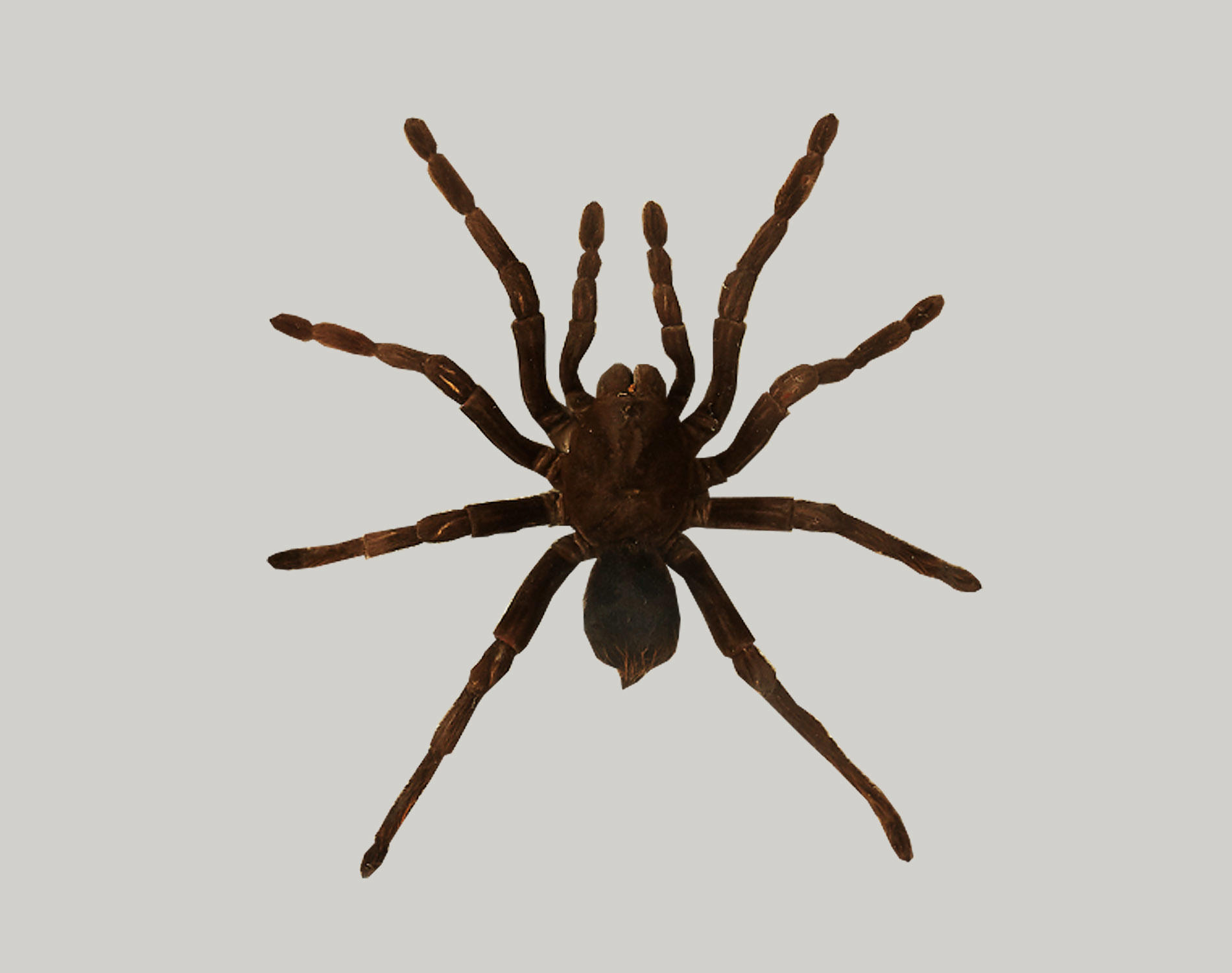


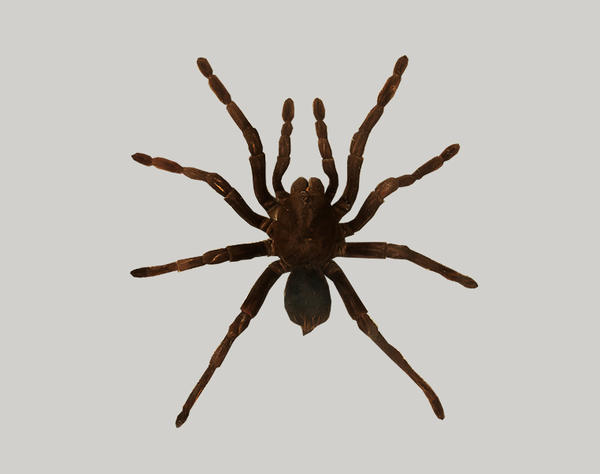
Pamphobeteus antinous (black pamphobeteus), also known as the giant black tarantula, is one of the largest spiders of the genus Pamphobeteus; it lives in tropical forests of Bolivia and Peru; it is aggressive and quick. Adults can even attack very large prey, including frogs and rodents.
The body of giant black tarantula consists of the cephalothorax and abdomen coated with durable chitin. The spider’s eight eyes are located on the cephalothorax. Tarantula spider has six pairs of limbs: four pairs of legs, chelicerae, that is, mouthparts designed for digging, self-defense and prey capture, and pedipalps, the tentacles used for touch.
The color of Pamphobeteus antinous depends on its gender. Males have purple chelicerae and forelegs, and red hair on the abdomen (posterior part of the body); females are usually darker than males, their coloration is closer to black. Pamphobeteus antinous with its impressive size is quite “slim”: its body reaches ten centimeters in length, and the sweep of the legs reaches twenty centimeters. Tarantula spiders grow relatively slowly, males reaching their puberty only at the age of two years; females mature closer to the fourth year.
Giant black tarantulas build shelters on trees or live in holes in the ground. It is noteworthy that as they grow older they change their environment, that is, younger spiders spend most of the time in the ground holes, and adults usually live on the surface. Burrowing spiders create houses in the soil, and tree spiders weave webs in the bark of trees.
Tarantula spiders are active only if they have to. Even hungry individuals in anticipation of prey may refrain from creeping out of the shelter for a long time. Well fed black tarantula females often stay in their burrows for months. Despite the fact that these spiders are called bird spiders, giant black tarantulas have difficulties with constant digesting of meat food; for this reason their diet consists mainly of small insects.
The life span of Pamphobeteus antinous depends on gender. Females live much longer than males. Having reached puberty, males, as a rule, do not shed their crust, and if they are unable to mate with a female, they will die in a few months, or sometimes survive to a year. The life span of females is measured in decades. Scientists know individuals that lived up to thirty years or more.
The body of giant black tarantula consists of the cephalothorax and abdomen coated with durable chitin. The spider’s eight eyes are located on the cephalothorax. Tarantula spider has six pairs of limbs: four pairs of legs, chelicerae, that is, mouthparts designed for digging, self-defense and prey capture, and pedipalps, the tentacles used for touch.
The color of Pamphobeteus antinous depends on its gender. Males have purple chelicerae and forelegs, and red hair on the abdomen (posterior part of the body); females are usually darker than males, their coloration is closer to black. Pamphobeteus antinous with its impressive size is quite “slim”: its body reaches ten centimeters in length, and the sweep of the legs reaches twenty centimeters. Tarantula spiders grow relatively slowly, males reaching their puberty only at the age of two years; females mature closer to the fourth year.
Giant black tarantulas build shelters on trees or live in holes in the ground. It is noteworthy that as they grow older they change their environment, that is, younger spiders spend most of the time in the ground holes, and adults usually live on the surface. Burrowing spiders create houses in the soil, and tree spiders weave webs in the bark of trees.
Tarantula spiders are active only if they have to. Even hungry individuals in anticipation of prey may refrain from creeping out of the shelter for a long time. Well fed black tarantula females often stay in their burrows for months. Despite the fact that these spiders are called bird spiders, giant black tarantulas have difficulties with constant digesting of meat food; for this reason their diet consists mainly of small insects.
The life span of Pamphobeteus antinous depends on gender. Females live much longer than males. Having reached puberty, males, as a rule, do not shed their crust, and if they are unable to mate with a female, they will die in a few months, or sometimes survive to a year. The life span of females is measured in decades. Scientists know individuals that lived up to thirty years or more.