Font
Color
Graphics
Изображение точки

To see AR mode in action:

1. Install ARTEFACT app for iOS or Android;

2. Find the exhibition «Exhibition “Giving Good”»

3. Push the «Augmented reality» button and point your phone's camera at the exhibit;

Скрыть точки интересаПоказать точки интереса
Показать в высоком качестве

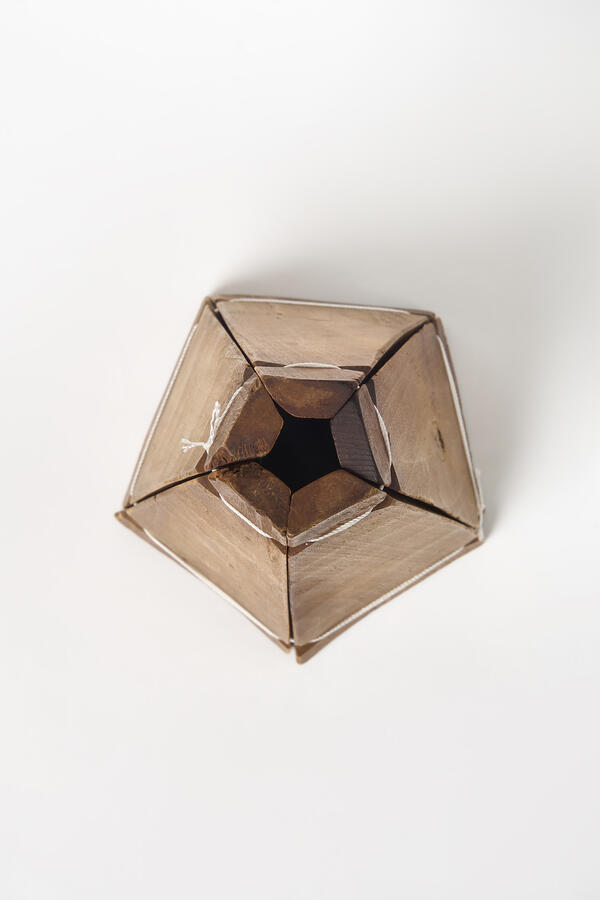
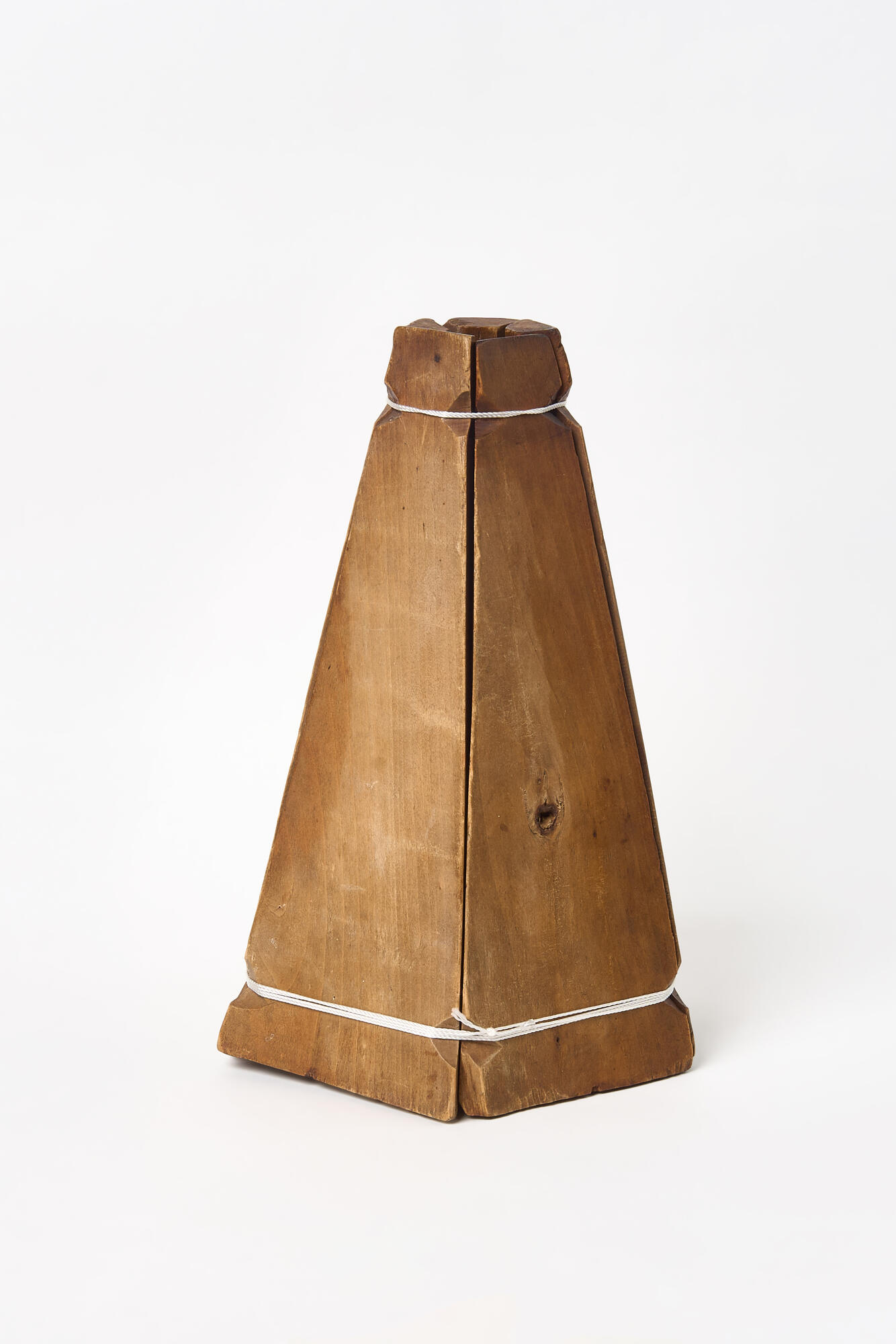
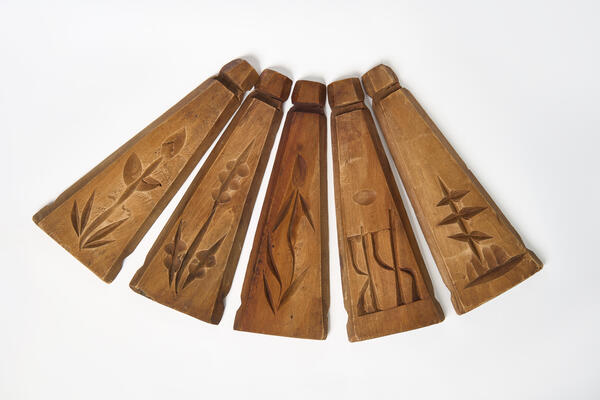
Pyramid-shaped pentagonal Easter mold

Creation period
the early 20th century
Place of сreation
the Russian Empire
Dimensions
20,2x13,2x4,2 cm
Technique
wood; sawing, incised wood carving
10
Open in app
#7

A pasochnitsa is a sectional mold designed to make Easter cottage cheese. This dish, along with kulich (Easter cake) and eggs, can be consecrated in church on Great (or Holy) Saturday, the eve of Easter Sunday.

This custom goes back more than one millennium. Since ancient times, cottage cheese has been considered sacred food. The reason is that in the past the ingredients used to make Easter cottage cheese (sugar, drawn butter, sour cream, eggs and, of course, cottage cheese) were considered a luxury for many people with modest incomes. According to the ancient Slavic tradition, this dish was made once a year for the feast on Easter Sunday.

A mold was made of several wooden planks in the form of a truncated pyramid, which symbolizes Calvary, the mountain where Jesus Christ was crucified.
#5
Pyramid-shaped pentagonal Easter mold
#3

Nowadays, Easter molds tend to be made of metal and plastic, while in the old days this kitchen utensil was made of wood. In Old Russia, wood from deciduous trees was used to make Easter cheese molds. Mostly linden wood was used as the softest and most suitable for carving; birch or aspen was less common.


When making an Easter cotton cheese mold, trapezoidal boards 1 to 1.5 centimeters thick were sawn out. If there were four of them, two had ears on the sides and the other two had slots for them. When assembled, the ears were inserted into the slots and fastened with special wedges. A simpler variant of joining included slits on the outside of the boards. In this case, they were fastened with ordinary string.

Originally, to create the structure of the Easter cheese mold, simple wooden planks were fastened together. A little later they began to be decorated with carved drawings. Traditionally, on the inner side of each plank there are carved letters XB, meaning the Easter greeting “Christ is Risen!”. There could also be images of a cross and a spear — instruments of Passion of Jesus Christ. Easter cheese molds featured floral designs, such as grape clusters or flowers and grass — symbols of the Resurrection of Christ and the rebirth of life. Sometimes a dove was depicted as a symbol of the Holy Spirit.

To make Easter cheese molds last longer, they, like other wooden items for storing and cooking food, were soaked in well-heated vegetable oil.

#6
Pyramid-shaped pentagonal Easter mold
#4
read morehide
00:00
00:00
1x

Pyramid-shaped pentagonal Easter mold

Creation period
the early 20th century
Place of сreation
the Russian Empire
Dimensions
20,2x13,2x4,2 cm
Technique
wood; sawing, incised wood carving
10
Point your smartphone camera to open in the app
Share
VkontakteOdnoklassnikiTelegram
Share on my website
Copy linkCopied
Copy
Open in app
To see AR mode in action:
  1. Install ARTEFACT app for 
  2. iOS or Android;
  3. Find and download the «Paintings in Details» exhibition
  4. Push the «Augmented reality» button and point your phone's camera at the painting;
  5. Watch what happens on your phone screen whilst you flip through the pictures.
 
We use Cookies
Cookies on the Artefact Website. We use cookies to ensure that we give you the best experience on our website. If you continue without changing your settings, we'll assume that you are happy to receive all cookies on the Artefact website. However, if you would like to, you can change your cookie settings at any time.
Learn more about useHide
Content is available only in Russian

X

Нашли опечатку?...

%title%%type%