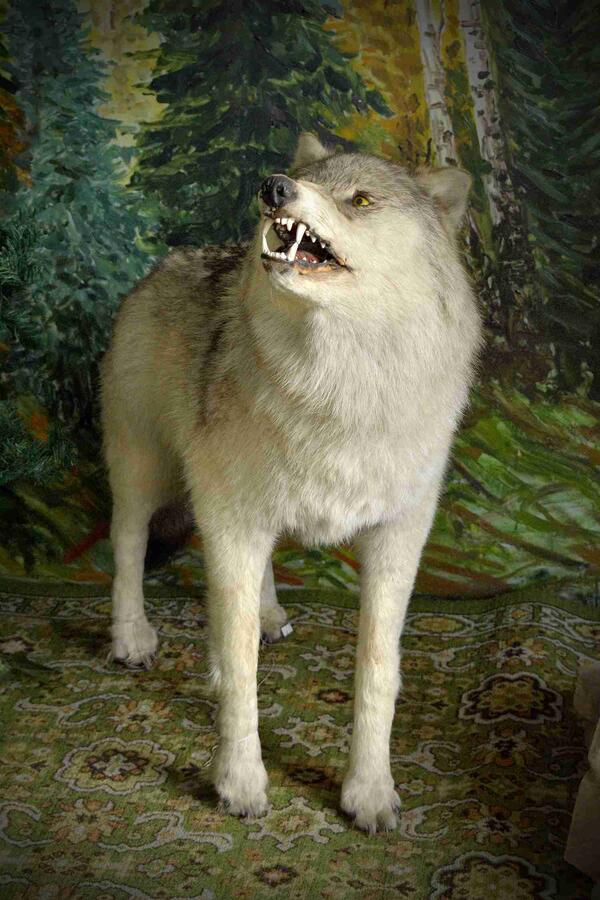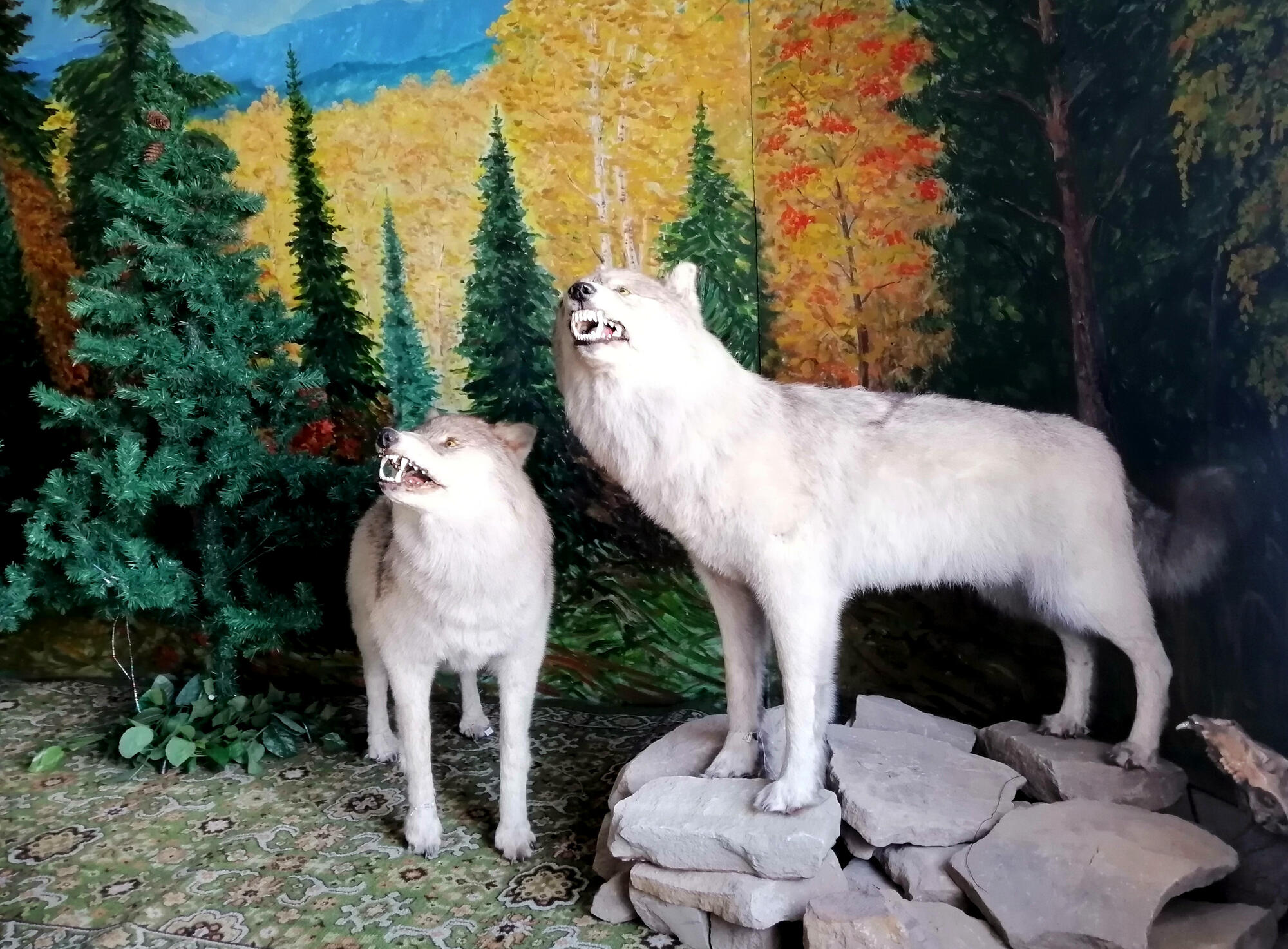


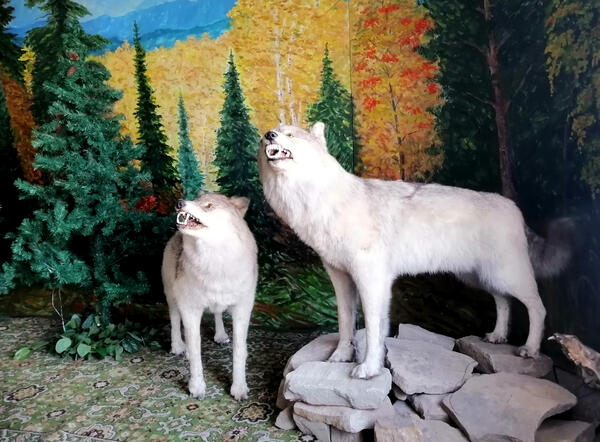
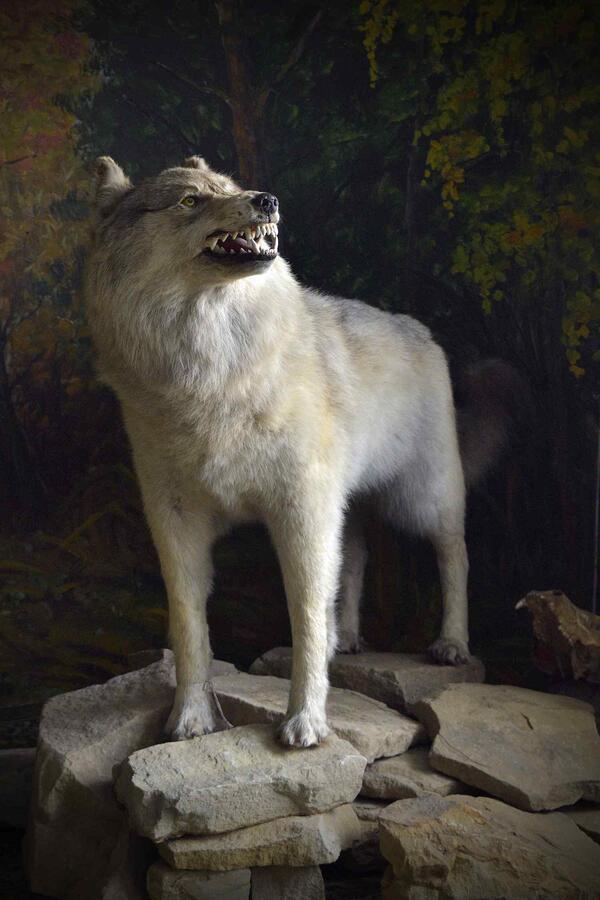
The grey wolf bears a close resemblance to a dog, which is not surprising as these canines share common ancestors. However, the wolf looks a lot bigger. The length of its body can reach 110 to 160 centimeters and of its tail — up to 52 cm. Its height at the withers ranges from 60 to 90 centimeters, while the weight of this animal can reach 80 kilograms. Certain specimen were found to weight as much as 92 kg. Wolves’ size and weight depend on where they live. The colder the climate, the bigger, on average, this animal is. Males are always larger than females.
Grey wolves have a thick, fairly long and insulating coat, which consists of two layers. The outer coat is coarser and protects the animal from dirt. The undercoat is water-resistant and insulates the canine from the cold and prevents it from getting wet. These predators live in forests, steppes, deserts, the taiga (boreal woods), the tundra, forest steppes and at the base of mountains. Interestingly, the only region grey wolves do not inhabit in Russia is the Sakhalin island.
They live in packs, and hunt, play and even howl together. A wolf pack is a family unit that is comprised of animals of various ages. There can be from 3 to 40 canines in it. These animals rely on their sensory organs for survival. They use them to hunt as well as to communicate with each other. Its excellent auditory perception allows the predator to hear howling of its fellow pack member from as far as 7 kilometers away. Their sense of smell is 100 times better than that of a human.
Grey wolves are easily adaptable predators. This animal can run at a speed of 55 km/h. Hence, it can catch a large hoofed animal, such as deer, elks, Saiga antelopes, sheep and goats. They also hunt herds of cattle. In addition, grey wolves feed on hares, various rodents and birds. Sometimes, they can even eat dead members of their pack.
On average, these animals need 3 to 4.5 kg of meat a day. The canines also stock up on food. Having had its fill, a wolf buries the remaining pieces of meat. These predators can survive for more than two weeks without food. In summer, their diet usually includes plant-based foods, such as fruit and berries.
The grey wolf plays an important role in maintaining a balanced ecosystem. They help regulate the number of large hoofed animals. In addition, these canines are, in a way, viewed as guardians of the environment as they rid it of sick creatures, thereby preventing diseases from spreading.
Grey wolves have a thick, fairly long and insulating coat, which consists of two layers. The outer coat is coarser and protects the animal from dirt. The undercoat is water-resistant and insulates the canine from the cold and prevents it from getting wet. These predators live in forests, steppes, deserts, the taiga (boreal woods), the tundra, forest steppes and at the base of mountains. Interestingly, the only region grey wolves do not inhabit in Russia is the Sakhalin island.
They live in packs, and hunt, play and even howl together. A wolf pack is a family unit that is comprised of animals of various ages. There can be from 3 to 40 canines in it. These animals rely on their sensory organs for survival. They use them to hunt as well as to communicate with each other. Its excellent auditory perception allows the predator to hear howling of its fellow pack member from as far as 7 kilometers away. Their sense of smell is 100 times better than that of a human.
Grey wolves are easily adaptable predators. This animal can run at a speed of 55 km/h. Hence, it can catch a large hoofed animal, such as deer, elks, Saiga antelopes, sheep and goats. They also hunt herds of cattle. In addition, grey wolves feed on hares, various rodents and birds. Sometimes, they can even eat dead members of their pack.
On average, these animals need 3 to 4.5 kg of meat a day. The canines also stock up on food. Having had its fill, a wolf buries the remaining pieces of meat. These predators can survive for more than two weeks without food. In summer, their diet usually includes plant-based foods, such as fruit and berries.
The grey wolf plays an important role in maintaining a balanced ecosystem. They help regulate the number of large hoofed animals. In addition, these canines are, in a way, viewed as guardians of the environment as they rid it of sick creatures, thereby preventing diseases from spreading.