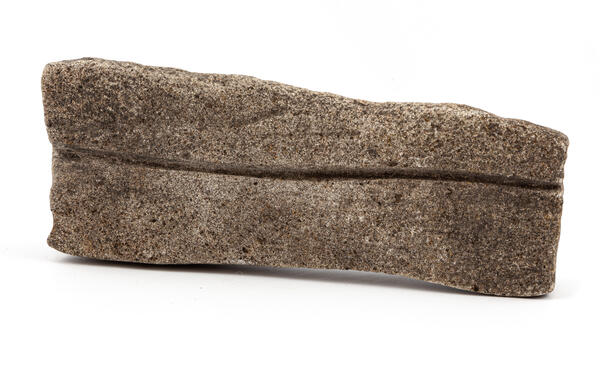
Knives, axes, and scythes were used on a regular basis, and sooner or later their metal elements lost their sharpness. To restore it, people used whetstones or sharpening stones. They looked like blocks and were composed of natural or man-made materials.
Initially, any found stone of a suitable shape could become a whetstone. Subsequently, people discovered that some stones were better suited for sharpening. Each settlement had its own source of abrasive rocks.
Such devices have been used by people since ancient times: archaeological finds indicate that whetstones were widespread across a variety of cultures of the Bronze Age.
Emery rock has been used as an organic abrasive for centuries. Its first deposits were found in ancient Greece. Most often, the rock was used to make grinding wheels, which accompanied sharpeners from different countries and eras as they walked the streets of ancient cities and offered sharpening services.
Many other rocks could also be used for making whetstones, as long as they contained small quartz grains. When the blade of a tool was rubbed against the surface of a whetstone, it had to be moistened with oil, sometimes water, otherwise, metal particles would stick to the rock and it would “glisten”.
All whetstones have the same operating principle. The abrasive particles have extremely high hardness. Once a block made of an abrasive material comes in contact with the surface of a steel blade with a lower hardness, small particles of metal are ripped off by abrasive grains. As layers of metal get removed one by one, the surface of the blade becomes leveled and acquires the necessary grinding angle and sharpness.
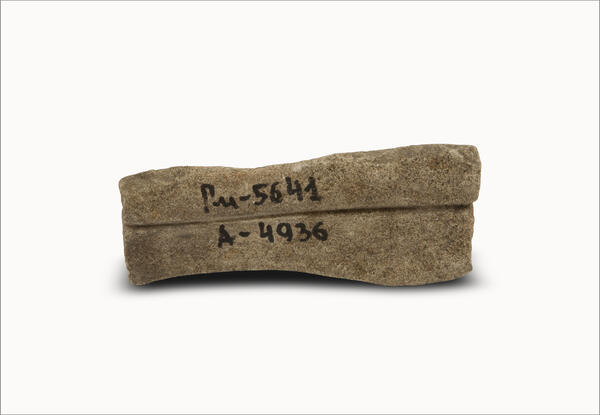
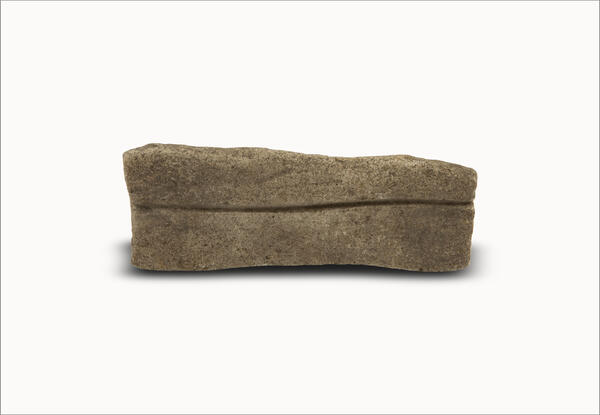
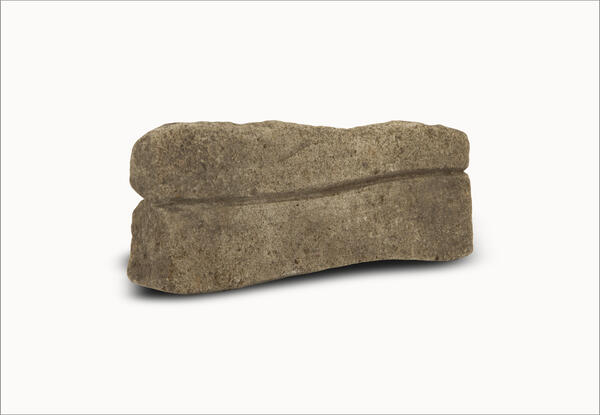
The item, found during the archaeological research on the territory of the Gorokhovets district, belongs to the period between the 12th and the 13th century. It is made from sandstone. It is a sedimentary rock, composed of quartz, feldspars, and mica. Sandstone, which was used to make whetstones, was often found on riverbanks. That is why such whetstones were also called “waterstones”.
Initially, any found stone of a suitable shape could become a whetstone. Subsequently, people discovered that some stones were better suited for sharpening. Each settlement had its own source of abrasive rocks.
Such devices have been used by people since ancient times: archaeological finds indicate that whetstones were widespread across a variety of cultures of the Bronze Age.
Emery rock has been used as an organic abrasive for centuries. Its first deposits were found in ancient Greece. Most often, the rock was used to make grinding wheels, which accompanied sharpeners from different countries and eras as they walked the streets of ancient cities and offered sharpening services.
Many other rocks could also be used for making whetstones, as long as they contained small quartz grains. When the blade of a tool was rubbed against the surface of a whetstone, it had to be moistened with oil, sometimes water, otherwise, metal particles would stick to the rock and it would “glisten”.
All whetstones have the same operating principle. The abrasive particles have extremely high hardness. Once a block made of an abrasive material comes in contact with the surface of a steel blade with a lower hardness, small particles of metal are ripped off by abrasive grains. As layers of metal get removed one by one, the surface of the blade becomes leveled and acquires the necessary grinding angle and sharpness.
The item, found during the archaeological research on the territory of the Gorokhovets district, belongs to the period between the 12th and the 13th century. It is made from sandstone. It is a sedimentary rock, composed of quartz, feldspars, and mica. Sandstone, which was used to make whetstones, was often found on riverbanks. That is why such whetstones were also called “waterstones”.