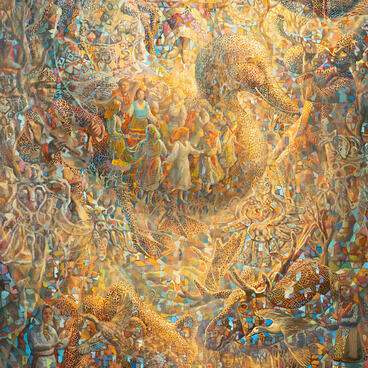
Alla Orlova comes from a dynasty of Mari artists. She is a master of decorative and applied arts, a teacher, and an Honored Artist of Russia. She has become a worthy heir to the traditions of the Orlov family of artists. Her mother Lilia Alexandrovna Orlova dedicated her life to the revival and preservation of the traditions of Mari embroidery. A graduate of the Yoshkar-Ola Art School, Alla Orlova is a hardworking and successful teacher who also creates works of art. Her works are distinguished by their elegant decorative elements, original compositions and great skill.
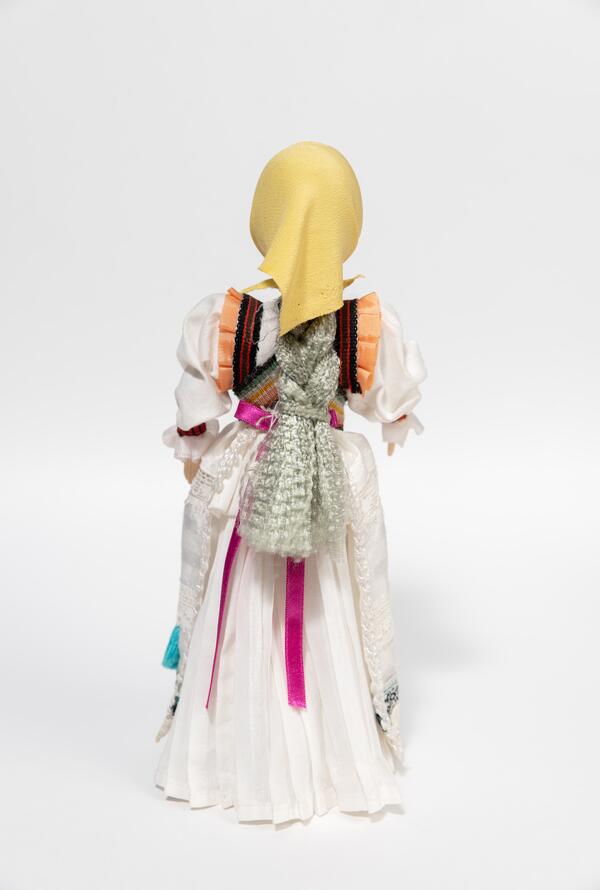
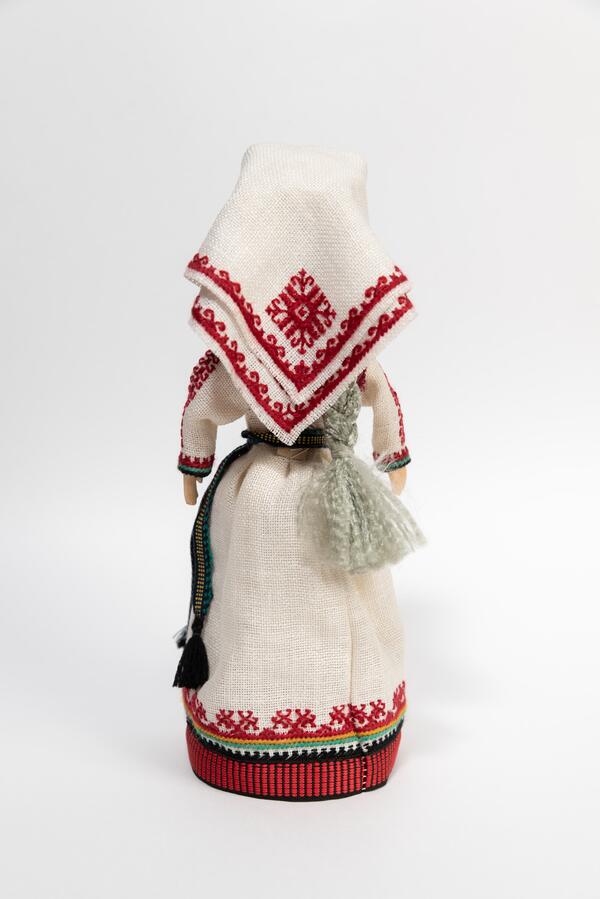
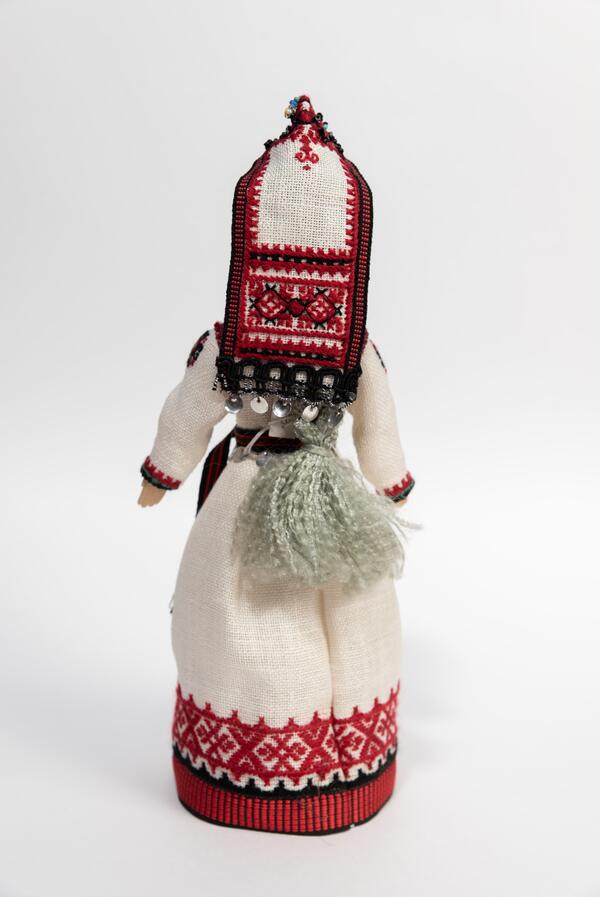
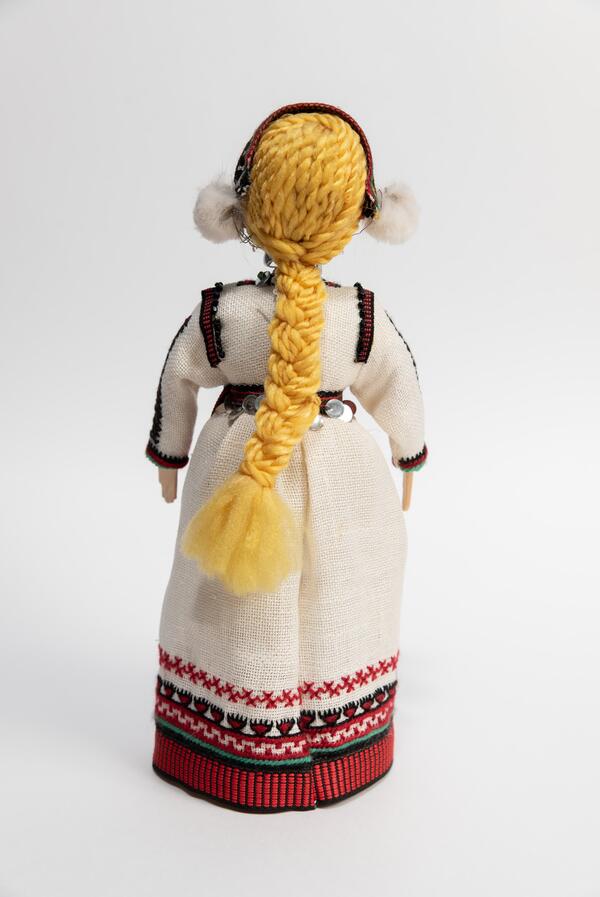
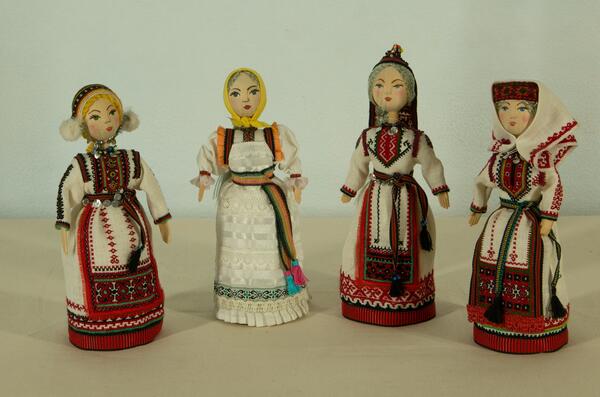
The beauty and harmony of the Mari folk costume, decorated with embroidery and jewelry, is reflected in her series of dolls. Each of them represents a woman’s outfit of a particular ethnic group of the Mari people. With her dolls in folk clothes, Alla Orlova captivates children and young people and exposes them to the national decorative arts. She conveys the originality of national culture in a unique way through decorative items.
The traditional women’s costume consisted of an embroidered white shirt (“tuvyr”), an apron (“onchylasakysh/anzylvach”), a caftan (“myzher/myzhar”, “shovyr/shavyr”), canvas trousers with a traditional woven belt with pendants (“ӱshtӧ/yshry”) (“yolash/ yalash”), a headdress and bast shoes with wool and canvas footwraps. The shirt was decorated with patches (“vochygach”). A set of accessories was a part of the festive costume. In the traditional Mari culture, the shape of the headdress and ornaments on in not only indicated the social status of a woman, but also testified to her belonging to one or another ethnographic group. The women’s costume of the Meadow Mari was complemented by a shawl (“shovych”) and headdresses like a “shimaksh” or a “soroka”. Mountain Mari women wore a headscarf (“savyts”), which replaced the traditional headdress (“sharpan”) with a forehead band (“nashmak”). Each doll in the presented series has its own unique features: though the costumes and hats, the artist shows representatives of different regions of the republic and their social status.
The beauty and harmony of the Mari folk costume, decorated with embroidery and jewelry, is reflected in her series of dolls. Each of them represents a woman’s outfit of a particular ethnic group of the Mari people. With her dolls in folk clothes, Alla Orlova captivates children and young people and exposes them to the national decorative arts. She conveys the originality of national culture in a unique way through decorative items.
The traditional women’s costume consisted of an embroidered white shirt (“tuvyr”), an apron (“onchylasakysh/anzylvach”), a caftan (“myzher/myzhar”, “shovyr/shavyr”), canvas trousers with a traditional woven belt with pendants (“ӱshtӧ/yshry”) (“yolash/ yalash”), a headdress and bast shoes with wool and canvas footwraps. The shirt was decorated with patches (“vochygach”). A set of accessories was a part of the festive costume. In the traditional Mari culture, the shape of the headdress and ornaments on in not only indicated the social status of a woman, but also testified to her belonging to one or another ethnographic group. The women’s costume of the Meadow Mari was complemented by a shawl (“shovych”) and headdresses like a “shimaksh” or a “soroka”. Mountain Mari women wore a headscarf (“savyts”), which replaced the traditional headdress (“sharpan”) with a forehead band (“nashmak”). Each doll in the presented series has its own unique features: though the costumes and hats, the artist shows representatives of different regions of the republic and their social status.