

The role of birds in the subsistence economy of the Mansi and Khanty was second only to that of fish and animals. Various birds were hunted in the fall, summer, and spring, and their meat was dried and preserved. Traps and bows were the main types of equipment for hunting birds, later replaced by guns. Birds also provided down and feathers, which have been used for various purposes since ancient times.
Feathers were burned during pagan rituals and the smoke was used in ceremonies. Feathers were used to decorate the clothing and drum of the shaman — the intermediary between the worlds of humans and spirits. Wing and tail feathers were also used to stabilize arrows.
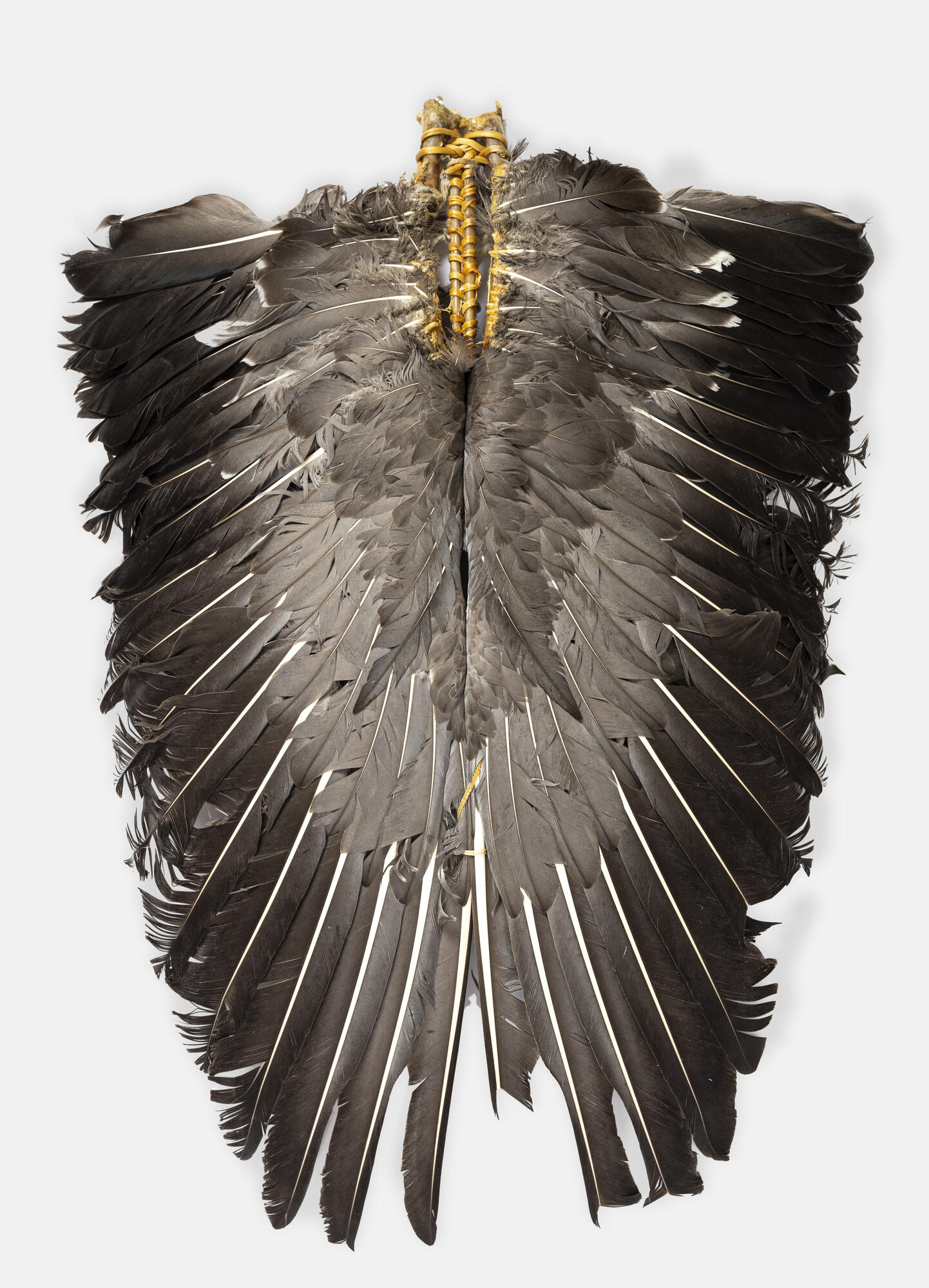
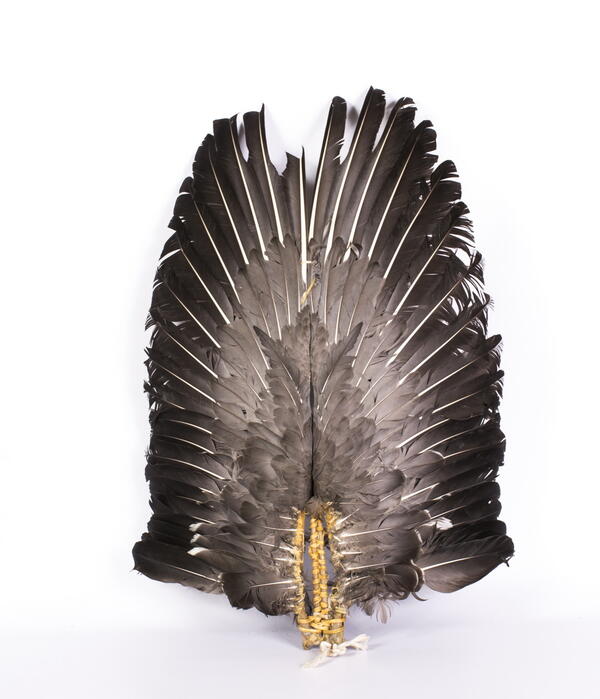
A fan of bird feathers was always kept near the main place in the house — the hearth. Fire was essential to survival in the northern climate and was therefore always believed to possess magical properties. The hearth was compared to a mother protecting and warming her child, hence the mythological personification of the hearth in the image of a mother.
According to Khanty beliefs, the female goddess lives in an open hearth, chuval, or an oven. The firewood is her flesh, and the flame is her soul. The homemaker always tends to the fire, feeding it with pieces of meat and drops of fat during traditional ceremonies, offering sacrificial clothes and handkerchiefs by burning scraps. Men also show their respect for the fire by giving it the first drops of wine during feasts.
The hearth is a sacred place that should be kept clean and in order. The homemaker must take care of it every day, changing the sand in the hearth, sweeping around it, and taking out the garbage. After cooking, the trivet’s crossbar must be removed from the poles and placed beside them. At the same time, the hooks for hanging cauldrons were cleaned and placed back on.
A broom made of bird’s wings with strong flight
feathers was used for cleaning. A fan was always kept beside it to kindle the
flame. The fan was made from the wings of a goose, duck, or loon. They were
fastened with a flexible cedar root ribbon, which was prepared in a special way
and also used for weaving boxes. When the fan wore out, it was repaired and
kept near the hearth as a broom.