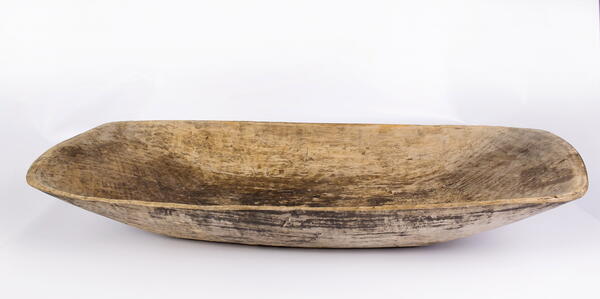
Wood is a traditional material for making tableware, household utensils, tools, and furniture. In Russia, Scandinavia, and countries of the Baltic region, craftsmen often chose birch which grows almost everywhere, regardless of the soil quality and climate, and has unique properties.
Birch bark and wood are odorless and naturally antibacterial, keeping food fresh for a long time and maintaining its health benefits. In Russia, some of the popular containers included birch bark tuyes boxes and bowls. Their size varied from miniature to extremely large, over a meter in height. Birch bark bowls were used for storing not only dry food but also drinks: a properly made bowl maintained the drink’s temperature for a long time and served as a thermos.
Unlike birch bark, which was used in women’s handicrafts, wood was traditionally processed by men. Birch wood is both strong and pliable. It is also flexible, easy to bend, and unlikely to split. Birch is also valued for its aesthetic qualities: a properly processed surface, especially the burl, a growth on the trunk, preserves the captivating texture of the wood. Birch products are durable and resistant to changes in temperature and humidity. This is especially important for utensils that have to withstand the high temperatures of hot broth and steamed porridge, as well as the cold conditions in which food is stored at night.
One of the distinctive types of wooden utensils are flat hollowed-out plates made from a single piece of wood. Such a plate has an elongated, boat-shaped form. It is shallow, has a small flat bottom, and sloping sides. It suits perfectly for serving national dishes of northern peoples. The shape of the plate allows meat and fish around the edges to cool quickly, while the food in the recessed center, where all the fat runs down, retains heat.
Reindeer herders kept tableware inside the house,
near the door, and stored containers with food supplies in the outer entrance
hall and barns. Fragile and breakable utensils were placed in wicker kornevatik
chests. In the 20th century, the traditional utensils of the
northern peoples began to be replaced by industrially produced metal, glass,
and later plastic utensils. However, birch bark and wooden utensils are still
used in the households of reindeer herders.