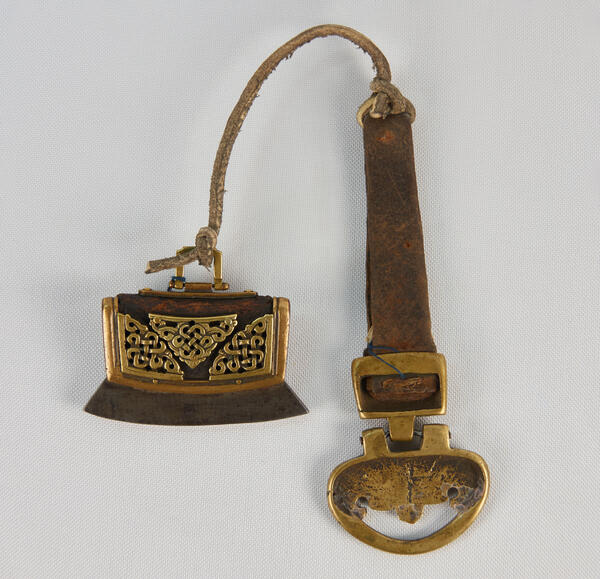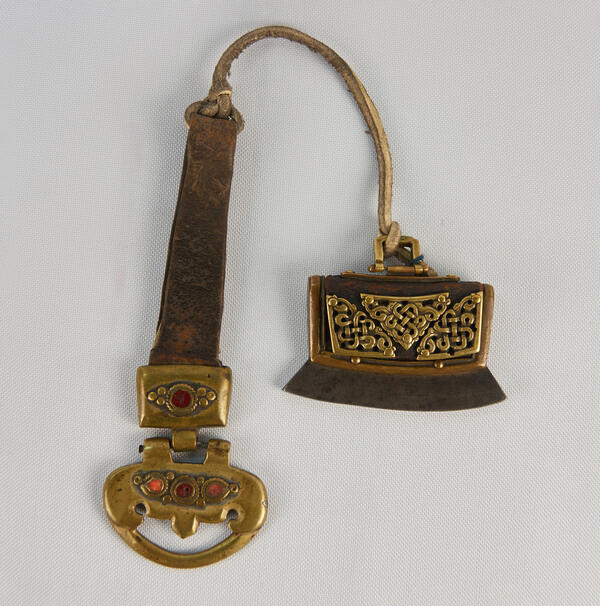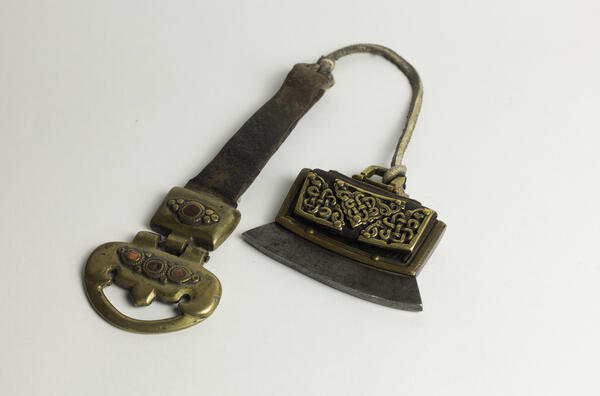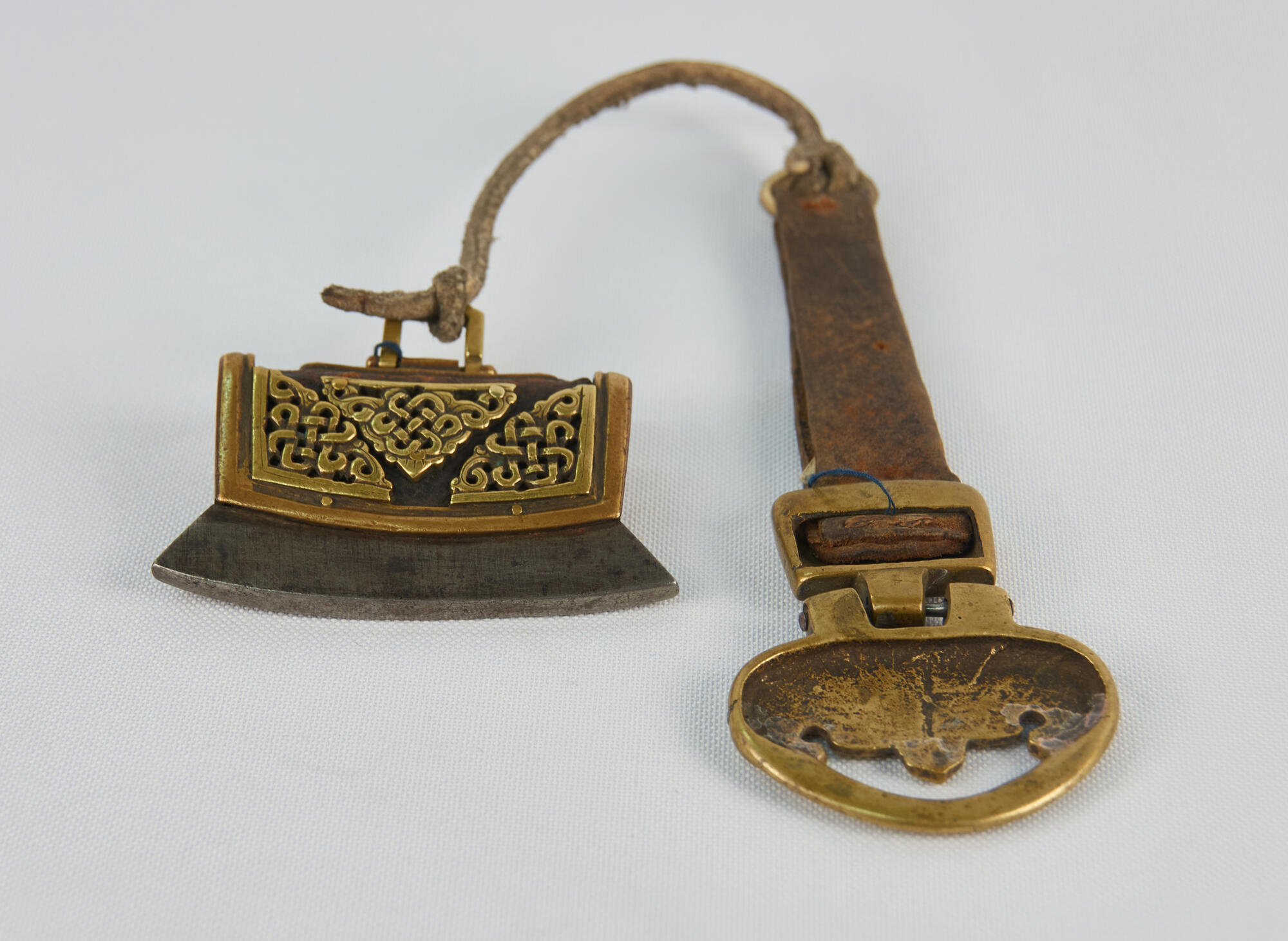


The National Museum of the Republic of Tuva has a collection of Turkic-Mongolian-type tinder pouches, widespread in South Siberia in the last quarter of the 19th — early 20th centuries. The Turkic-Mongolian type of tinder pouches is represented by various variants of a leather belt purse decorated with figural patterned overlays for keeping tinder and flint, as well as an impacting steel blade attached to its lower edge.
The main part of the collection of the National Museum is constituted by rather simple in form and material tinder pouches with traces of long-term use. As with neighboring peoples (Altai, Shors, Khakasses, Mongols and Buryats), they were used by Tuvans in everyday life and were an obligatory element of the tool kit of cattle breeders and hunters.
Along with everyday tinder pouches, richly decorated silver and gold-plated sets, among which there are striking pieces of art, were in great demand. They occupied the most prominent and honorable place in the yurt of nomads, and on solemn occasions and holidays they were suspended on the belt, which not only demonstrated wealth, prosperity and high social status, but also emphasized the connection with ancestors, who had left a family relic to descendants.
The tinder pouch presented in the museum is made in the form of a trapezoidal purse. The back wall and the flap are made of one piece of leather. The purse is encircled on the sides and in the lower part with a strip of white metal, secured with small nails.
The back side and flap of the purse are decorated with metal openwork stamped and engraved plates depicting the “knot of happiness” pattern, located in the lower corners and in the central part.
At the top, a rectangular piece of leather is attached to the fold with nails and lugs. A metal handle in the form of a staple was attached to the leather with two lugs, to which a belt buckle was tied with a thin leather strap.
The belt buckle (dergi) is one of the main accessories of men’s costume. The Tuvan custom of wearing ornately shaped suspended buckles on the belt has a very long tradition in the Turkic culture of the second half of the first millennium AD. It consists of an upper rectangular frame and a lower oval part. The buckle is inlaid with stones (coral, carnelian and agate).