The Ob Ugrians, including the Khanty and Mansi peoples, sewed traditional shoes from leather, fur, or deerskin (rovduga), sometimes they used fabric. The choice of material and the cut of the item depended on the time of year and the purpose of the shoes.
In winter, the Khanty and Mansi wore burkas made of deer fur, which were sewn from “kamus” (the skin from the feet of a deer or elk). These shoes were decorated with beads or with fur of different shades in the technique of fur mosaic. The Khanty got some materials that were used in making and decorating footwear, for example, beads, cloth or nylon threads, from visiting merchants in exchange for local natural resources: rare plants, furs, valuable fish species — the nelma or muksun fish.
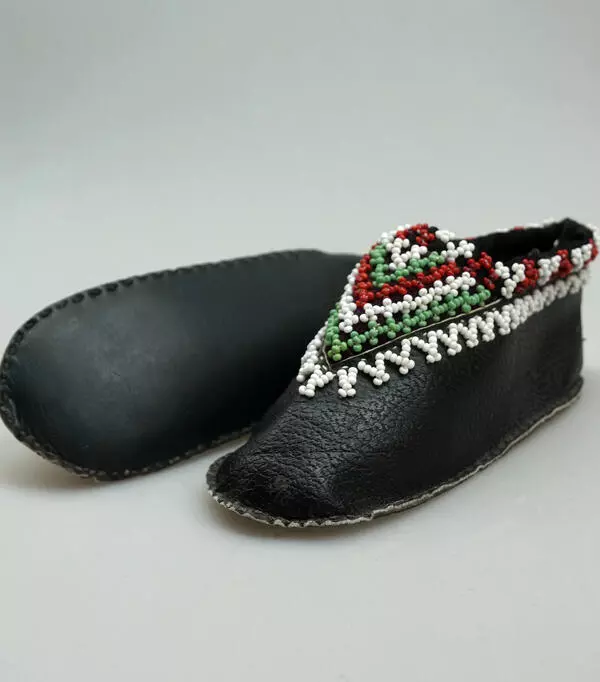
In summer, the Khanty wore short boots called “niry”. Some researchers believe that this word was originally used by the Khanty to refer to any kind of footwear. Niry were made of fine deerskin and decorated with beads.
Such footwear could also be sewn from fish skin, which was one of the cheapest materials. The Khanty used all parts of the fish they caught. They made waterproof cloaks and raincoats, used it to cover wooden household items to protect them from moisture. Fish scales were used to make multifunctional adhesives, which were used in their turn for sewing shoes. Fish oil was derived from the fish guts, and the rest was used as a mosquito repellent. Dried small fish were crushed together with the bones and turned into flour, which could be used to cook a quick rich brew.
There was no difference in the cut of women’s and men’s footwear, but women’s shoes had more decorations. One of the old techniques of decorating shoes was mosaic. A pattern was applied with a paint, made from deer blood with a decoction of larch bark. Painted fish skin and light deer suede created a contrasting mosaic pattern. This technique has not been preserved to the present day.
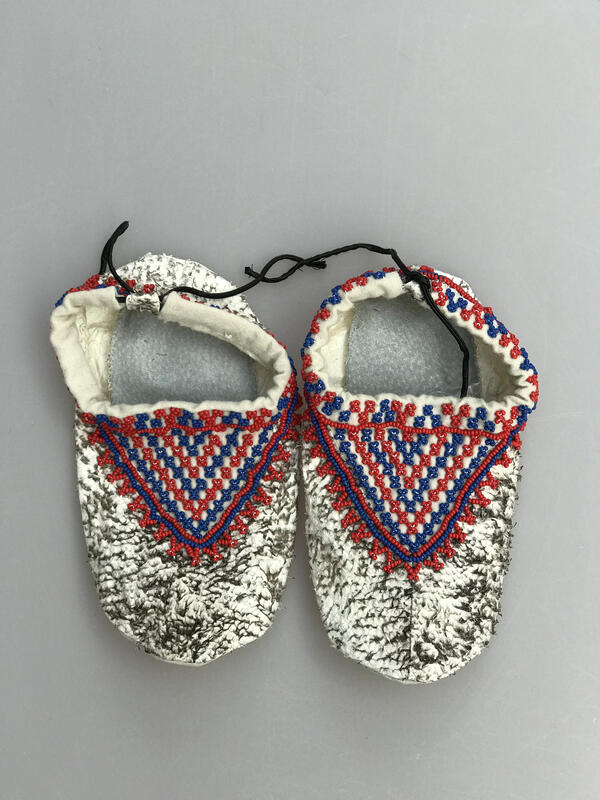
The niry that are on display in the museum were sewn by the People’s Master of Russia Nadezhda Grishkina in 2015. She used gray-white pike skin, synthetic leather, beads, cloth and cotton threads. The edges and the front part of the footwear are decorated with blue and red beads.
In winter, the Khanty and Mansi wore burkas made of deer fur, which were sewn from “kamus” (the skin from the feet of a deer or elk). These shoes were decorated with beads or with fur of different shades in the technique of fur mosaic. The Khanty got some materials that were used in making and decorating footwear, for example, beads, cloth or nylon threads, from visiting merchants in exchange for local natural resources: rare plants, furs, valuable fish species — the nelma or muksun fish.
In summer, the Khanty wore short boots called “niry”. Some researchers believe that this word was originally used by the Khanty to refer to any kind of footwear. Niry were made of fine deerskin and decorated with beads.
Such footwear could also be sewn from fish skin, which was one of the cheapest materials. The Khanty used all parts of the fish they caught. They made waterproof cloaks and raincoats, used it to cover wooden household items to protect them from moisture. Fish scales were used to make multifunctional adhesives, which were used in their turn for sewing shoes. Fish oil was derived from the fish guts, and the rest was used as a mosquito repellent. Dried small fish were crushed together with the bones and turned into flour, which could be used to cook a quick rich brew.
There was no difference in the cut of women’s and men’s footwear, but women’s shoes had more decorations. One of the old techniques of decorating shoes was mosaic. A pattern was applied with a paint, made from deer blood with a decoction of larch bark. Painted fish skin and light deer suede created a contrasting mosaic pattern. This technique has not been preserved to the present day.
The niry that are on display in the museum were sewn by the People’s Master of Russia Nadezhda Grishkina in 2015. She used gray-white pike skin, synthetic leather, beads, cloth and cotton threads. The edges and the front part of the footwear are decorated with blue and red beads.