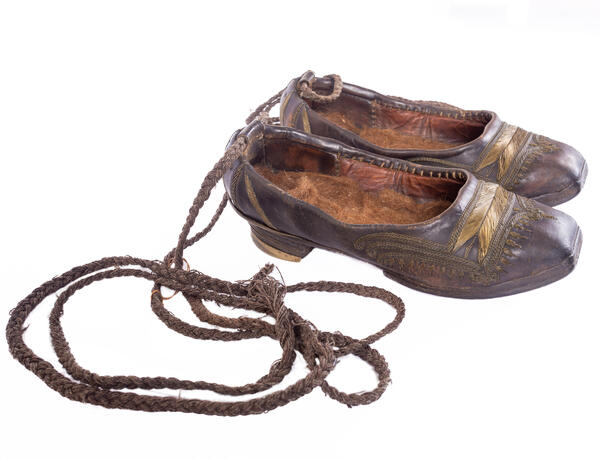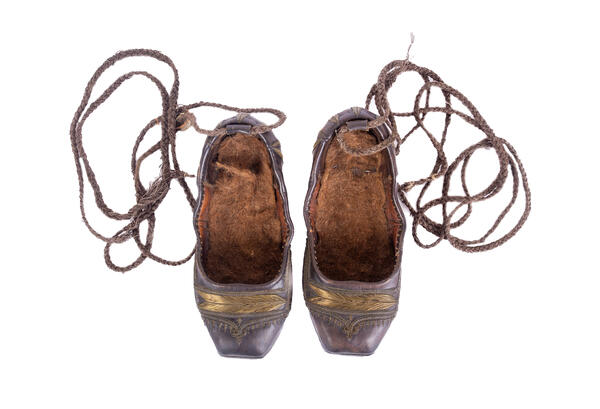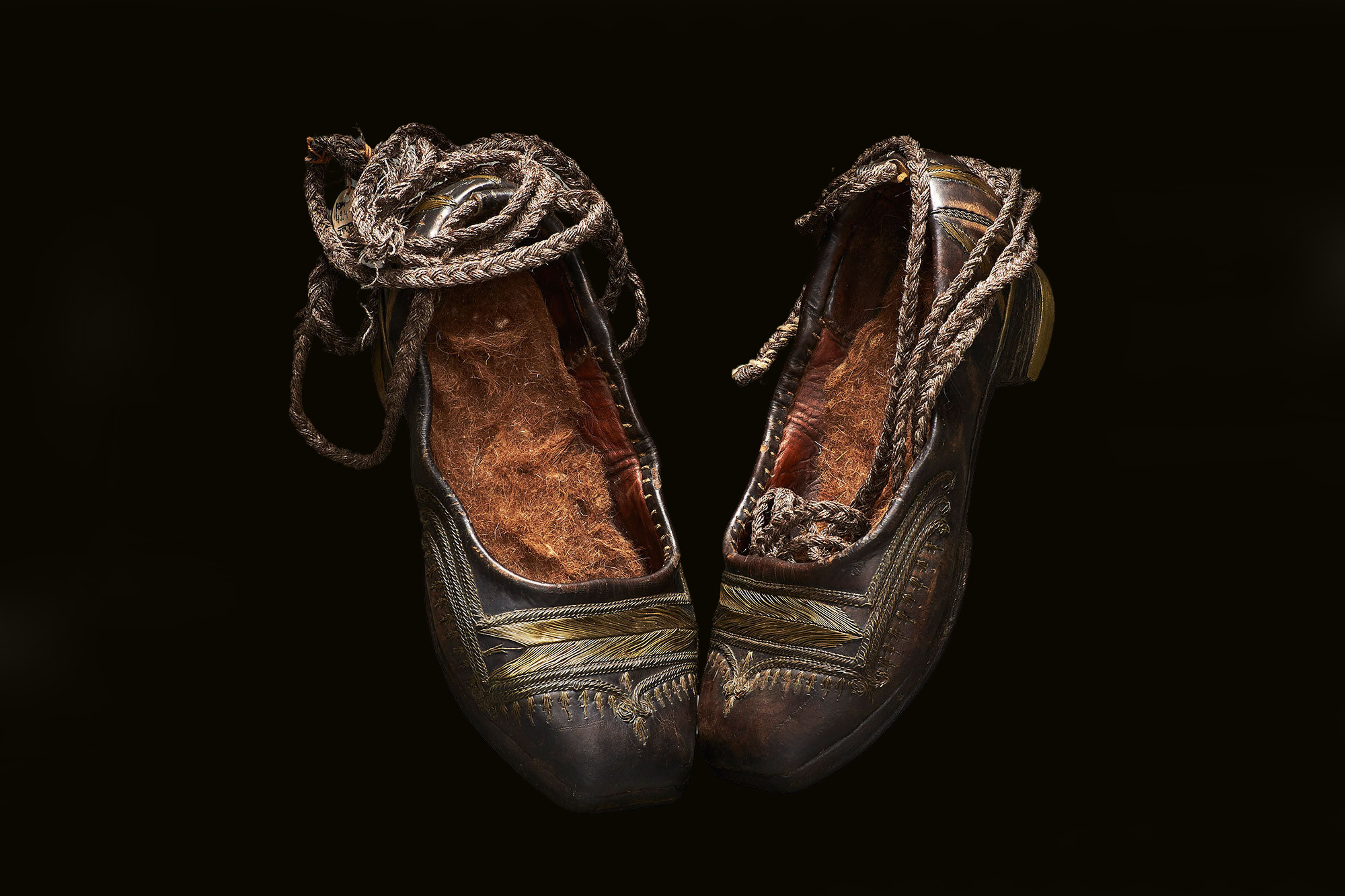


In the 18th — early 20th centuries, koty — leather open shoes on the sole and heel, with a rigid toe and heel back — were popular among wealthy Russian peasants (including those in Voronezh Governorate).
Koty were made of black rough leather, usually on a straight last — the same for the right and left leg, less often different for each foot.
Koty were worn by both men and women. The top, back and sides of these shoes were decorated differently depending on whether they belonged to a woman or a man. Women’s koty were decorated with red and yellow morocco leather, embossed leather, leather fringe, and metal studs. They were embroidered with colored wool and silk, as well as metal, silver and gold threads, velvet, beads, buttons, and rosettes of colored ribbons. The decoration of men’s models was more modest, for example, a flap of leather with a pattern made of thin copper nails with wide heads was sewn on the back.
Shoes were attached to the foot with obora laces — short leather straps, silk ribbons, cords woven from wool or plant fibers or, at worst, braids of twisted threads. The obora was decorated with tassels, pompoms, beads, fringe or metal sequins.
The wide heels, about one and a half centimeters high were staked and lined with copper or iron heel plates. Young peasant women in southern Russian regions also attached jingles and bells to the heels of their koty, which when they walked and danced “made a terrible clattering sound”.
Only experienced shoemakers were entrusted with making such shoes. Due to the high cost and inconvenience of wearing them for a long time, koty were used only on holidays, worn over thick knitted stockings, pleated on the lower leg.
Setting out for the festivities in the neighboring village, people walked barefoot, carrying their shoes in their hands. When they approached the village, they stopped at the nearest water reservoir, washed their feet of road dust, put on stockings and koty — and only after that they showed up at the event.