Font
Color
Graphics
Изображение точки

To see AR mode in action:

1. Install ARTEFACT app for iOS or Android;

2. Find the exhibition «The History of the Sarov Monastery»

3. Push the «Augmented reality» button and point your phone's camera at the exhibit;

Скрыть точки интересаПоказать точки интереса
Показать в высоком качестве

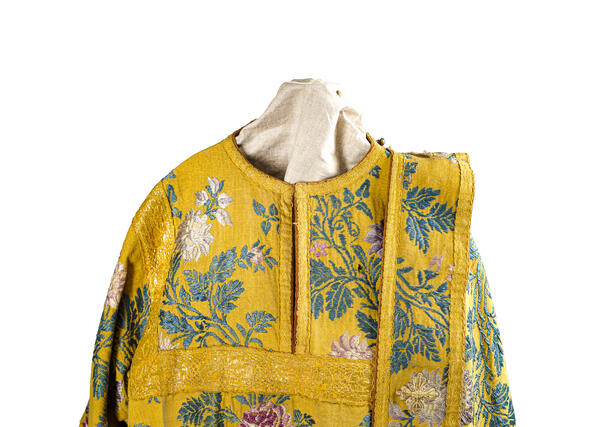
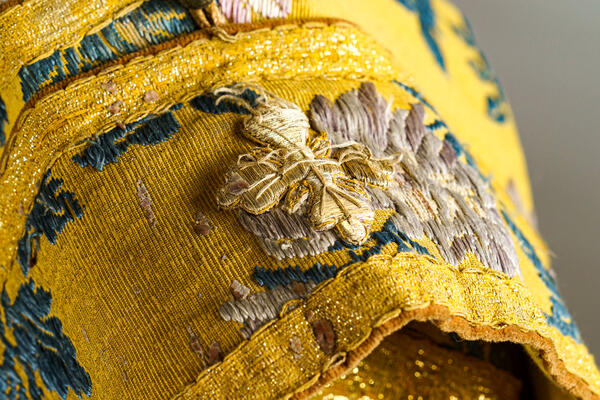
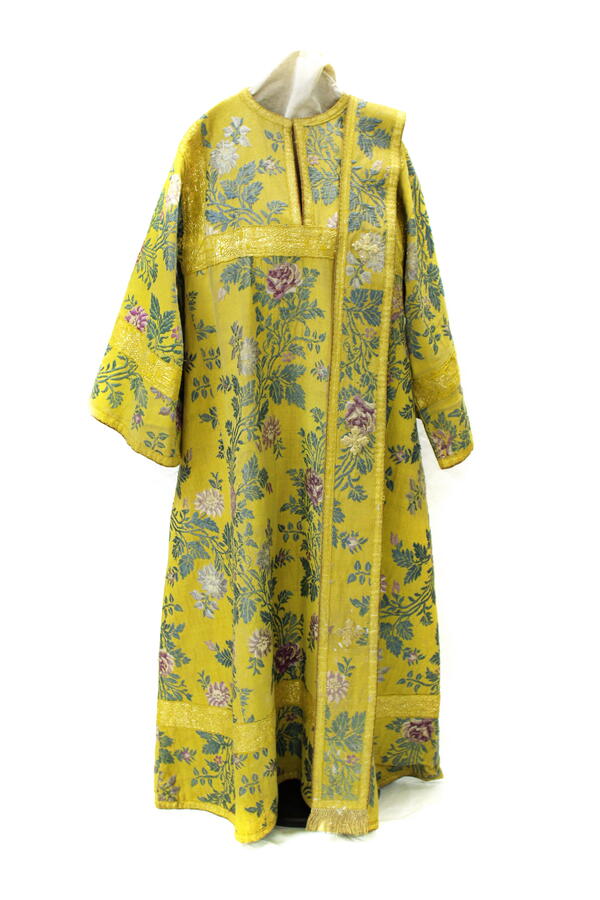
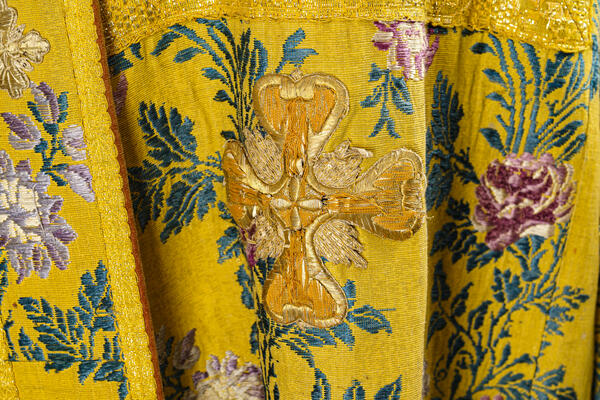
Sticharion and orarion

Creation period
the early 20th century
Place of сreation
Nizhny Novgorod Governorate, the Russian Empire
Dimensions
140x70 cm
Technique
brocade, sewing
Collection
0
Open in app
#3

The sticharion is a liturgical vestment worn by priests and church ministers, characterized by its straight, long design with wide sleeves.

In ancient times, this garment was known as a tunic or alb. It was simply ordinary clothing for both men and women. The Christian Church adopted this garment as sacred, modeled after the priestly garments of the Old Testament, known as the chiton (or, for the high priests, the podiris).

The sticharion was widely used in all ancient churches and was made of linen, typically white, which is indicated by one of its names — alb (white garment). The sticharion symbolizes the garment of salvation, signifies the joyful sanctified life of those who wear it, and serves as a reminder of the purity and innocence with which God’s ministers should carry out their high service. This significance is expressed in the prayer recited when donning the sticharion:
#5

My soul shall rejoice in the Lord, for He has clothed me with the robe of salvation and has wrapped me in the garment of joy, as a bridegroom crowns me with a crown and, as a bride, adorns me with beauty.

#6

The sticharion is used by all three degrees of the priesthood, as the same purity of life is required of them. At the beginning of the service, the archbishop blesses his unsewn sticharion and the subdeacons place this sticharion over the archbishop’s cassock and fasten the buttons on its sides. The priest also blesses his sticharion and puts it on over his cassock. In both cases, the sticharion is then considerably covered by other sacred garments. Both versions of the sticharion are made from white lightweight fabric (usually silk), with long thin ties on the sleeves.

For the archbishop and priests, the sticharion is made wider and more spacious than that of the deacon and is referred to in Russian as the “podriznik”, as it is worn beneath other vestments known as “riza”. Sometimes ribbons are sewn onto the sides and sleeves of the sticharion, symbolizing the bonds with which Jesus Christ was bound before Caiaphas and Pilate, and the blood that flowed from His side. The slits under the sleeves of the sticharion remind us of Christ’s pierced side, while the shoulder pieces made of different materials or colors represent the wounds from His scourging.

On the left shoulder, there is a long fabric ribbon made of colored brocade, called the orarion, which translates from Greek as “to pray” or “the time of prayer.” The orarion symbolizes angelic wings, and the deacon himself is likened to an angel, ready to fulfill God’s will. Additionally, the orarion is a symbolic representation of the gracious gifts of the deacon as a minister.

#7
Sticharion and orarion
#4
View in the State Catalogue
read morehide
00:00
00:00
1x

Sticharion and orarion

Creation period
the early 20th century
Place of сreation
Nizhny Novgorod Governorate, the Russian Empire
Dimensions
140x70 cm
Technique
brocade, sewing
Collection
0
Point your smartphone camera to open in the app
Share
VkontakteOdnoklassnikiTelegram
Share on my website
Copy linkCopied
Copy
Open in app
To see AR mode in action:
  1. Install ARTEFACT app for 
  2. iOS or Android;
  3. Find and download the «Paintings in Details» exhibition
  4. Push the «Augmented reality» button and point your phone's camera at the painting;
  5. Watch what happens on your phone screen whilst you flip through the pictures.
 
We use Cookies
Cookies on the Artefact Website. We use cookies to ensure that we give you the best experience on our website. If you continue without changing your settings, we'll assume that you are happy to receive all cookies on the Artefact website. However, if you would like to, you can change your cookie settings at any time.
Learn more about useHide
Content is available only in Russian

X

Нашли опечатку?...

%title%%type%