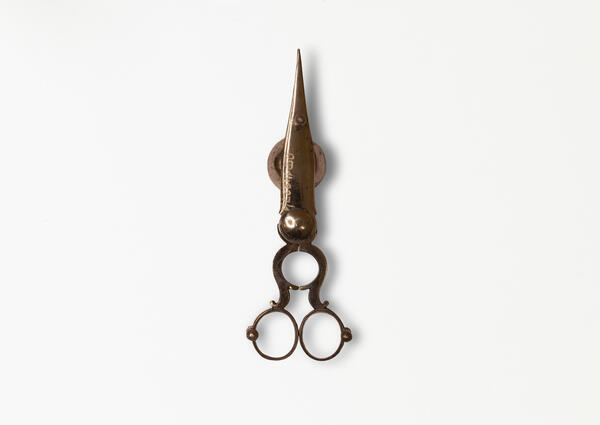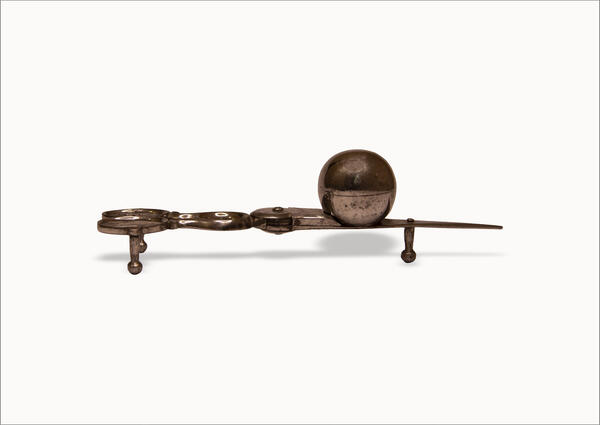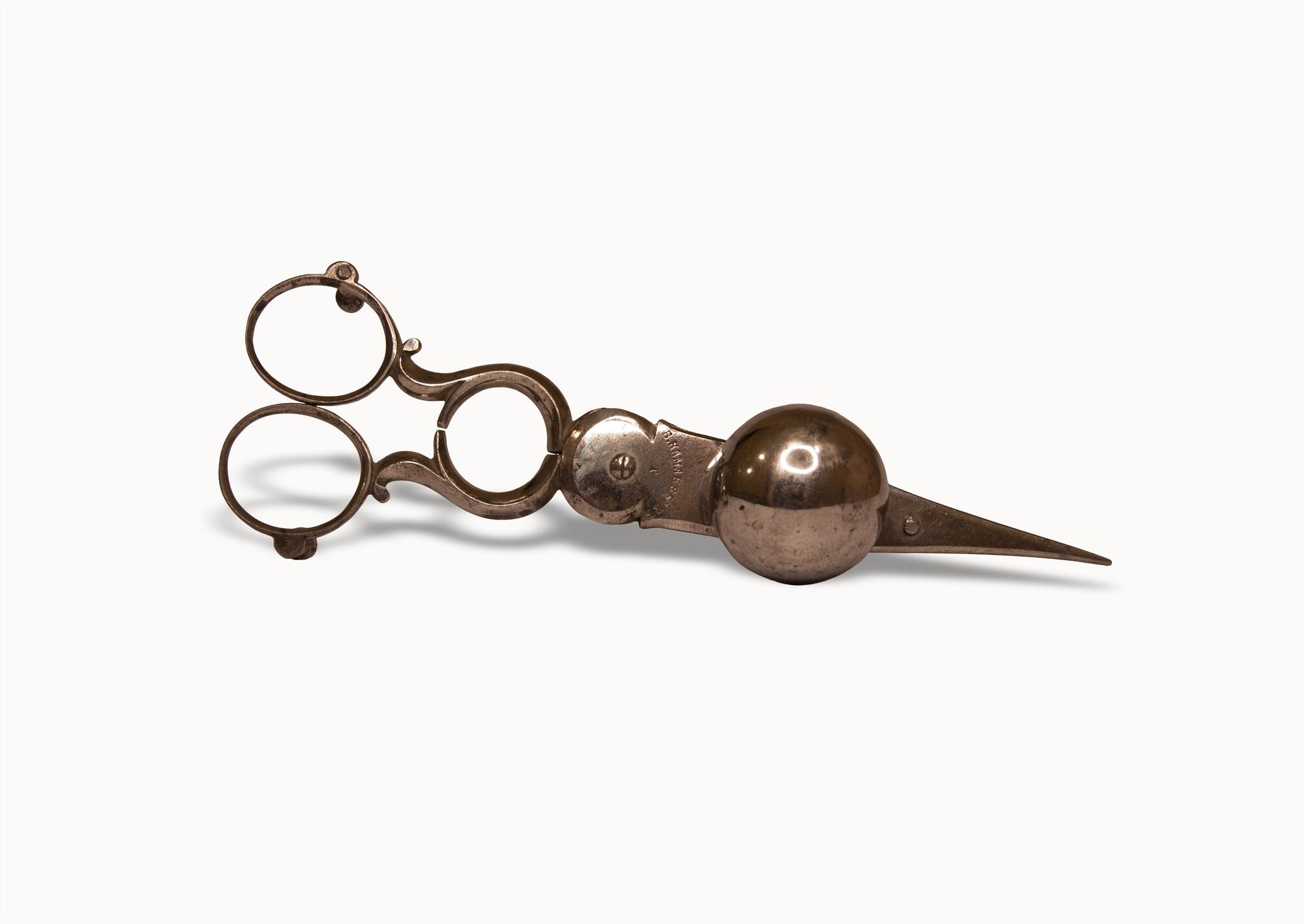


Before the revolution, these candlewick trimmers belonged to the Tyumen merchant Fyodor Kapitonovich Shadrin, who was one of the representatives of a large family of Ural-Siberian merchants.
The family from Verkhotursk earned their first capital in the Northern Ural. They traded in the district of the Bogoslovsky Mining Plants (it included the cities of Serov, Severouralsk and Krasnoturinsk). In Tyumen, the Shadrin family traded in grain and bread, and also owned steam mills with a dam on the Babarynka River (the brick building is still preserved on Melzavodskaya Street). Fyodor Kapitonovich lived in a wooden mansion. The house was destroyed in the early 1990s, but the shop remained in a “modernized” form. The Shadrin brothers also settled in Barnaul, where they had a magnificent Art Nouveau wooden tower built.
Candlewick trimmers (scissors) are a type of an instrument with scissor-like rings and a small box. They were designed to shorten the wicks of candles and oil lamps. The first scissors for removing soot appeared in the Renaissance. At that time, palaces were lit with candlelight. Candles used to gutter and smoke, and their wick became too long. In order to save the candles and to make lighting more efficient, the attendant shortened the burnt wick with scissors. Until the early 19th century, candles were made from wax or animal fat, which formed a deposit of soot at the end of the wick. With the invention of paraffin and stearin, the need for constant shortening of the wick disappeared, although not completely. In the 19th century, wicks were made from a thick cotton cord reinforced with a lead thread, which practically did not burn. When the wax melted and the wick became too long, the flame of the candle rose to a dangerous height. After the invention of industrial impregnation of the wick with boric acid, the need to remove the remains of the wick practically disappeared. Today, such items are used only in churches. The trimmers feature a mark “T.B. Kamaevykh”, but it was not possible to find more detailed information.
The family from Verkhotursk earned their first capital in the Northern Ural. They traded in the district of the Bogoslovsky Mining Plants (it included the cities of Serov, Severouralsk and Krasnoturinsk). In Tyumen, the Shadrin family traded in grain and bread, and also owned steam mills with a dam on the Babarynka River (the brick building is still preserved on Melzavodskaya Street). Fyodor Kapitonovich lived in a wooden mansion. The house was destroyed in the early 1990s, but the shop remained in a “modernized” form. The Shadrin brothers also settled in Barnaul, where they had a magnificent Art Nouveau wooden tower built.
Candlewick trimmers (scissors) are a type of an instrument with scissor-like rings and a small box. They were designed to shorten the wicks of candles and oil lamps. The first scissors for removing soot appeared in the Renaissance. At that time, palaces were lit with candlelight. Candles used to gutter and smoke, and their wick became too long. In order to save the candles and to make lighting more efficient, the attendant shortened the burnt wick with scissors. Until the early 19th century, candles were made from wax or animal fat, which formed a deposit of soot at the end of the wick. With the invention of paraffin and stearin, the need for constant shortening of the wick disappeared, although not completely. In the 19th century, wicks were made from a thick cotton cord reinforced with a lead thread, which practically did not burn. When the wax melted and the wick became too long, the flame of the candle rose to a dangerous height. After the invention of industrial impregnation of the wick with boric acid, the need to remove the remains of the wick practically disappeared. Today, such items are used only in churches. The trimmers feature a mark “T.B. Kamaevykh”, but it was not possible to find more detailed information.