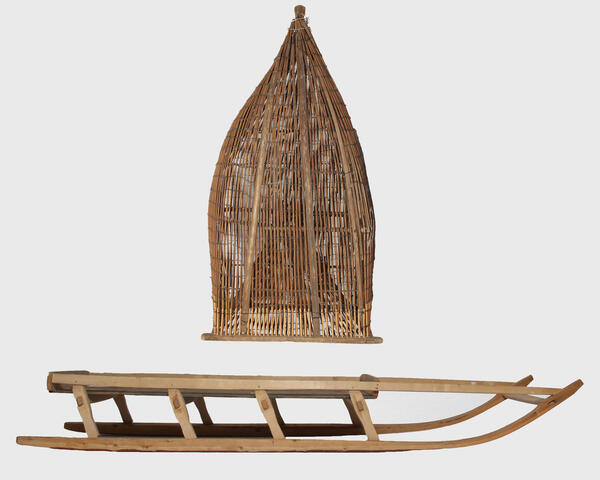
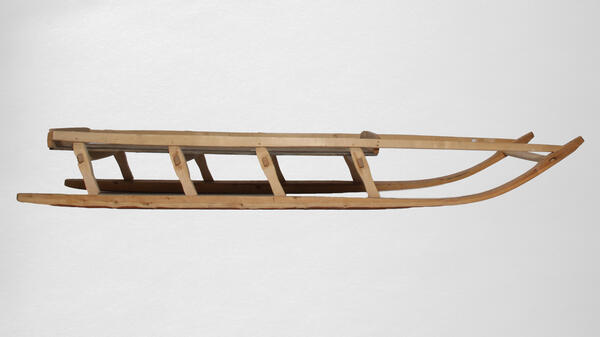
The main means of transportation of the Nenets in the tundra at all seasons was reindeer sleighs or sledges. For a long time, the sledges — with two runners and beveled sides — practically did not change. They were made of wood without using nails.
The main part of the sledge were runners. They were usually made from larch, since this wood provided a smooth ride not only on snow, but also on low bushes and trees of the tundra zone. This was due to the increased density of the wood layers and the abundance of resin, which, hardening in the cold, improved the sliding of the runners. The runners had holes for front crossbars, as well as for splints, stanchions and place for the seat and cargo.
Long, thin beams, which were attached to the runners with the help of stanchions, short wooden bars, were called splints. The stanchions were driven directly into the sledge runners. They were made, as a rule, from birch, sometimes from spruce wood. Wooden bars 50–60 centimeters long and 10–12 centimeters thick were dried and processed all summer long before the sledges began to be assembled. Then, stanchions were cut out of these blanks, which had pointed ends. They also connected the runners with splints.
Sledges differed in structure depending on the purpose: they were for transporting people and cargo. The first ones, in turn, were divided into men’s and women’s sleds.
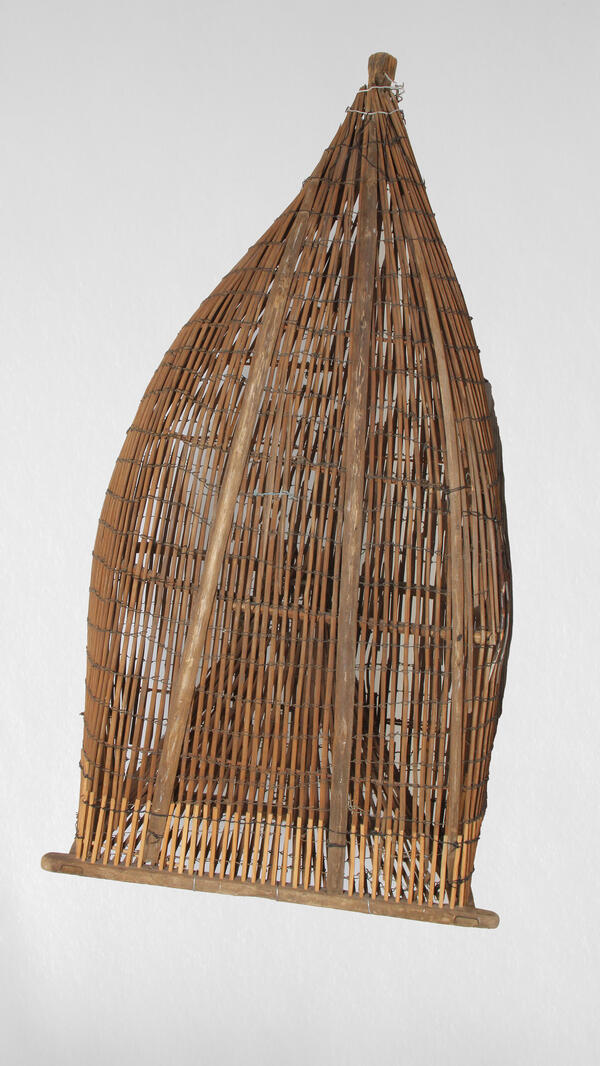
Women’s sledges were considered heavy, so they had high stanchions — from half a meter and more. The woman always took her children with her, so her sledges were long, with a back or vaulted cover.
Men’s sleds were faster and lighter, with low stanchions that allowed better control of the road. The Nenets rode such sleds alone and with a light load.
The design changed depending on the type of cargo — whether it was food, clothing, a tent or mixed cargo. For example, the poles were transported without a cargo bed, and for food and ritual items, sledges were built in the form of a box with a lid.
If the cargo was massive, the Nenets made up a wagon train called “argish”. Behind a sled the cargo sledge was tied. The weight of the loaded sleds should not exceed 180–200 kilograms. Such sledges were harnessed to an odd number of deer — from three to five. The sledge could drive up to 250 kilometers per day at an average speed of 15 kilometers per hour.
The main part of the sledge were runners. They were usually made from larch, since this wood provided a smooth ride not only on snow, but also on low bushes and trees of the tundra zone. This was due to the increased density of the wood layers and the abundance of resin, which, hardening in the cold, improved the sliding of the runners. The runners had holes for front crossbars, as well as for splints, stanchions and place for the seat and cargo.
Long, thin beams, which were attached to the runners with the help of stanchions, short wooden bars, were called splints. The stanchions were driven directly into the sledge runners. They were made, as a rule, from birch, sometimes from spruce wood. Wooden bars 50–60 centimeters long and 10–12 centimeters thick were dried and processed all summer long before the sledges began to be assembled. Then, stanchions were cut out of these blanks, which had pointed ends. They also connected the runners with splints.
Sledges differed in structure depending on the purpose: they were for transporting people and cargo. The first ones, in turn, were divided into men’s and women’s sleds.
Women’s sledges were considered heavy, so they had high stanchions — from half a meter and more. The woman always took her children with her, so her sledges were long, with a back or vaulted cover.
Men’s sleds were faster and lighter, with low stanchions that allowed better control of the road. The Nenets rode such sleds alone and with a light load.
The design changed depending on the type of cargo — whether it was food, clothing, a tent or mixed cargo. For example, the poles were transported without a cargo bed, and for food and ritual items, sledges were built in the form of a box with a lid.
If the cargo was massive, the Nenets made up a wagon train called “argish”. Behind a sled the cargo sledge was tied. The weight of the loaded sleds should not exceed 180–200 kilograms. Such sledges were harnessed to an odd number of deer — from three to five. The sledge could drive up to 250 kilometers per day at an average speed of 15 kilometers per hour.