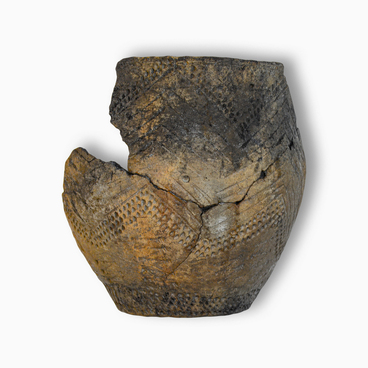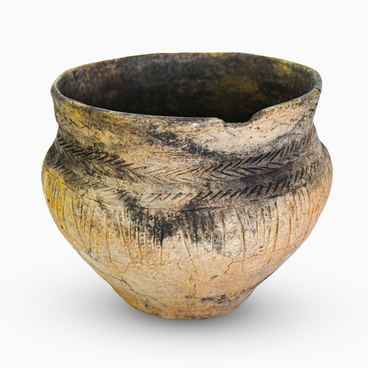
A strip of chernozem fields stretches along the Irtysh River from the Kazakh steppes to the mouth of the Tara River. In the 5th century BCE — the 4th century CE, the Sargat nomadic pastoralists lived in this territory. Their material culture allows the experts to attribute this people to the Scythian world — a family of peoples with similar cultural characteristics who occupied territories from the northern Black Sea region to the steppes of northern Mongolia.
The Sargat nobility belonged to the Caucasians, and the ordinary population belonged to the Mongoloids of the Ugric group. In the open fields where the Sargat people grazed cattle, they also built mounds where they buried their tribesmen. Large “royal” mounds were built for the leaders, smaller hills were built for the ordinary population.
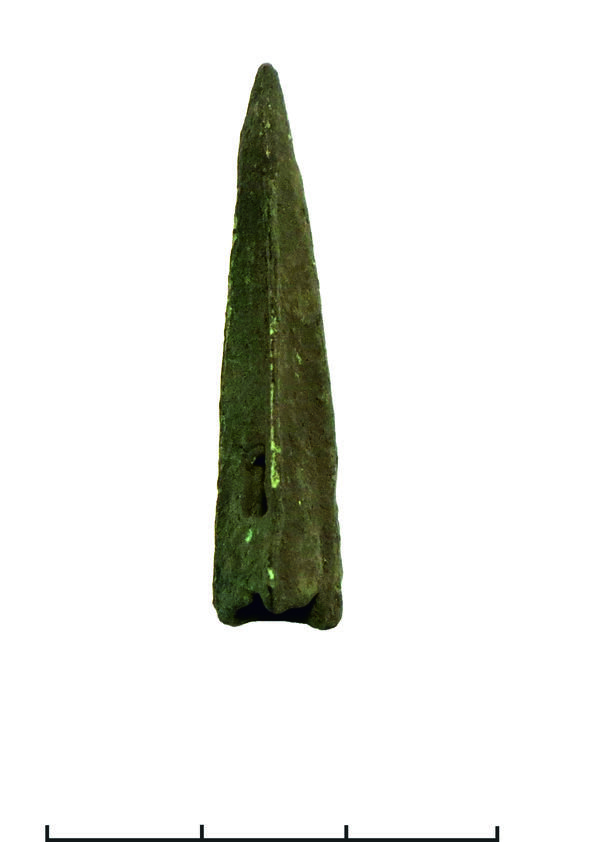
Much later, in the 17th century the Russian population came to the Irtysh region and actively began to plow local chernozems. Plowing often ruined low mounds of ordinary burials, destroying graves, lifting grave goods and parts of human skeletons to the surface. Walking through a newly plowed field, with enough luck anyone can find an artifact of the Sargat era. This is the origin of this exhibit, which was donated to the museum by one of the local residents.
Three-bladed needle-shaped arrowheads are the hallmark of the Sargat archaeological culture, as, in principle, of any culture of the Scythian world. They were ubiquitous. The triangular shape ensured penetration of both bone and iron armor, and the small size provided ease when shooting from the saddle.
In the early period of the Sargat culture, such
arrowheads were made of bone and bronze, but with the development of plate
armor, arrowheads began to be made only of iron. The former small Scythian bow
was no longer suitable for them: to balance the iron arrowhead, the arrows
needed a long shaft, which, in turn, required a large bow. Shields and clothes
with bone plates sewn on them were used for protection. Over time, the bone
plates were replaced by iron ones.