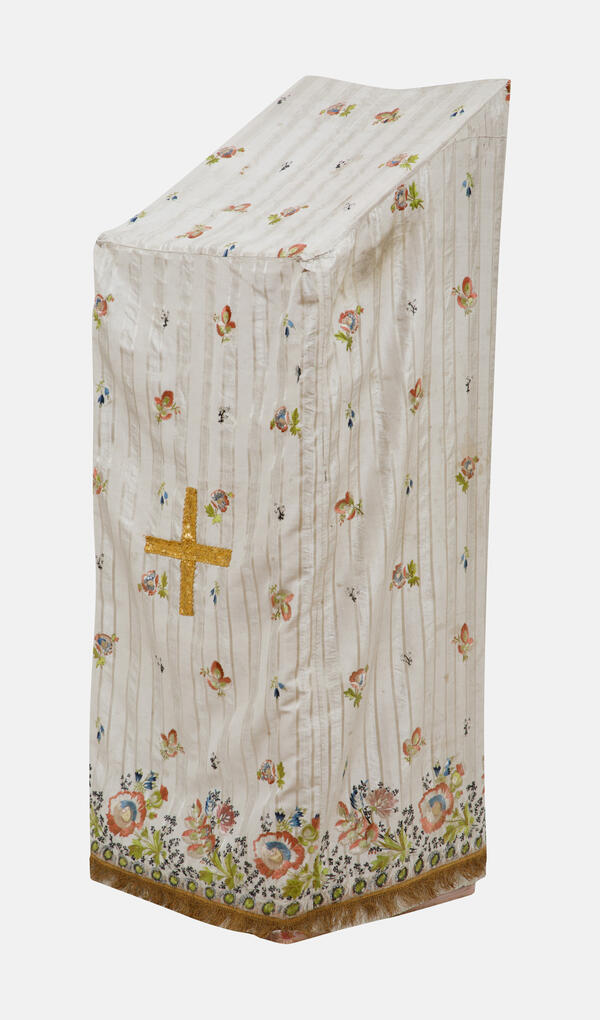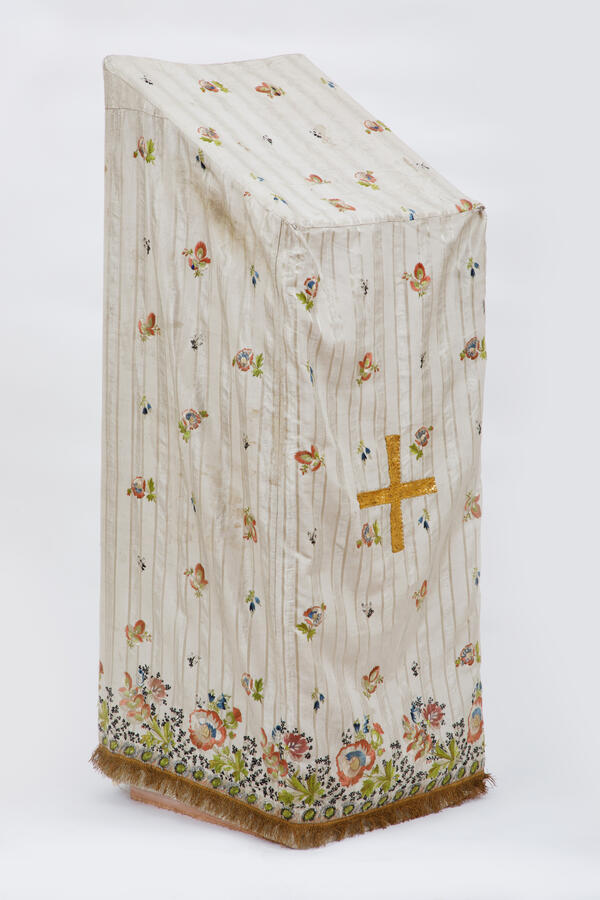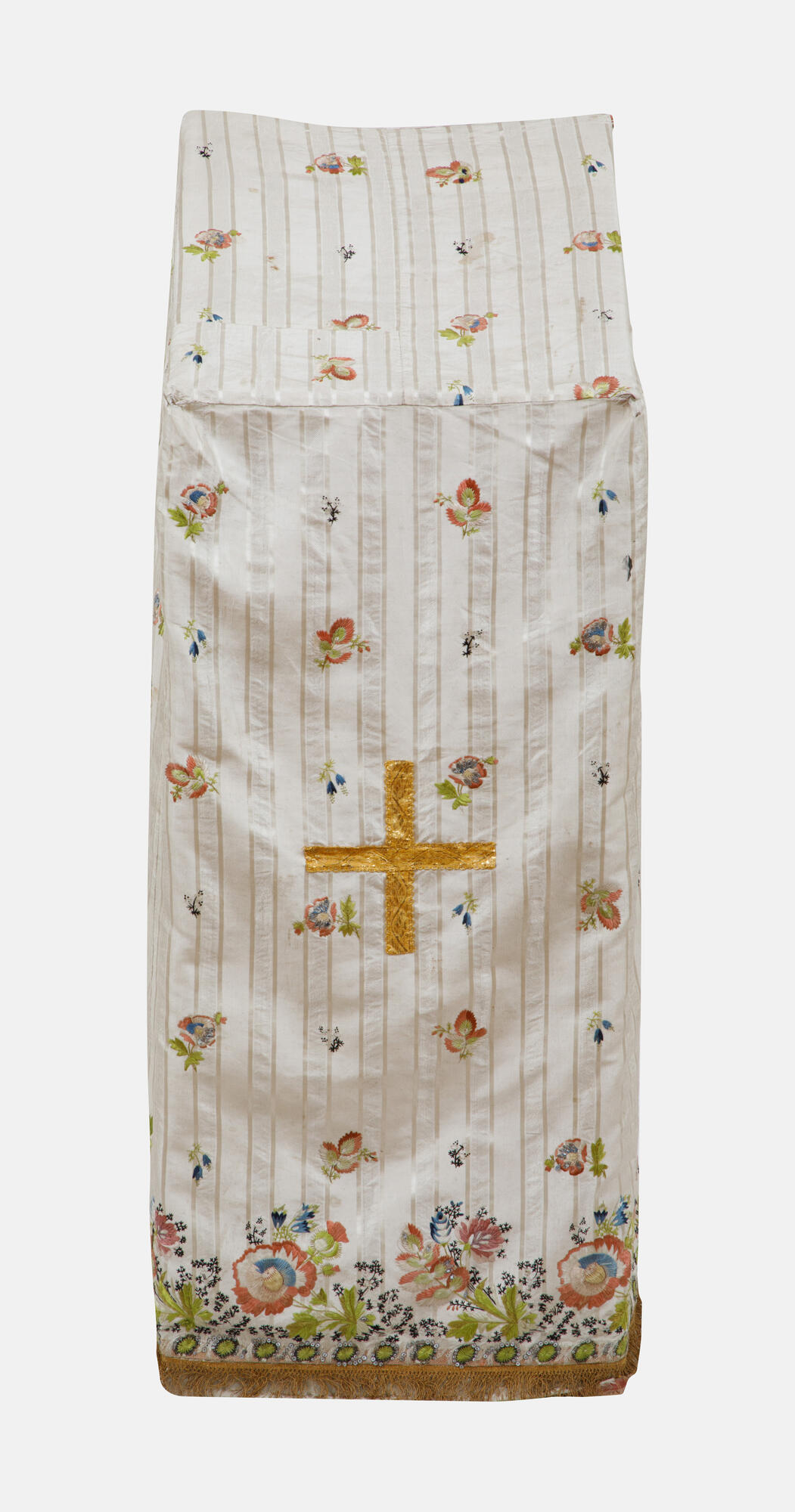


A church analogion, a lectern, is vested in a number of cloths: a pavoloka, or shirt, is covered with a podea, and a special long cover is placed atop the upper inclined part of the lectern, where the icon lies. The podea is decorated with an embroidered image of the cross, which can be depicted directly under the icon itself or on the part of the cloth that hangs freely underneath the icon.
The presented podea entered the museum’s collection in 1929 after the Dormition Convent was closed. It was compared to some similar items from the Hermitage collection, which allowed experts to determine that the exhibit was made in Russia in the 1780s or 1790s, according to a French model.
A number of details indicate that the lectern podea was previously part of a secular clothing item, probably the petticoat of a fashionable dress. Elegant dresses and garments were quite often donated to monasteries, where they were reused in accordance with the needs of the church.
The side part of the cover is made from three vertical panels of reps; inserts for the upper plane and the extension of the back are cut from the remains of the same fabric; the fabric has retained traces of frills. The technique and composition of embroidery and ornaments, and the multi-layered applique — all this is characteristic of secular costumes of the last quarter of the 18th century.
Especially noteworthy is the “embroidery… that carefully reproduces plants”: their variety and detailed depiction are akin to the accuracy of a botanical atlas. Poppy, marsh gentian, fumewort, and rosehip — these flowers are depicted so elegantly and meticulously that the smallest details, for instance, the cut leaves of fumewort in the herbarium are blackened. Almost all the flowers here are medicinal, forest or field plants that grow in the north-western and central regions of Russia. This fact also speaks in favor of the Russian origin of this embroidery.
The art critic Elizaveta Vladimirovna Sheveleva
explains the interest in floral motifs by the natural-scientific orientation of
the “Age of Reason” and at the same time emphasizes the decorative and symbolic
nature of the “language of flowers”. In her research paper on the embroidery of
the late 18th century housed in the collection of the Kargopol
Museum, Sheveleva writes that during that period flowers “played an important
semantic role… Philosophers, writers, Enlightenment artists… proclaimed the
priorities of naturalness” and at the same time “aroused interest in classical
and non-European cultural traditions.”