From ancient times to the present day, the horse in Yakutia has been an indispensable mode of transportation. Besides, the animal’s meat and fat as well as mare’s milk are highly valued. The national drink of the Sakha people is koumiss. Items of clothing made of horse hair and skins protected ancient Yakuts from frost, wind and insects.
As a special and valuable animal, the horse in Yakutia was often dressed in a rich harness. It sometimes represented not just a skillfully made element of horse gear, but a masterpiece of folk art.
Horse harness includes a wide range of pieces: saddles, stirrups, bridles and halters, woven saddle girths with buckles, reins, saddle and side covers, riding crops, whips and knot amulets.
As Václav Seroshevsky, the ethnographer and publicist, noted, Yakuts have been horse breeders since ancient times and used all their creative experience and skills to decorate the horse gear. They carved, cast, forged, and applied decorative motives on it.
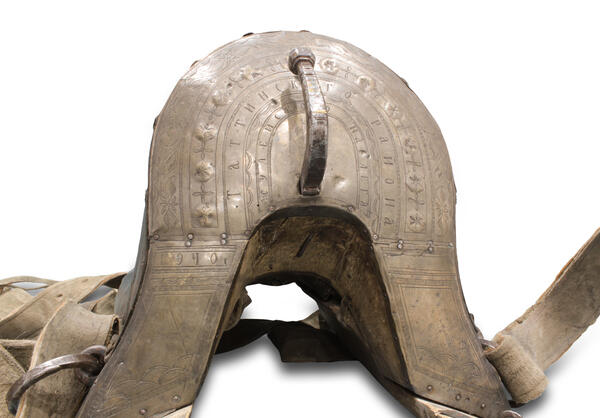
Yakut saddles, both pack and riding ones, were often almost entirely made of wood. A pack saddle consisted of two boards, which were connected at the ends by small wooden arches. In the middle, a cross was attached to these main boards, and the ears of the packs were placed behind its protruding “shoulders”. A thick pad was placed on the horse’s back and sides under the saddle and under the weights. It was designed to reduce the animal’s discomfort while riding.
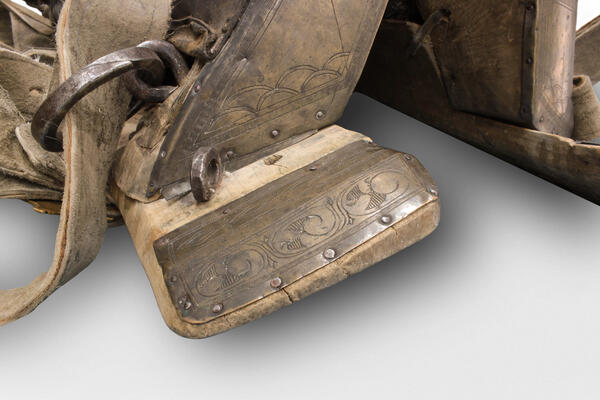
The construction of the horse saddle was very similar to that of the pack saddle. The base was also made of two parallel boards, which were slightly curved and angled towards each other. This construction was something like the edges of a trough without bottom or sides. At the ends they were joined by thick and high arches, which formed a high Asian bow, that is, the curve of the front and back edges of the saddle, and the backrest. The seat strap was stretched from the bow to the backrest. A cushion was placed on top of the saddle. The stirrups were attached to the rings that were hammered into the front ends of the parallel boards, and then three girths were attached.
The Yakut saddle, especially the ancient one, was
less perfect compared to the Mongolian or Buryat versions. It was heavier, the
bow was higher and rougher, which made it harder for the rider to ride and jump
over obstacles. Nevertheless, it sat firmly on the horse, and due to its size,
it was comfortable to sit on. Besides, a lot of cargo could be placed under the
rider.