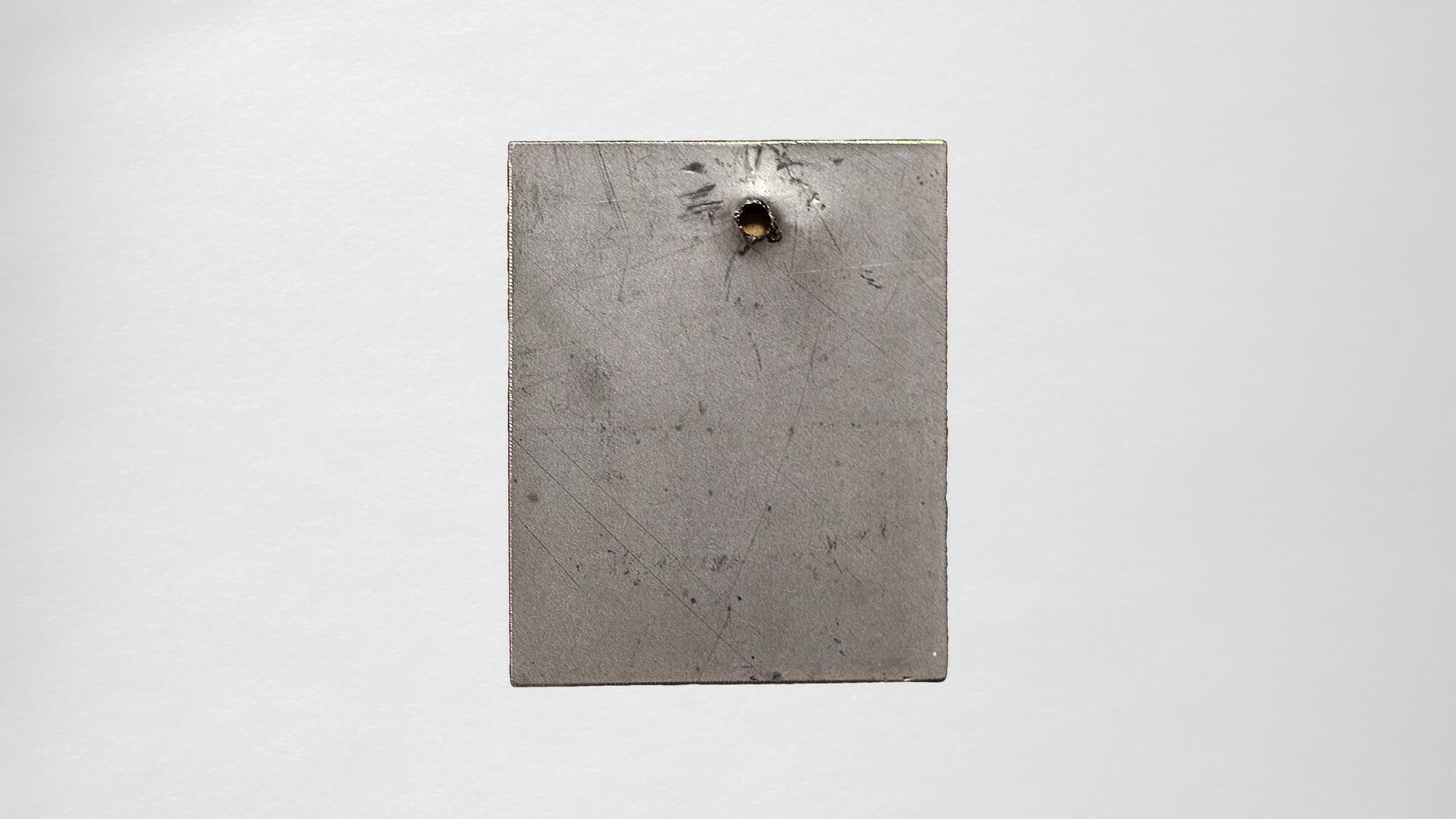


The collection of the museum contains a breastplate with traces of shelling — it belonged to Oleg Tabunov, a resident of Anzhero-Sudzhensk, a participant of the Soviet-Afghan War. During the conflict, soldiers often wore flak jackets with titanium plates that covered the upper chest — protecting the heart and lungs from being hit by bullets and shrapnel. Such equipment has been mass-produced for servicemen since 1981.
147 natives of Anzhero-Sudzhensk served during the Soviet-Afghan War. Seven of them did not return home, including Oleg Tabunov. Tabunov was born on June 28, 1961. He completed eight classes of school No. 1. In 1976, he moved to Sverdlovsk (now Yekaterinburg) to attend a Suvorov school. Oleg Tabunov studied there for two years and then transferred to the Alma-Ata Higher Combined Arms Command School. In August 1982, he graduated and was sent to Afghanistan.
Tabunov served in the city of Ghazni in the central part of the country. With the rank of guards lieutenant, he commanded a paratrooper-assault platoon. On December 4, 1982, his unit carried out a combat mission: insurgents attacked the convoy, and the soldiers repelled the attack. Oleg Tabunov died in that battle. For bravery shown in the battle, the officer was rewarded posthumously with the Order of the Red Star. Tabunov was buried in his hometown.
The Soviet-Afghan War was a military conflict in the Democratic Republic of Afghanistan (DRA) that lasted from 1979 to 1989. Some of the Soviet troops also took part in the fighting. On the territory of the country more than 620 thousand Soviet citizens performed military service. There were soldiers and officers, civilian employees, representatives of the Committee of State Security, the Ministry of Internal Affairs and the Border Troops.
The losses of the USSR in the Soviet-Afghan War are assessed differently. Most researchers believe that the Soviet troops lost more than 15 thousand soldiers — those who died in battle or in hospital after being wounded or contused. 417 men were taken prisoner or went missing. Most losses were in 1984 — 2343 Soviet servicemen died back then.
147 natives of Anzhero-Sudzhensk served during the Soviet-Afghan War. Seven of them did not return home, including Oleg Tabunov. Tabunov was born on June 28, 1961. He completed eight classes of school No. 1. In 1976, he moved to Sverdlovsk (now Yekaterinburg) to attend a Suvorov school. Oleg Tabunov studied there for two years and then transferred to the Alma-Ata Higher Combined Arms Command School. In August 1982, he graduated and was sent to Afghanistan.
Tabunov served in the city of Ghazni in the central part of the country. With the rank of guards lieutenant, he commanded a paratrooper-assault platoon. On December 4, 1982, his unit carried out a combat mission: insurgents attacked the convoy, and the soldiers repelled the attack. Oleg Tabunov died in that battle. For bravery shown in the battle, the officer was rewarded posthumously with the Order of the Red Star. Tabunov was buried in his hometown.
The Soviet-Afghan War was a military conflict in the Democratic Republic of Afghanistan (DRA) that lasted from 1979 to 1989. Some of the Soviet troops also took part in the fighting. On the territory of the country more than 620 thousand Soviet citizens performed military service. There were soldiers and officers, civilian employees, representatives of the Committee of State Security, the Ministry of Internal Affairs and the Border Troops.
The losses of the USSR in the Soviet-Afghan War are assessed differently. Most researchers believe that the Soviet troops lost more than 15 thousand soldiers — those who died in battle or in hospital after being wounded or contused. 417 men were taken prisoner or went missing. Most losses were in 1984 — 2343 Soviet servicemen died back then.