

In the past, women of the Khanty and Mansi peoples did not wear hats. The most common female headdress was a headscarf. In frosty winters, several headscarves were tied on the head at once, inside each other. On holidays, a headband was worn under the headscarf, sewn from a strip of fabric, decorated with multicolored beads.
The headscarf was an essential part of a woman’s costume. In the Khanty culture, it had a sacred meaning. It was considered a symbol of protection, a talisman against evil spirits, and an offering to patron spirits.
The headscarf is used in various rituals of the Khanty people. For example, during matchmaking, the groom’s parents sent a headscarf to the bride’s family. It became a symbol of engagement, and the girl could no longer marry another man. During the wedding, the bride wore two headscarves if both of her parents were alive. If she had only one parent, she wore only one headscarf.
The Khanty also had the custom of “avoidance”: unfamiliar men should not be able to see a married woman’s face. That is why after the wedding, the wife put the headscarf upon her face if strangers were around.
The Northern peoples living in different territories wore the headscarf in different ways. For example, the eastern Khanty tied it under the chin, while on the Vasyugan river (the lower tributary of the Ob), the ends of the headdress were tied behind, covering the forehead to the eyebrows. Indoors, when a woman did not need to hide her face, she fixed a headscarf on the back of her head.
Sewing headscarves has traditionally been a women’s craft. In the old days, the Khanty took an arshin (slightly more than 70 centimeters) of fabric for making this headdress. They also trimmed it along the edge. It symbolized the border that protected the woman from the hostile outer world.
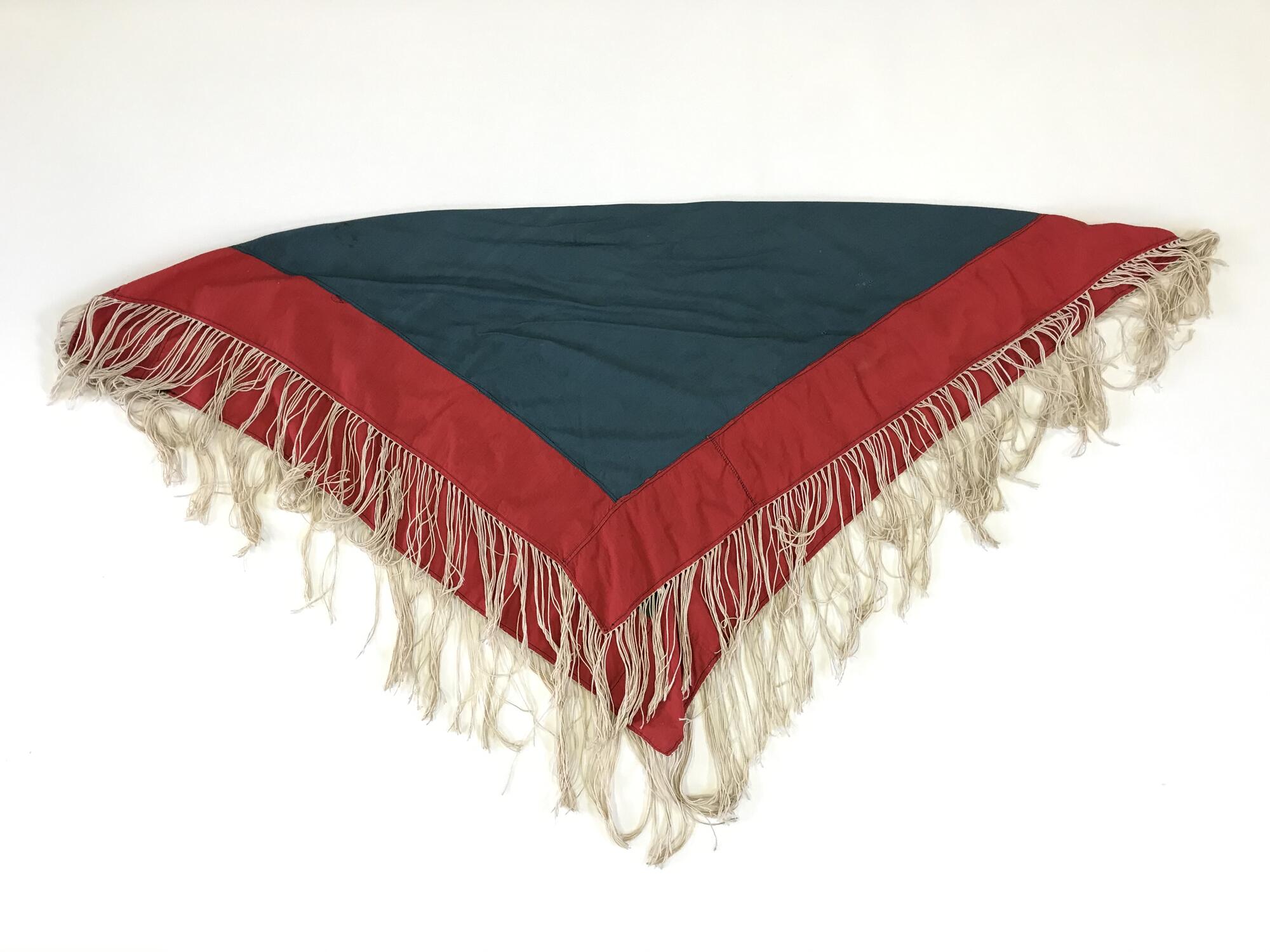
Among the eastern Khanty, the headscarf could only be quadrangular, while among the southern and northern Ob Ugrians, it was popular to wear triangular headscarves decorated with embroidery.
The Khanty scarves often cane in two colors: they were either red and blue or red and green. The headdresses were decorated with beaded pendants, bells, fringes, and tassels.
The headscarf displayed at the exhibition was sewn manually in the middle of the 20th century in the village of Kazym, Beloyarsky district of Tyumen Oblast.
The headscarf was an essential part of a woman’s costume. In the Khanty culture, it had a sacred meaning. It was considered a symbol of protection, a talisman against evil spirits, and an offering to patron spirits.
The headscarf is used in various rituals of the Khanty people. For example, during matchmaking, the groom’s parents sent a headscarf to the bride’s family. It became a symbol of engagement, and the girl could no longer marry another man. During the wedding, the bride wore two headscarves if both of her parents were alive. If she had only one parent, she wore only one headscarf.
The Khanty also had the custom of “avoidance”: unfamiliar men should not be able to see a married woman’s face. That is why after the wedding, the wife put the headscarf upon her face if strangers were around.
The Northern peoples living in different territories wore the headscarf in different ways. For example, the eastern Khanty tied it under the chin, while on the Vasyugan river (the lower tributary of the Ob), the ends of the headdress were tied behind, covering the forehead to the eyebrows. Indoors, when a woman did not need to hide her face, she fixed a headscarf on the back of her head.
Sewing headscarves has traditionally been a women’s craft. In the old days, the Khanty took an arshin (slightly more than 70 centimeters) of fabric for making this headdress. They also trimmed it along the edge. It symbolized the border that protected the woman from the hostile outer world.
Among the eastern Khanty, the headscarf could only be quadrangular, while among the southern and northern Ob Ugrians, it was popular to wear triangular headscarves decorated with embroidery.
The Khanty scarves often cane in two colors: they were either red and blue or red and green. The headdresses were decorated with beaded pendants, bells, fringes, and tassels.
The headscarf displayed at the exhibition was sewn manually in the middle of the 20th century in the village of Kazym, Beloyarsky district of Tyumen Oblast.