

The first evidence of human use of spices dates back to the Paleolithic era — 450–500 thousand years ago. At that time, hunters added various roots and tubers to their food. Written sources indicate that aromatic leaves and fruits were grown in the gardens of Assyria and ancient China to flavor food. In the 7th century BC saffron, garlic, cardamom, fennel and many other spices were transported from Babylon to other countries by caravans overland or by ship along the Tigris and Euphrates rivers. The era of travelers and seafarers opened up all the variety of spices to the world.
Over time, a number of special small containers that were designed for storing and serving spices came into use. In Russia, each kind of spice on the table was served in a vessel with its own name. Salt dishes were called “solonitsa” or “solonka”, pepper dishes were called “perechnitsa”, vinegar was poured into “uksusnitsa” and so on. The whole stand with seasonings was called “sudok”.
The first mention of such tableware in Russia dates back to the 16th century. Spices and herbs were served in noble homes in beautiful and ornate containers made of silver, gold and crystal. Lower-income families used wooden, metal, ceramic and glass vessels. Modern versions are often made of plastic, but their contents are the same as they were centuries ago.
Depending on the intended use, each container in this set has its specific features. Pepper casters, which are designed for ground red or black pepper, have several holes in the upper part, through which the contents can be dispensed.
Salt shakers in the sets also have many holes in the lid. They didn’t have such a design until the mid-19th century. Their prototype was a salt shaker, which was developed by the American John Landis Mason in 1858. Before, salt was put on the table in small boxes, drawers or bowls.
Sauce boats, which are intended not only for sauces, but also for gravy, sour cream and cream, have an oval or round shape, as well as a spout and a handle. Mustard pots, or horseradish pots, are small vessels of various shapes with a lid and, in most cases, with a slot for a spoon. Vinegar bottles have a narrow neck and a stopper.
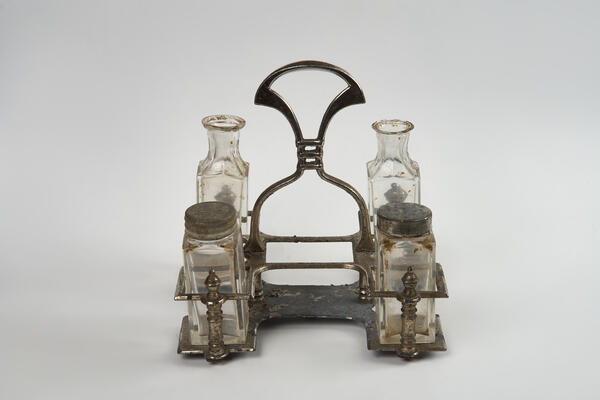
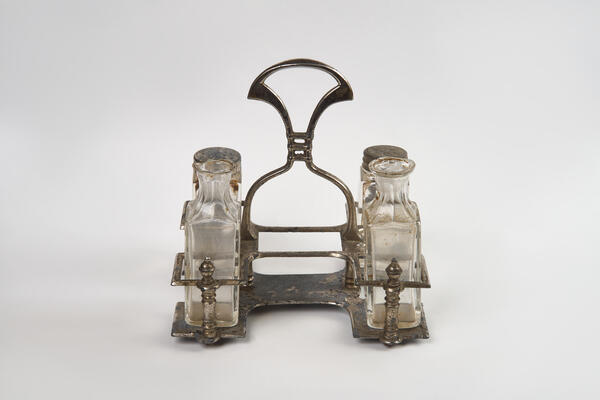
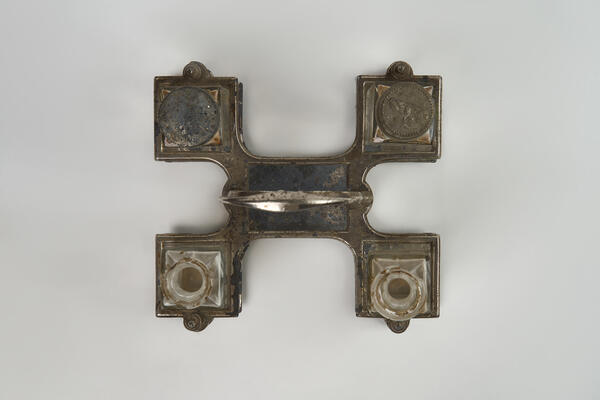
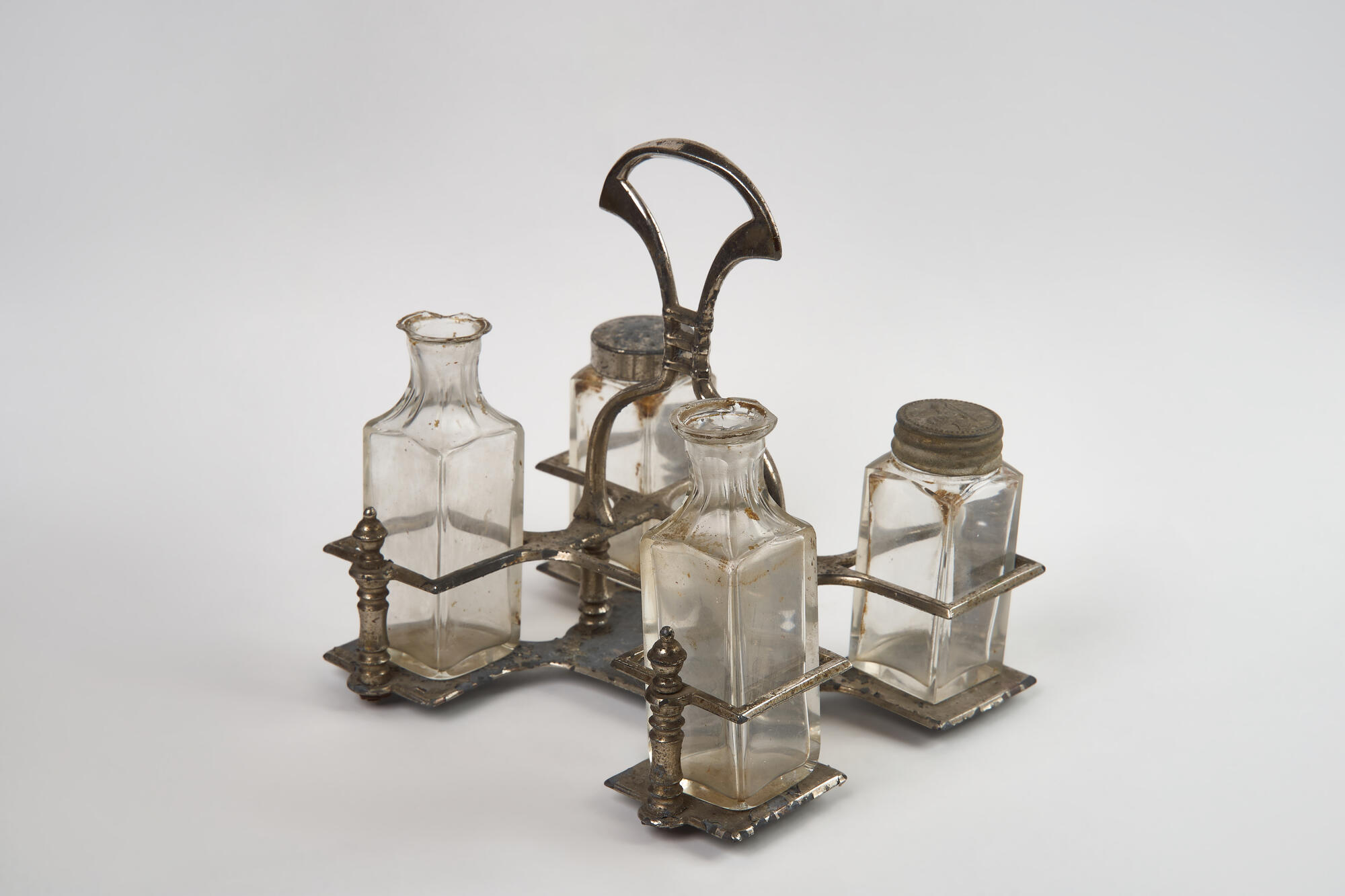
The cruet stand presented in the museum exhibition
consists of four vessels: a pepper caster, a mustard jar and two vessels for
vinegar and vegetable oil. They are united by a metal stand with a handle,
which is fixed in the center. The glass stoppers of the vinegar and oil bottles
are missing.