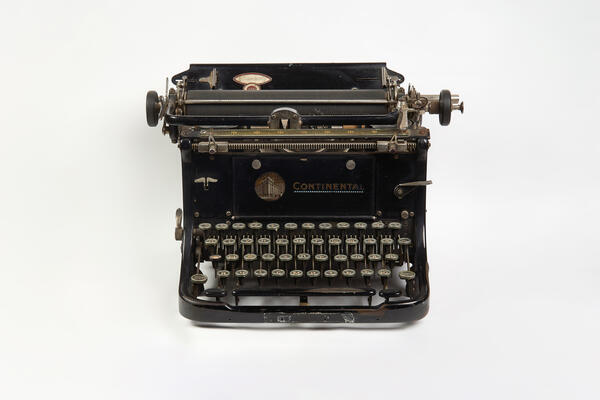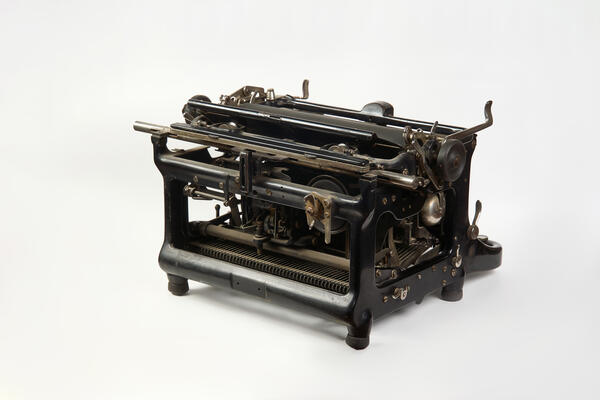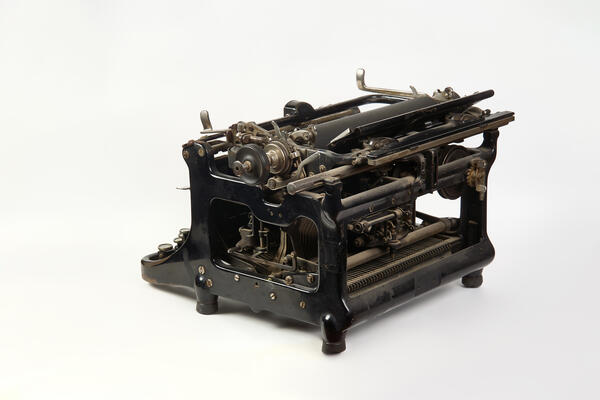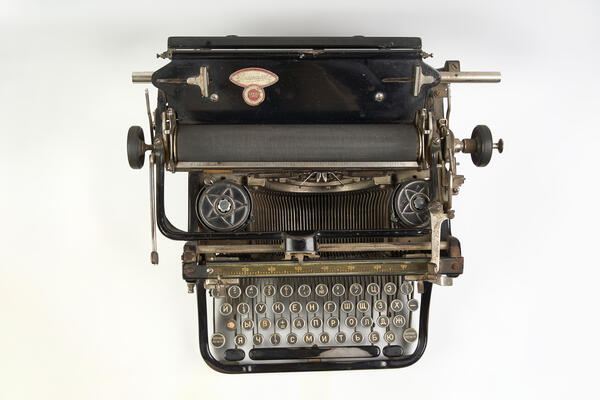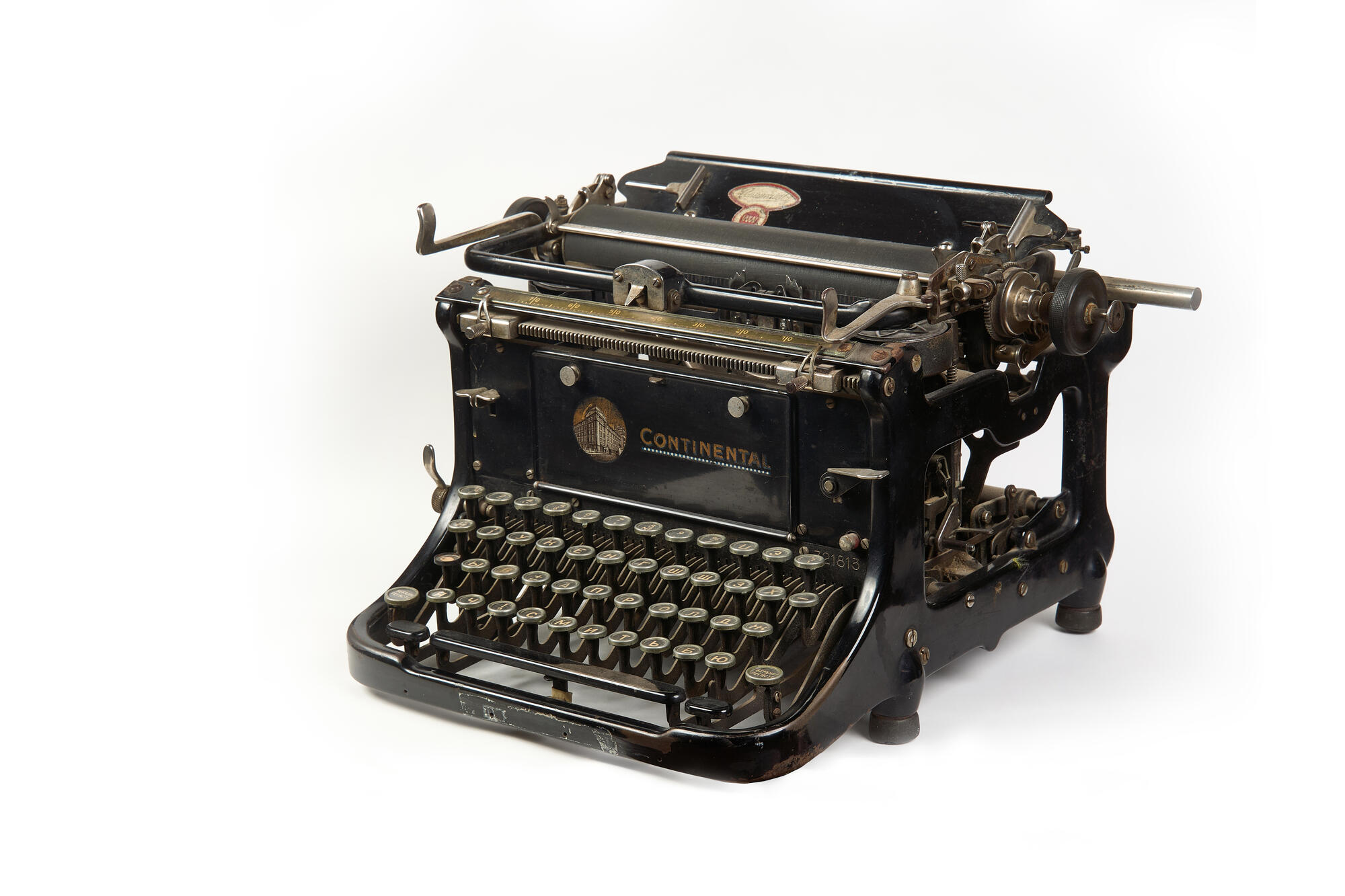


The mechanical typewriter Continental, which is displayed at the exhibition, was produced by the German firm Wanderer Werke AG.
Such machines were produced in Germany in one of the largest centers of German industry — the city of Chemnitz. The company was founded in 1885 by a cycling instructor Johann Winklhofer and a mechanic Richard Jenicke.
In the first years, the name of the factory included the names of the founders —Winklhofer & Jenicke. Initially, the partners were engaged in the sale and repair of bicycles and motorcycles, then soon switched to in-house production, and in 1912, after several years of development and testing, the company began producing automobiles.
As production progressed, the name was changed to Wanderer, which has the same meaning in German as in English. This was a reference to the vehicles produced by the company.
In 1903 the company was ready to produce the typewriter mechanism, and in the following year it received a patent, and the machines hit the market under the name Continental Standard. The first typewriter design was so successful that only a few minor changes were made over several decades of production. The models that were produced by the factory were customized for fonts of all common languages of the world, including Russian.
In 1929, Wanderer Werke AG began producing portable typewriters, followed in 1934 by the Continental Silenta, a noiseless office model. This was the German answer to the American Remington version. The German version was characterized by a simpler and more reliable lever mechanism. Continental typewriters produced before 1942 continue to be considered among the best in the world in terms of quality and design.
During the war, production was significantly reduced and the plant switched to manufacturing products for the needs of the German army. Some of the equipment was sent to Belgium during the war, where production could resume, but the quality of the products could no longer meet the previous standards.