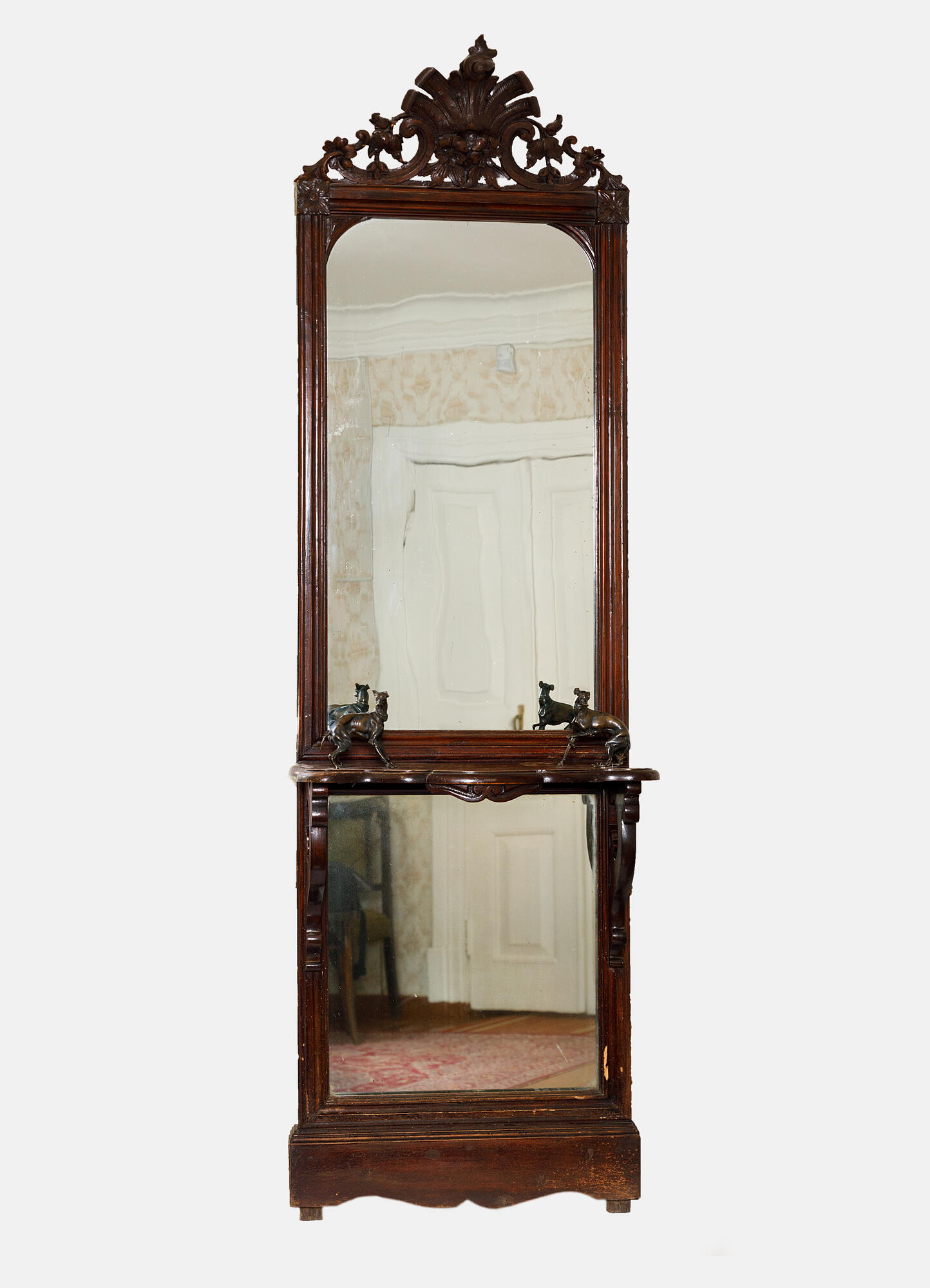


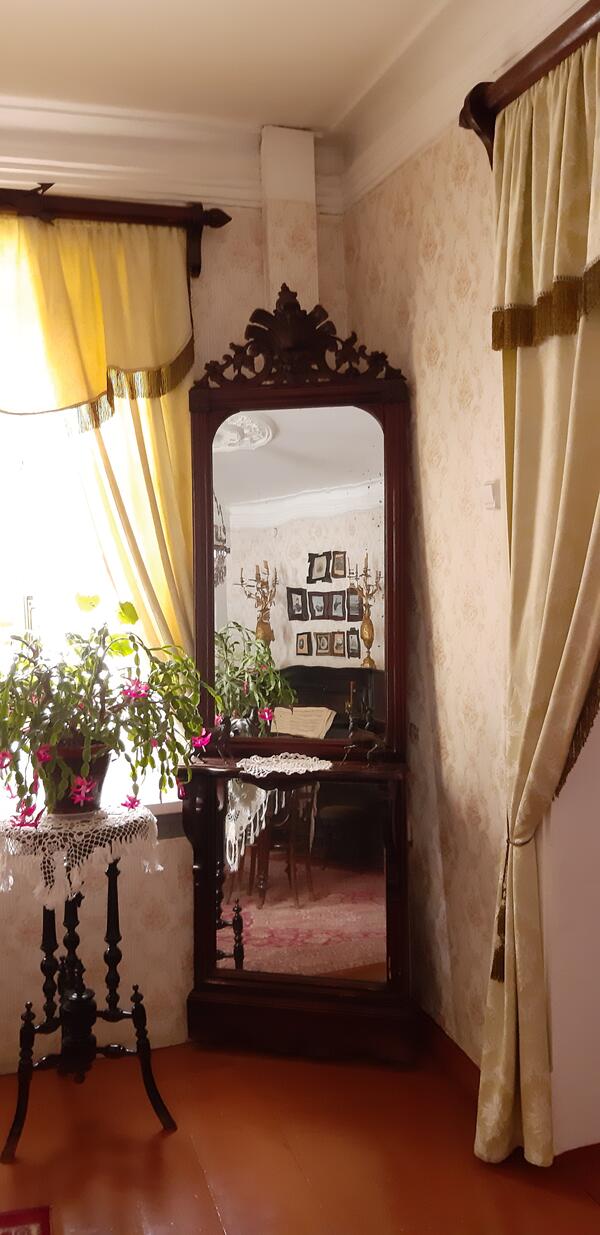
The living room was the main one on the first floor of the Pavlov house in Ryazan. The whole big Pavlov family, their relatives and guests gathered in this room with its three large windows, an oval table, a piano with luxurious candelabra, and easy chairs. A massive 19th-century cheval mirror was an outstanding decoration of the living room, it occupied a whole corner and reflected everyone who came into the room.
In the Middle Ages, mirrors were a luxury affordable only to kings. The making process of mirrors was kept confidential, and craftsmen faced the death penalty if they were to reveal the secret. In 1835, the technology of silvering appeared, which is still in use today, and the establishment of mirror-making factories made mirrors cheaper and more affordable. Nevertheless, large and high-quality mirrors as tall as full height and decorated with elaborate frames were available only to wealthy people.
The mirror in the Pavlov house stands at the entrance to the living room. The guests could use it to tidy themselves up or fix their hair before joining the others. The upper part of the wooden frame of this mirror has beautiful and refined carvings. An elegant table divides the mirror into two parts — the upper part is larger and the lower one is smaller. The table could have vases with flowers, porcelain and bronze figurines, and caskets on top of it.
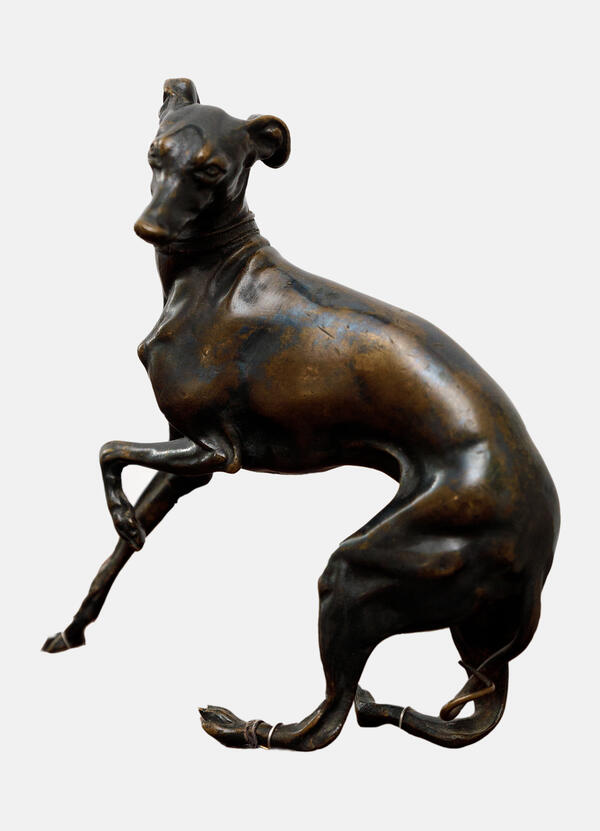
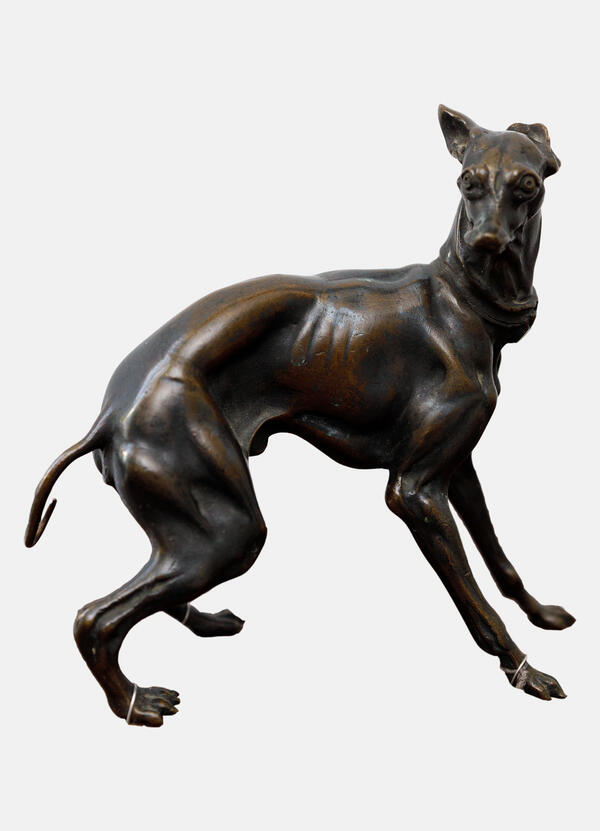
The mirror table features figurines of Italian Greyhound dogs — a symbol of aristocratic noble interiors. The 19th century witnessed the popularity of the French animalier Pierre-Jules Mêne, who created sculptural groups with animals. He is considered one of the pioneers of the animalier genre in Europe, Mêne’s works were distinguished by a high degree of naturalism and accuracy. The master exhibited his sculptures numerous times at the Paris Salon, and his works were reproduced in large quantities in spelter, bronze, cast iron, and silver.
In Russia, the Kasli and Kusinski factories made figurines in the manner characteristic of Pierre-Jules Mêne. Still, they had different designations: if the French sculptor called the composition of two dogs, similar to that on the dressing table in the Pavlov house, “Gigi and Giselle” or “Two Greyhounds Playing Ball”, the Russian copies were called “Italian Greyhounds” or “Two Italian Greyhound Dogs”. Elegant figurines of animals always were a favorable addition to a wealthy house that emphasized its interiors.
In the Middle Ages, mirrors were a luxury affordable only to kings. The making process of mirrors was kept confidential, and craftsmen faced the death penalty if they were to reveal the secret. In 1835, the technology of silvering appeared, which is still in use today, and the establishment of mirror-making factories made mirrors cheaper and more affordable. Nevertheless, large and high-quality mirrors as tall as full height and decorated with elaborate frames were available only to wealthy people.
The mirror in the Pavlov house stands at the entrance to the living room. The guests could use it to tidy themselves up or fix their hair before joining the others. The upper part of the wooden frame of this mirror has beautiful and refined carvings. An elegant table divides the mirror into two parts — the upper part is larger and the lower one is smaller. The table could have vases with flowers, porcelain and bronze figurines, and caskets on top of it.
The mirror table features figurines of Italian Greyhound dogs — a symbol of aristocratic noble interiors. The 19th century witnessed the popularity of the French animalier Pierre-Jules Mêne, who created sculptural groups with animals. He is considered one of the pioneers of the animalier genre in Europe, Mêne’s works were distinguished by a high degree of naturalism and accuracy. The master exhibited his sculptures numerous times at the Paris Salon, and his works were reproduced in large quantities in spelter, bronze, cast iron, and silver.
In Russia, the Kasli and Kusinski factories made figurines in the manner characteristic of Pierre-Jules Mêne. Still, they had different designations: if the French sculptor called the composition of two dogs, similar to that on the dressing table in the Pavlov house, “Gigi and Giselle” or “Two Greyhounds Playing Ball”, the Russian copies were called “Italian Greyhounds” or “Two Italian Greyhound Dogs”. Elegant figurines of animals always were a favorable addition to a wealthy house that emphasized its interiors.