#1
Blunderbuss, Arquebus
#2
#3
#6
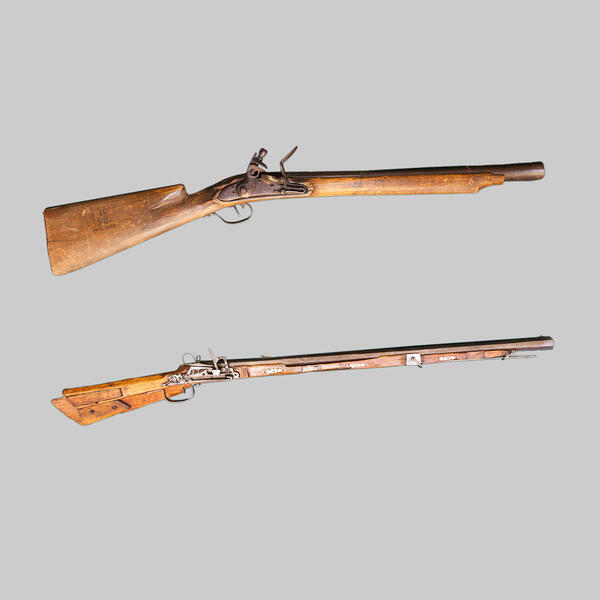
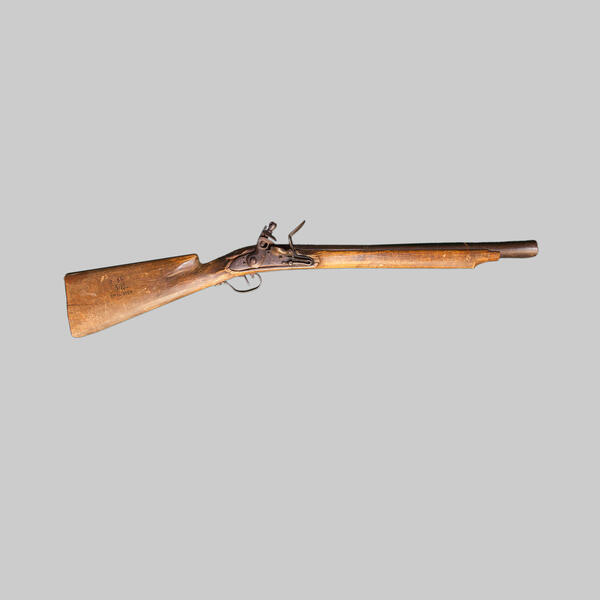
The blunderbuss is a historical cavalry gun. Its muzzle ends with a bell – shaped bell. Unlike a musket, a blunderbuss has a short barrel, which makes it seem lighter. The peculiar device of the barrel allowed loading a gun with small buckshot or chopped pieces of lead. It was believed that the shaped bell helps to increase the spread of buckshot and, accordingly, the area of damage. All this compensated for the low accuracy of the weapon. The blunderbuss was very popular, because you could hit the target from a short distance, even if you were shooting on the move, with a horse galloping at full speed.
In Russia, blunderbusses appeared around the middle of the 17th century and were originally called ‘scatter-shots’ or ‘shotguns’. Since the 18th century, it was assigned the name ‘blunderbuss.’ The gun was used both in the navy and in the cavalry. The blunderbuss was among the weapons of the soldiers during the Patriotic war of 1812, and was manufactured in a slightly improved form until 1814 inclusive.
The blunderbuss, presented in the exposition of the Tobolsk Museum Reserve, has a flint lock with an iron pan of the French battery type installed. This design of the lock appeared in 1610 thanks to the French gunsmith Marin Le Bourgeois from Lisieux, Normandy. When preparing to shoot, the shooter had to first load the weapon, that is, fill up the powder, hammer the plug and bullet into the barrel. Next, the shooter placed the hammer at safety, opened the pan cover, cleaned the fire hole if necessary, and poured a small amount of gunpowder on the pan, after which the hammer was ready to fire. Since such a weapon was designed to shoot at close range with buckshot or large shot almost at point-blank range, there is no rear sight or foresight on its barrel. For the belt, there are two attachment devices-swivel base: one-under the butt, the other on the front of the club, in the form of a bracket rotating on a cross screw. On the lock sheet of the blunderbuss, there is a stamp of military acceptance formed by two letters ‘NS’, as well as the name of the manufacturer: ‘Sestroretsk’ and the year of issue ‘1814’.
In Russia, blunderbusses appeared around the middle of the 17th century and were originally called ‘scatter-shots’ or ‘shotguns’. Since the 18th century, it was assigned the name ‘blunderbuss.’ The gun was used both in the navy and in the cavalry. The blunderbuss was among the weapons of the soldiers during the Patriotic war of 1812, and was manufactured in a slightly improved form until 1814 inclusive.
The blunderbuss, presented in the exposition of the Tobolsk Museum Reserve, has a flint lock with an iron pan of the French battery type installed. This design of the lock appeared in 1610 thanks to the French gunsmith Marin Le Bourgeois from Lisieux, Normandy. When preparing to shoot, the shooter had to first load the weapon, that is, fill up the powder, hammer the plug and bullet into the barrel. Next, the shooter placed the hammer at safety, opened the pan cover, cleaned the fire hole if necessary, and poured a small amount of gunpowder on the pan, after which the hammer was ready to fire. Since such a weapon was designed to shoot at close range with buckshot or large shot almost at point-blank range, there is no rear sight or foresight on its barrel. For the belt, there are two attachment devices-swivel base: one-under the butt, the other on the front of the club, in the form of a bracket rotating on a cross screw. On the lock sheet of the blunderbuss, there is a stamp of military acceptance formed by two letters ‘NS’, as well as the name of the manufacturer: ‘Sestroretsk’ and the year of issue ‘1814’.
#7
Date: 1814
Place: Russia, Sestroretsk, Sestroretsk Arms Factory
Technique: factory production
Dimensions: 91×12 cm
Collection: Weaponry
Copyright: Tyumen Province State Autonomous Cultural Institution ‘Tyumen Museum and Educational Association’, Structural Division ‘Tobolsk Historical and Architectural Museum Reserve’
Goskatalog Number: 5901405
Place: Russia, Sestroretsk, Sestroretsk Arms Factory
Technique: factory production
Dimensions: 91×12 cm
Collection: Weaponry
Copyright: Tyumen Province State Autonomous Cultural Institution ‘Tyumen Museum and Educational Association’, Structural Division ‘Tobolsk Historical and Architectural Museum Reserve’
Goskatalog Number: 5901405
#5
Arquebus
#4
#8
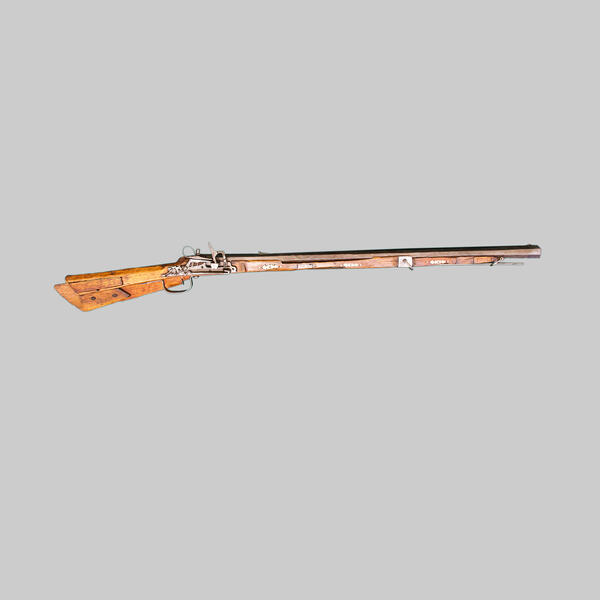
From the middle of the 16th century rifles began to spread in Ancient Rus or, as they were called in written sources, squeaked arquebuses. They were different from the smoothbore arquebuses above all by the fact that the barrel had rifling, which helped the bullet make more stable in flight. Moscow squeaked arquebuses had six (‘six-inch nail’) or eight (‘eight-inch nail’) rifling. A larger amount was applied quite rarely and only for custom-made weapons. At an early stage, rifles were more often used in hunting, but since there was no division between hunting and combat in command weapons in the 16th-17th centuries, rifled barrels were very soon used during military operations.
It is known from written sources that since the middle of the 17th century, rifles had been quite actively manufactured in domestic weapons centers, for example, in the Moscow Armoury. In the second half of the century, the Streltsy troops were already regularly supplied with squeaked arquebuses. Service people in North-Eastern Russia and Siberia often had rifled weapons – they were used both as combat and commercial weapons.
The historian Lilla Makovskaya wrote in her research: ‘In 1698, squeaked arquebuses represented 20% in the weaponry of the Tyumen service people. In 1702, the Kuznetsk service people and Tyumen foot streltsy had a higher percentage of rifles: the highest — 50% - of the children of boyars, almost 33% - of horseback cossacks, 7% - of the streltsy.’
Unlike the rifles that were manufactured in European Russia, archaic forms were typical for the squeaked arquebuses of the North-East and Siberia – up to the middle of the 19th century. There, massive faceted barrels of small caliber and flint locks of the Russian and Karelian types, typical for the middle of the 17th century, continued to be used.
On January 19, 1700, a decree was issued on the production of weapons in Siberia. On March 8, 1702, together with the main guns of the Kamensky factory, the first products from Tobolsk — 6 flintlock muskets and 6 muskets were delivered to Moscow, for which the voivodes received a letter of commendation from the Tsar. There was a historical event, in Tobolsk, the first specialized state weapons factory in Russia started to operate, created according to the type of centralized manufactory that produced cold and small arms.
It is known from written sources that since the middle of the 17th century, rifles had been quite actively manufactured in domestic weapons centers, for example, in the Moscow Armoury. In the second half of the century, the Streltsy troops were already regularly supplied with squeaked arquebuses. Service people in North-Eastern Russia and Siberia often had rifled weapons – they were used both as combat and commercial weapons.
The historian Lilla Makovskaya wrote in her research: ‘In 1698, squeaked arquebuses represented 20% in the weaponry of the Tyumen service people. In 1702, the Kuznetsk service people and Tyumen foot streltsy had a higher percentage of rifles: the highest — 50% - of the children of boyars, almost 33% - of horseback cossacks, 7% - of the streltsy.’
Unlike the rifles that were manufactured in European Russia, archaic forms were typical for the squeaked arquebuses of the North-East and Siberia – up to the middle of the 19th century. There, massive faceted barrels of small caliber and flint locks of the Russian and Karelian types, typical for the middle of the 17th century, continued to be used.
On January 19, 1700, a decree was issued on the production of weapons in Siberia. On March 8, 1702, together with the main guns of the Kamensky factory, the first products from Tobolsk — 6 flintlock muskets and 6 muskets were delivered to Moscow, for which the voivodes received a letter of commendation from the Tsar. There was a historical event, in Tobolsk, the first specialized state weapons factory in Russia started to operate, created according to the type of centralized manufactory that produced cold and small arms.
#9
Date: 18th century
Place: Tobolsk, Russia, Tobolsk weapons factory
Technique: forging, casting, carving, incrustation
Dimensions: 133,5×10 cm
Collection: Weaponry
Copyright: Tyumen Province State Autonomous Cultural Institution ‘Tyumen Museum and Educational Association’, Structural Division ‘Tobolsk Historical and Architectural Museum Reserve’
Goskatalog Number: 5901394
Place: Tobolsk, Russia, Tobolsk weapons factory
Technique: forging, casting, carving, incrustation
Dimensions: 133,5×10 cm
Collection: Weaponry
Copyright: Tyumen Province State Autonomous Cultural Institution ‘Tyumen Museum and Educational Association’, Structural Division ‘Tobolsk Historical and Architectural Museum Reserve’
Goskatalog Number: 5901394
read morehide
00:00
00:00
1x
Blunderbuss, Arquebus
Collection
0
 Point your smartphone camera to open in the app
Open in app
Share